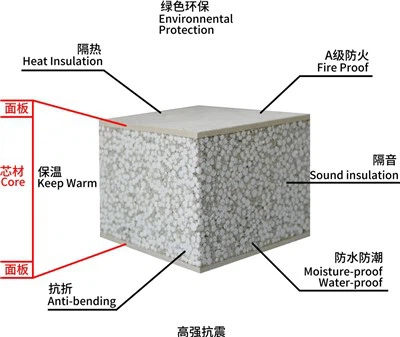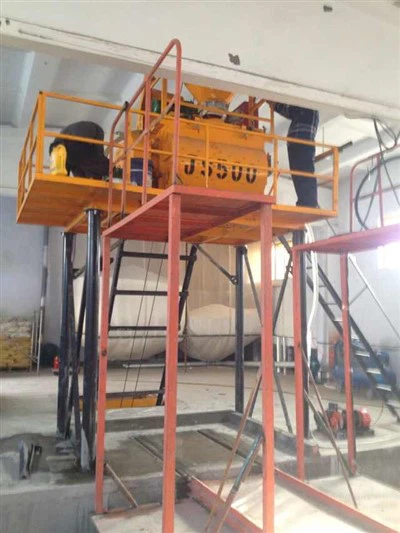

Hey there! As a supplier of Fiber Cement Board Equipment, I often get asked about how our machines can control the thickness tolerance of products. Well, let's dive right into it.
First off, understanding the importance of thickness tolerance is crucial. In the construction industry, fiber cement boards are used for a variety of applications, from wall cladding to roofing. Any significant deviation in thickness can lead to issues like uneven surfaces, poor installation, and even structural problems. So, having tight control over thickness tolerance is a must.
Precise Material Feeding Systems
One of the key ways our equipment controls thickness tolerance is through its precise material feeding systems. We've designed our machines to measure and dispense the raw materials - things like cement, fiber, and additives - with extreme accuracy. The feeding mechanism uses advanced sensors and control algorithms to ensure that the right amount of material is delivered to the forming section at all times.
For example, our volumetric feeders are calibrated to a high degree of precision. They can adjust the flow rate of materials based on real - time measurements, compensating for any variations in the material density or consistency. This means that whether you're using a different batch of cement or a new type of fiber, the machine can still maintain a consistent thickness in the final product.
Advanced Forming Technology
The forming process is where the magic really happens. Our fiber cement board equipment uses state - of - the - art forming technology to shape the material into the desired thickness. One of the techniques we employ is the use of forming rollers. These rollers are carefully machined and adjusted to apply a uniform pressure across the width of the board.


The gap between the rollers is precisely set according to the desired thickness of the fiber cement board. As the material passes through the rollers, it gets compressed to the exact thickness. Our machines are also equipped with automatic gap adjustment systems. These systems can detect any minor changes in the material properties or the machine's operating conditions and make real - time adjustments to the roller gap.
Another important aspect of our forming technology is the use of a multi - stage forming process. Instead of trying to achieve the final thickness in one go, the material goes through several stages of forming. This allows for better control over the thickness and density of the board. Each stage gradually compresses the material, ensuring a more uniform and consistent product.
Quality Control Sensors
To further ensure that the thickness tolerance is within the acceptable range, our fiber cement board equipment is fitted with a series of quality control sensors. These sensors are placed at various points along the production line, from the forming section to the cutting area.
For instance, we use laser thickness sensors. These sensors emit a laser beam that measures the thickness of the board as it moves along the conveyor. The data collected by the sensors is sent to a control system, which continuously monitors the thickness and compares it to the set target. If the thickness deviates from the target by a certain amount, the control system can automatically adjust the machine settings to correct the issue.
We also have ultrasonic sensors that can detect any internal inconsistencies in the board, such as air pockets or density variations. These sensors work by sending ultrasonic waves through the board and analyzing the reflections. By detecting these internal issues early on, we can take corrective actions to ensure that the final product meets the required thickness and quality standards.
Process Optimization and Operator Training
Controlling the thickness tolerance isn't just about the equipment itself; it also involves process optimization and operator training. Our team of experts works closely with our customers to develop customized production processes that are tailored to their specific needs and requirements.
We analyze every step of the production process, from material preparation to final packaging, to identify any potential areas where thickness variations could occur. By making small adjustments to the process parameters, such as the mixing time, the forming speed, or the curing conditions, we can significantly improve the thickness control of the fiber cement boards.
In addition, we provide comprehensive operator training programs. Our operators are taught how to operate the equipment correctly, how to interpret the data from the sensors, and how to make adjustments when necessary. A well - trained operator can play a crucial role in maintaining the thickness tolerance of the products.
Related Equipment for Your Needs
If you're in the market for other types of panel - making equipment, we've got you covered. Check out our EPS Cement Wall Panel Making Machine, which is designed to produce high - quality EPS cement wall panels. We also offer Fiber Cenment Board Production Equipment for large - scale production. And if you're interested in partition panels, our Partition Panel Production Equipment is a great choice.
Conclusion
Controlling the thickness tolerance of fiber cement boards is a complex but achievable task. Our fiber cement board equipment uses a combination of precise material feeding systems, advanced forming technology, quality control sensors, and process optimization to ensure that the products meet the highest standards. If you're looking to invest in high - quality fiber cement board equipment or any of our related products, don't hesitate to get in touch. We're here to help you take your production to the next level and ensure that your products are of the best quality.
References
- ASTM International. (Year). Standard Specification for Fiber - Cement Flat Sheets. ASTM C1186.
- Building and Construction Research Institute. (Year). Guidelines for the Production and Quality Control of Fiber Cement Boards.