
As a supplier of 150mm EPS insulation boards, I often encounter inquiries about the electrical insulation properties of our products. In this blog post, I will delve into the electrical insulation characteristics of 150mm EPS insulation boards, exploring their composition, performance, and applications from an electrical perspective.
Composition and Structure of 150mm EPS Insulation Boards
Expanded Polystyrene (EPS) is a lightweight, rigid thermoplastic foam material made from polystyrene beads that are expanded and fused together. The 150mm EPS insulation board is a specific type of EPS product with a thickness of 150 millimeters, offering enhanced insulation capabilities compared to thinner boards.
The cellular structure of EPS plays a crucial role in its electrical insulation properties. EPS consists of millions of tiny closed cells filled with air. These closed cells act as effective barriers to the flow of electricity, preventing the movement of electrons and thus providing excellent electrical insulation. The air trapped within the cells has a high electrical resistivity, which further contributes to the overall insulation performance of the EPS board.
Electrical Insulation Performance of 150mm EPS Insulation Boards
One of the key indicators of electrical insulation performance is electrical resistivity. Electrical resistivity is a measure of how strongly a material opposes the flow of electric current. High electrical resistivity means that the material is a poor conductor of electricity and is therefore a good insulator.
150mm EPS insulation boards typically have a very high electrical resistivity. The exact value can vary depending on factors such as the density of the EPS, the manufacturing process, and the presence of any additives. However, in general, EPS has an electrical resistivity on the order of 10^13 to 10^15 ohm - meters, which is extremely high compared to many other materials.
Another important aspect of electrical insulation is dielectric strength. Dielectric strength is the maximum electric field that a material can withstand without breaking down and allowing current to flow. EPS insulation boards have a relatively high dielectric strength, which means they can resist the application of high - voltage electric fields without experiencing electrical breakdown. This makes them suitable for use in applications where electrical safety is a concern.
Applications of 150mm EPS Insulation Boards Based on Electrical Insulation
Building Construction
In building construction, electrical insulation is a critical consideration. 150mm EPS insulation boards can be used in both residential and commercial buildings to provide electrical isolation between different components of the building's electrical system. For example, they can be installed in walls, floors, and ceilings to prevent electrical interference and reduce the risk of electrical fires.
Electrical Equipment Enclosures
EPS insulation boards can also be used in the construction of electrical equipment enclosures. These enclosures are designed to protect electrical components from environmental factors such as moisture, dust, and mechanical damage, while also providing electrical insulation. The high electrical resistivity and dielectric strength of 150mm EPS boards make them an ideal choice for this application, ensuring the safe operation of electrical equipment.
Cable Insulation
In some cases, 150mm EPS insulation boards can be used as an additional layer of insulation for cables. This can help to improve the overall electrical performance of the cables, reduce signal loss, and protect the cables from external electrical interference.
Comparison with Other Insulation Materials
When compared to other insulation materials, 150mm EPS insulation boards offer several advantages in terms of electrical insulation. For example, compared to traditional fibrous insulation materials such as fiberglass, EPS has a more uniform cellular structure, which provides more consistent electrical insulation performance. Fiberglass insulation can sometimes have gaps or voids in its structure, which can lead to uneven electrical insulation and potential electrical leakage.
Compared to some inorganic insulation materials like Waterproof Calcium Silicate Board, EPS is lighter in weight and easier to install. In addition, the electrical insulation properties of EPS are not significantly affected by moisture, while some inorganic materials may experience a decrease in electrical resistivity when exposed to high - humidity environments.
Related Products and Their Electrical Insulation Considerations
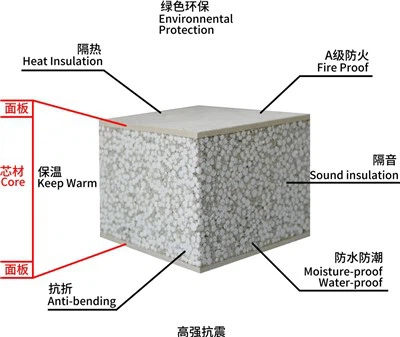
As a supplier, we also offer other related products such as Waterproof EPS Sandwich Panel and EPS Cement Concrete Sandwich Panel. These products also have electrical insulation properties, which are influenced by the EPS core.
The waterproof EPS sandwich panel combines the electrical insulation properties of EPS with the waterproofing capabilities of the outer layers. This makes it suitable for applications in wet or humid environments where both electrical safety and moisture protection are required.
The EPS cement concrete sandwich panel, on the other hand, combines EPS with cement concrete. The EPS core provides electrical insulation, while the cement concrete layers offer mechanical strength and durability. This product can be used in applications where a combination of electrical insulation and structural integrity is needed.
Factors Affecting the Electrical Insulation of 150mm EPS Insulation Boards
Although 150mm EPS insulation boards generally have excellent electrical insulation properties, there are several factors that can affect their performance.
Temperature
Temperature can have an impact on the electrical resistivity of EPS. As the temperature increases, the electrical resistivity of EPS may decrease slightly. However, within the normal operating temperature range of most applications, this change is usually not significant enough to affect the overall electrical insulation performance.
Contamination
Contamination of the EPS board with conductive materials such as dust, dirt, or metal particles can reduce its electrical insulation performance. It is important to ensure that the EPS boards are stored and installed in a clean environment to prevent contamination.


Physical Damage
Physical damage to the EPS board, such as cracks or punctures, can also compromise its electrical insulation properties. When installing 150mm EPS insulation boards, care should be taken to avoid any damage to the boards to maintain their electrical insulation performance.
Conclusion
In conclusion, 150mm EPS insulation boards have excellent electrical insulation properties due to their unique cellular structure and the high electrical resistivity of EPS. They offer high electrical resistivity, good dielectric strength, and are suitable for a wide range of applications in building construction, electrical equipment enclosures, and cable insulation.
Compared to other insulation materials, EPS insulation boards have several advantages in terms of electrical insulation performance, weight, and ease of installation. However, factors such as temperature, contamination, and physical damage can affect their performance, so proper handling and installation are essential.
If you are interested in our 150mm EPS insulation boards or any of our related products, we invite you to contact us for further information and to discuss your specific requirements. Our team of experts is ready to assist you in finding the best insulation solutions for your projects.
References
- "Handbook of Polymer Science and Technology", various authors, Wiley - Interscience
- "Building Materials and Construction", numerous contributors, McGraw - Hill Education
- Technical data sheets provided by EPS manufacturers.