
As a supplier of EPS Cement Sandwich Panels, I often encounter inquiries from customers regarding the suitability of these panels for exterior walls. This blog post aims to comprehensively explore the feasibility of using EPS Cement Sandwich Panels for exterior wall applications, considering various aspects such as their properties, advantages, limitations, and installation requirements.
Properties of EPS Cement Sandwich Panels
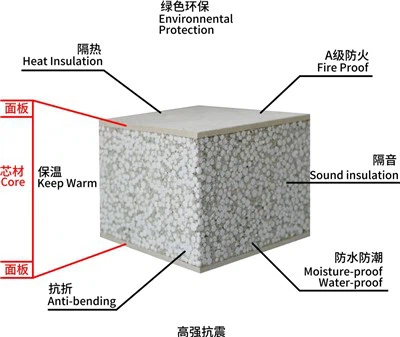
EPS Cement Sandwich Panels consist of an expanded polystyrene (EPS) core sandwiched between two layers of cement boards. The EPS core provides excellent thermal insulation properties, while the cement boards offer strength, durability, and fire resistance.
Thermal Insulation
One of the primary advantages of EPS Cement Sandwich Panels is their high thermal insulation performance. The EPS core has a low thermal conductivity, which helps to reduce heat transfer through the wall. This can significantly improve the energy efficiency of a building, reducing heating and cooling costs. According to industry standards, EPS Cement Sandwich Panels can achieve a thermal conductivity as low as 0.035 W/(m·K), making them an ideal choice for energy-efficient buildings.
Strength and Durability
The cement boards on either side of the EPS core provide the panel with excellent strength and durability. These boards are resistant to impact, moisture, and fire, ensuring that the panels can withstand harsh environmental conditions. Additionally, the panels are lightweight, which makes them easy to handle and install. This can reduce construction time and labor costs, making them a cost-effective solution for exterior wall applications.
Fire Resistance
EPS Cement Sandwich Panels have good fire resistance properties. The cement boards act as a barrier to prevent the spread of fire, while the EPS core is treated with fire retardant chemicals to reduce its flammability. In many countries, these panels meet the required fire safety standards for exterior wall applications, providing an added layer of protection for buildings.
Advantages of Using EPS Cement Sandwich Panels for Exterior Walls
Energy Efficiency
As mentioned earlier, the high thermal insulation properties of EPS Cement Sandwich Panels can significantly improve the energy efficiency of a building. By reducing heat transfer through the walls, these panels can help to maintain a comfortable indoor temperature, reducing the need for heating and cooling systems. This not only saves energy but also reduces carbon emissions, making them an environmentally friendly choice.
Cost-Effectiveness
EPS Cement Sandwich Panels are a cost-effective solution for exterior wall applications. Their lightweight nature reduces transportation and installation costs, while their long lifespan and low maintenance requirements make them a cost-effective investment in the long run. Additionally, the energy savings achieved through their use can offset the initial investment over time.
Design Flexibility
These panels come in a variety of sizes, colors, and finishes, allowing for a high degree of design flexibility. They can be used to create a variety of architectural styles, from modern and contemporary to traditional and rustic. This makes them a popular choice for architects and designers who want to create unique and visually appealing buildings.
Quick Installation
EPS Cement Sandwich Panels are easy to install, which can significantly reduce construction time. They can be installed using simple tools and techniques, and their lightweight nature makes them easy to handle and position. This can help to speed up the construction process, allowing buildings to be completed more quickly and efficiently.
Limitations of Using EPS Cement Sandwich Panels for Exterior Walls
Moisture Resistance
While the cement boards on EPS Cement Sandwich Panels are resistant to moisture, the EPS core can absorb water if it is exposed to prolonged periods of moisture. This can lead to a reduction in the panel's thermal insulation performance and structural integrity. Therefore, it is important to ensure that the panels are properly installed and protected from moisture during and after construction.


Aesthetic Limitations
Although EPS Cement Sandwich Panels come in a variety of finishes, they may not offer the same level of aesthetic appeal as some other exterior wall materials, such as brick or stone. However, with the use of appropriate coatings and finishes, the panels can be made to look more like traditional materials, improving their aesthetic appeal.
Structural Considerations
EPS Cement Sandwich Panels are lightweight, which can be an advantage in some situations. However, in areas with high wind loads or seismic activity, additional structural support may be required to ensure the panels can withstand these forces. It is important to consult with a structural engineer to determine the appropriate structural design for the building.
Installation Requirements for EPS Cement Sandwich Panels on Exterior Walls
Surface Preparation
Before installing EPS Cement Sandwich Panels on exterior walls, the surface must be clean, dry, and level. Any loose or damaged material should be removed, and the surface should be primed to ensure good adhesion between the panel and the wall.
Panel Installation
The panels should be installed in accordance with the manufacturer's instructions. They can be installed using a variety of methods, such as mechanical fasteners or adhesives. It is important to ensure that the panels are properly aligned and secured to the wall to prevent any gaps or movement.
Sealing and Waterproofing
To prevent moisture from penetrating the panels, it is important to seal all joints and edges with a suitable sealant. Additionally, a waterproof membrane should be applied to the exterior surface of the panels to provide an additional layer of protection against moisture.
Maintenance
EPS Cement Sandwich Panels require minimal maintenance. However, it is important to inspect the panels regularly for any signs of damage or wear and tear. Any damaged panels should be replaced immediately to ensure the continued performance and integrity of the exterior wall.
Conclusion
In conclusion, EPS Cement Sandwich Panels can be used for exterior walls, offering a range of benefits such as energy efficiency, cost-effectiveness, design flexibility, and quick installation. However, they also have some limitations, such as moisture resistance and aesthetic limitations, which need to be considered before using them for exterior wall applications. By following the appropriate installation and maintenance procedures, these limitations can be minimized, and the panels can provide a reliable and cost-effective solution for exterior wall construction.
If you are interested in using EPS Cement Sandwich Panels for your next project, I encourage you to contact us to discuss your specific requirements. We are a leading supplier of EPS Cement Sandwich Insolation Board, Lightweight Partition Wall Panel, and Waterproof Calcium Silicate Board, and we can provide you with high-quality products and professional advice to ensure the success of your project.
References
- Building Construction Handbook, various editions
- Standards for Exterior Wall Materials, relevant national and international standards
- Research papers on the performance of EPS Cement Sandwich Panels in exterior wall applications