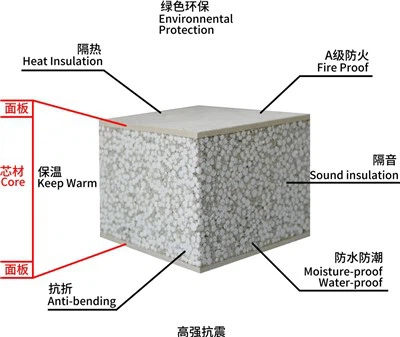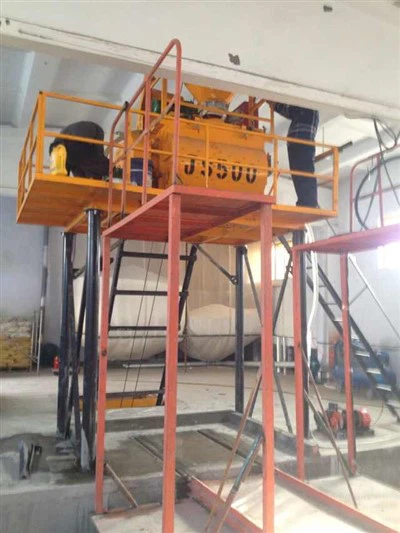

As a supplier of EPS panel machines, I'm excited to share with you the programming method of an EPS panel machine. EPS (Expanded Polystyrene) panel machines are used to produce a variety of panels, which are widely used in the construction, packaging, and insulation industries due to their lightweight, insulating, and cost - effective properties. Understanding the programming method is crucial for efficient and high - quality production.
1. Overview of EPS Panel Machine Programming
Programming an EPS panel machine involves setting up a series of instructions that control the machine's operations, including material feeding, heating, molding, cutting, and stacking. The programming is typically done using a Programmable Logic Controller (PLC), which is a digital computer used for automation of industrial processes.
The PLC is the brain of the EPS panel machine. It receives input signals from various sensors installed on the machine, such as temperature sensors, position sensors, and pressure sensors. Based on these input signals and the pre - programmed logic, the PLC sends output signals to control different actuators, like motors, valves, and heaters.


2. Step - by - Step Programming Process
2.1 Initialization and Parameter Setting
The first step in programming an EPS panel machine is to initialize the PLC and set the basic parameters. These parameters include the panel dimensions (length, width, and thickness), the type of EPS material to be used, and the production speed.
For example, if you want to produce an EPS panel with a length of 2000 mm, a width of 1000 mm, and a thickness of 50 mm, you need to enter these values into the PLC's programming interface. You also need to select the appropriate EPS material, as different materials may require different processing temperatures and pressures.
2.2 Material Feeding Control
Once the parameters are set, the next step is to program the material feeding system. The EPS beads or granules are usually stored in a hopper and fed into the machine through a conveyor or a screw feeder.
The PLC controls the speed and amount of material feeding. It uses sensors to detect the level of material in the hopper and the position of the conveyor. If the material level in the hopper is low, the PLC can send a signal to start a new batch of material loading. The speed of the conveyor or screw feeder can be adjusted according to the production speed and the panel thickness requirements.
2.3 Heating and Molding Control
Heating is a critical process in EPS panel production. The EPS beads need to be heated to a specific temperature to expand and fuse together to form a solid panel.
The PLC controls the heating elements, such as electric heaters or steam heaters. Temperature sensors are installed in the heating chamber to monitor the temperature. The PLC compares the actual temperature with the set - point temperature and adjusts the power supply to the heaters accordingly.
During the molding process, the PLC also controls the movement of the molds. It ensures that the molds are properly closed and locked before the heating process starts. After the EPS material has expanded and filled the mold cavity, the PLC can control the cooling process to solidify the panel.
2.4 Cutting and Stacking Control
Once the panel is formed and cooled, it needs to be cut to the desired size. The PLC controls the cutting mechanism, such as a saw or a knife. It uses position sensors to accurately position the panel for cutting.
After cutting, the panels are stacked for storage or further processing. The PLC can control the stacking system, which may include a conveyor, a robot arm, or a pneumatic system. It ensures that the panels are stacked neatly and securely.
3. Advanced Programming Features
3.1 Recipe Management
Many modern EPS panel machines support recipe management. This means that you can save different sets of production parameters as recipes in the PLC's memory. For example, you can have a recipe for producing 100 - mm thick EPS panels and another recipe for 50 - mm thick panels.
When you need to switch to a different production requirement, you can simply select the corresponding recipe from the PLC's programming interface. This greatly simplifies the programming process and reduces the time required for parameter setting.
3.2 Fault Diagnosis and Alarm System
The PLC can be programmed to include a fault diagnosis and alarm system. Sensors on the machine continuously monitor various operating conditions, such as temperature, pressure, and motor current.
If a fault is detected, the PLC can display an error message on the control panel and trigger an alarm. It can also provide detailed information about the fault, such as the location and possible causes. This helps the operators to quickly identify and solve problems, reducing downtime and improving production efficiency.
3.3 Remote Monitoring and Control
With the development of Internet of Things (IoT) technology, some EPS panel machines can be programmed for remote monitoring and control. The PLC can be connected to a network, allowing operators to monitor the machine's status and production data from a remote location using a computer or a mobile device.
Operators can also remotely adjust the production parameters, start or stop the machine, and receive real - time alerts in case of faults. This provides greater flexibility and convenience for production management.
4. Our EPS Panel Machine Offerings
As a professional EPS panel machine supplier, we offer a wide range of high - quality EPS panel machines, including the Upright EPS Sandwich Panel Forming Machine, the EPS Sandwich Panel Production Line, and the EPS Prefabricated Sandwich Panel Production Line.
Our machines are equipped with advanced PLC control systems, which are easy to program and operate. We also provide comprehensive technical support and training to our customers, ensuring that they can make the most of our machines and achieve efficient and high - quality production.
5. Conclusion
The programming method of an EPS panel machine is a complex but crucial process that involves multiple steps, from parameter setting to fault diagnosis. By using a PLC and advanced programming techniques, we can achieve precise control of the machine's operations and produce high - quality EPS panels.
If you are interested in our EPS panel machines or need more information about the programming and operation of these machines, please feel free to contact us. We are always ready to have in - depth discussions with you and help you find the best solutions for your production needs.
References
- Industrial Automation Handbook: Programmable Logic Controllers.
- EPS Panel Manufacturing Technology and Processes.
- Modern Control Systems for Manufacturing Equipment.