
What is the insulation performance of 180mm Sandwich Panel Wall?
As a supplier of 180mm Sandwich Panel Walls, I am often asked about the insulation performance of these panels. In this blog post, I will delve into the details of the insulation capabilities of 180mm Sandwich Panel Walls, exploring the factors that contribute to their effectiveness and why they are a popular choice for various applications.


Understanding Sandwich Panels
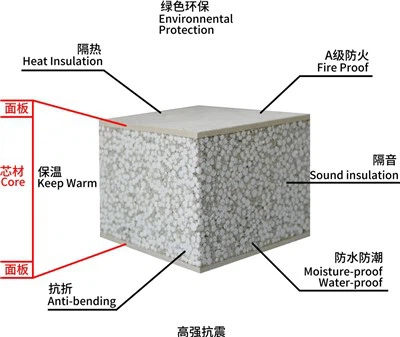
Before we discuss the insulation performance, let's first understand what a sandwich panel is. A sandwich panel consists of two outer layers, typically made of metal or other rigid materials, and a core material in between. The core material is the key component that determines the panel's insulation properties. In the case of our 180mm Sandwich Panel Walls, the core material is carefully selected to provide optimal insulation.
Insulation Mechanisms
The insulation performance of a 180mm Sandwich Panel Wall is based on several mechanisms. One of the primary mechanisms is the use of a low - conductivity core material. Common core materials for sandwich panels include expanded polystyrene (EPS), polyurethane (PU), and mineral wool. These materials have low thermal conductivity, which means they are poor conductors of heat.
EPS is a lightweight and cost - effective option. It has a closed - cell structure that traps air, and air is a good insulator. The closed - cell structure reduces the movement of heat through conduction and convection. Polyurethane, on the other hand, has even lower thermal conductivity than EPS. It forms a continuous foam structure that provides excellent insulation. Mineral wool is also a popular choice as it is fire - resistant and has good insulation properties due to its fibrous structure that traps air.
Factors Affecting Insulation Performance
- Core Material Thickness: The 180mm thickness of our sandwich panel wall plays a crucial role in its insulation performance. A thicker core material provides more resistance to heat transfer. As the heat has to travel through a greater distance in the low - conductivity core, the rate of heat transfer is reduced.
- Density of the Core Material: The density of the core material also affects insulation. For example, in the case of EPS, a higher - density EPS core can provide better insulation as it has more material to resist heat flow. However, there is a balance to be struck, as increasing the density too much can also increase the cost and weight of the panel.
- Sealing and Installation: Proper sealing and installation of the sandwich panels are essential for maintaining insulation performance. Any gaps or joints in the panels can allow air leakage, which can significantly reduce the insulation effectiveness. Our installation teams are trained to ensure a tight fit and proper sealing of the panels to minimize air infiltration.
Measuring Insulation Performance
The insulation performance of a 180mm Sandwich Panel Wall is typically measured using the R - value. The R - value is a measure of a material's resistance to heat flow. A higher R - value indicates better insulation. For our 180mm Sandwich Panel Walls, the R - value can vary depending on the core material used.
For example, a 180mm EPS - core sandwich panel may have an R - value in the range of 4 - 6 per inch of thickness. So, for a 180mm (approximately 7.09 inches) panel, the R - value could be around 28 - 42. A polyurethane - core panel of the same thickness may have an even higher R - value, typically in the range of 6 - 7 per inch, resulting in an R - value of around 42 - 50 for a 180mm panel.
Applications and Benefits
The excellent insulation performance of 180mm Sandwich Panel Walls makes them suitable for a wide range of applications. They are commonly used in industrial buildings, such as factories and warehouses. In these settings, the panels can help reduce energy costs by maintaining a stable indoor temperature. They also provide a comfortable working environment for employees.
In commercial buildings, such as offices and retail stores, the insulation properties of the panels contribute to a more energy - efficient building design. This can lead to lower utility bills and a reduced carbon footprint. Additionally, the panels can provide sound insulation, reducing noise from the outside environment.
In residential construction, 180mm Sandwich Panel Walls can be used to build energy - efficient homes. They can keep the interior warm in winter and cool in summer, providing a comfortable living environment.
Our Product Range
As a supplier, we offer a variety of 180mm Sandwich Panel Walls to meet different customer needs. Our Exterior Wall Sandwich Panel is designed for use on the exterior of buildings. It provides excellent insulation and weather resistance. The Fireproof Foam Sandwich Partition Board is a great option for internal partitions, especially in areas where fire safety is a concern. Our Expanded Polystyrene Wall Panels offer a cost - effective solution with good insulation properties.
Contact Us for Purchase and Consultation
If you are interested in learning more about the insulation performance of our 180mm Sandwich Panel Walls or are considering purchasing our products, we encourage you to contact us. Our team of experts is ready to provide you with detailed information, answer your questions, and assist you in making the right choice for your project. Whether you are building an industrial facility, a commercial building, or a residential home, our 180mm Sandwich Panel Walls can offer the insulation performance you need.
References
- ASHRAE Handbook of Fundamentals. This handbook provides comprehensive information on building insulation and thermal performance.
- Manufacturers' technical data sheets for sandwich panel materials. These data sheets offer specific information on the insulation properties of different core materials and panel configurations.