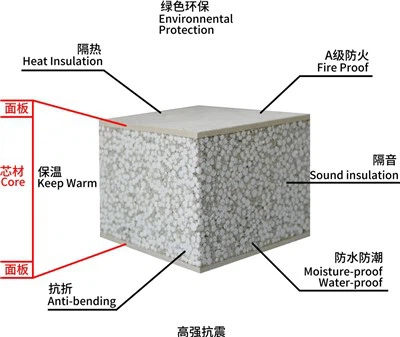

Installing a 150mm EPS insulation board on a concrete surface is a significant step towards enhancing the energy efficiency and thermal performance of a building. As a leading supplier of 150mm EPS Insulation Boards, I'm here to guide you through the entire installation process, ensuring that you achieve the best results.
Preparation
Before you start the installation, it's crucial to make thorough preparations. First, gather all the necessary tools and materials. You will need a tape measure, a utility knife, a trowel, a level, a drill, screws, and of course, the 150mm EPS insulation boards. Additionally, you might want to consider using a Waterproof EPS Sandwich Panel for areas where moisture is a concern.
Next, inspect the concrete surface. It should be clean, dry, and free of any debris, oil, or loose particles. If the surface is uneven, you may need to use a Calcium Silicate Cement Board to level it out. Measure the area where the insulation boards will be installed to determine the number of boards you need. Make sure to account for any cutouts or irregular shapes.
Measuring and Cutting the Boards
Once you have prepared the surface, it's time to measure and cut the 150mm EPS insulation boards. Use a tape measure to accurately measure the dimensions of the area. Transfer these measurements onto the insulation boards using a pencil or a marker. When cutting the boards, use a sharp utility knife. Score the board along the marked line several times to ensure a clean cut. Then, break the board along the scored line. For more precise cuts, especially for curved or irregular shapes, you can use a jigsaw.
Applying Adhesive
Apply a suitable adhesive to the back of the insulation board using a trowel. Make sure to spread the adhesive evenly across the entire surface, leaving a small gap around the edges. The adhesive should be applied in a zigzag pattern to ensure proper bonding. Place the board onto the concrete surface and press it firmly, starting from the center and working your way outwards to remove any air bubbles. Use a level to ensure that the board is perfectly horizontal or vertical, depending on the installation requirements.


Securing the Boards
After the adhesive has set, it's time to secure the insulation boards further. Drill holes through the boards into the concrete surface at regular intervals. Insert screws into the holes to hold the boards in place. Make sure not to overtighten the screws, as this could damage the boards. If you are installing the boards in a high - wind area, you may need to use additional fasteners or anchors for extra security.
Sealing the Joints
To prevent heat loss and air leakage, it's essential to seal the joints between the insulation boards. Use a high - quality sealant to fill the gaps between the boards. Apply the sealant along the joints and smooth it out using a putty knife. This will create a continuous thermal barrier and improve the overall insulation performance.
Finishing Touches
Once all the boards are installed and the joints are sealed, you can add a finishing layer. You might choose to install a 120mm EPS Cement Sandwich Panel over the insulation boards for added protection and aesthetic appeal. This panel can also provide additional structural support.
Maintenance and Troubleshooting
After the installation is complete, it's important to perform regular maintenance. Check the insulation boards periodically for any signs of damage, such as cracks or loose joints. If you notice any issues, repair them immediately to maintain the effectiveness of the insulation. In case of water damage, make sure to dry the area thoroughly and replace any damaged boards.
Conclusion
Installing a 150mm EPS insulation board on a concrete surface is a rewarding project that can significantly improve the energy efficiency of your building. By following these steps, you can ensure a successful installation. As a trusted supplier of 150mm EPS Insulation Boards, we are committed to providing high - quality products and excellent customer service. If you are interested in purchasing our products or have any questions about the installation process, please feel free to contact us for a detailed discussion. We look forward to working with you to achieve your insulation goals.
References
- Building Insulation Handbook, Third Edition. By John Straube and Joseph Lstiburek.
- Insulation Installation Guide for Residential Buildings. Published by the National Insulation Association.