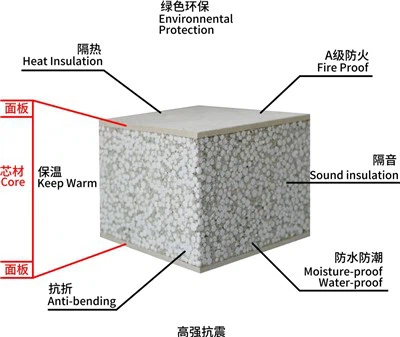

Hey there! As a supplier of Calcium Silicate Partition Walls, I often get asked about the heat transfer coefficient of these walls. So, I thought I'd write this blog to break it down for you in simple terms.
First off, let's understand what the heat transfer coefficient is. In plain English, it's a measure of how well a material can transfer heat. A lower heat transfer coefficient means the material is a better insulator, as it doesn't let heat pass through it easily. For Calcium Silicate Partition Walls, this coefficient is super important because it directly affects how energy - efficient a building is.
Calcium silicate is a pretty cool material. It's made up of calcium oxide, silica, and water. These components combine to create a structure that has some great insulating properties. The heat transfer coefficient of calcium silicate partition walls typically ranges from 0.04 to 0.07 W/(m²·K). This is quite low compared to a lot of other building materials out there.
Why is this low coefficient such a big deal? Well, in a building, heat is always trying to move from a warmer area to a cooler area. If you have a partition wall with a high heat transfer coefficient, a lot of heat will pass through it. This means that in the winter, the heat inside your building will escape, and in the summer, the heat from outside will come in. As a result, you'll have to use more energy to heat or cool your space, which can lead to higher energy bills.
On the other hand, Calcium Silicate Partition Walls with a low heat transfer coefficient act as a barrier to heat flow. They keep the heat where you want it - inside in the winter and outside in the summer. This can significantly reduce your energy consumption and save you money in the long run.

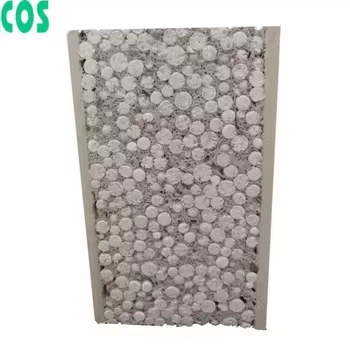
Let's talk about some of the factors that can affect the heat transfer coefficient of calcium silicate partition walls. One of the main factors is the density of the material. Generally, a higher - density calcium silicate wall will have a slightly higher heat transfer coefficient. This is because there are more solid particles in a high - density wall, which can conduct heat more easily.
Another factor is the thickness of the wall. Thicker walls tend to have a lower heat transfer coefficient because heat has to travel through a greater distance. So, if you're looking for maximum insulation, you might want to consider a thicker calcium silicate partition wall.
Now, let's compare Calcium Silicate Partition Walls with some other types of wall panels. For instance, the Composite Precast Cement Wall Panel has a different heat transfer coefficient. Composite precast cement wall panels are made up of different layers, and their heat transfer coefficient can vary depending on the materials used in those layers. In general, calcium silicate partition walls tend to be better insulators due to their lower heat transfer coefficient.
The 100mm Prefabricated Insulated Wall Panels are also a popular choice in the construction industry. These panels are designed to provide insulation, but again, the heat transfer coefficient might not be as low as that of calcium silicate partition walls. The 100mm thickness gives them some insulating properties, but calcium silicate's unique composition often gives it an edge.
Similarly, the 100mm Lightweight Sandwich Panel has its own heat transfer characteristics. Lightweight sandwich panels are made to be easy to install and relatively light in weight. However, when it comes to insulation, calcium silicate partition walls can outperform them because of their low heat transfer coefficient.
If you're in the process of building or renovating a property, choosing the right partition wall can make a huge difference. Calcium Silicate Partition Walls not only offer great insulation but also have other advantages. They are fire - resistant, which is a major plus for safety. They're also durable and can withstand the test of time.
In terms of installation, calcium silicate partition walls are relatively easy to work with. They can be cut and shaped to fit your specific needs, and they can be installed quickly, which can save you time and money during the construction process.
As a supplier of Calcium Silicate Partition Walls, I've seen firsthand the benefits that these walls can bring to a building. Many of our customers have reported significant energy savings after installing our calcium silicate partition walls. Plus, they love the peace of mind that comes with having a fire - resistant and durable partition wall in their property.
If you're interested in learning more about Calcium Silicate Partition Walls or if you're thinking about using them in your next project, I'd love to have a chat with you. Whether you're an architect, a builder, or a property owner, we can provide you with all the information you need to make an informed decision. Contact us to start a discussion about how our Calcium Silicate Partition Walls can meet your specific requirements.
References
- "Building Materials and Their Applications" by John R. Macdonald
- "Thermal Insulation in Buildings" by David Banks