
Hey there! As a supplier of Calcium Silicate Partition Walls, I often get asked about the anti - static property of these walls. So, I thought I'd write this blog to share all the ins and outs of this topic.
First off, let's understand what anti - static means. Static electricity is that annoying shock you get when you touch a metal doorknob after walking on a carpet. It's caused by the build - up of electric charge on the surface of an object. In a building, static electricity can cause all sorts of problems. It can attract dust and dirt, which is not only a cosmetic issue but can also affect the performance of sensitive equipment like computers and electronics. It can even lead to sparks, which is a fire hazard in certain environments.
Now, let's talk about calcium silicate partition walls and how they handle static electricity. Calcium silicate is a unique material. It has a natural ability to resist the build - up of static charge. The structure of calcium silicate contains a network of microscopic pores and fibers. These pores and fibers help to dissipate any static charge that might start to build up on the surface of the partition wall.
Think of it like a sponge. When water hits a sponge, it gets absorbed and spread out. Similarly, when an electric charge tries to accumulate on the surface of a calcium silicate partition wall, the charge gets dispersed throughout the material. This means that the wall doesn't hold onto the static charge for long, reducing the risk of static - related problems.
One of the key factors that contribute to the anti - static property of calcium silicate partition walls is their low conductivity. Conductivity is a measure of how easily electricity can flow through a material. Materials with high conductivity, like metals, can easily carry an electric charge. Calcium silicate, on the other hand, has a relatively low conductivity. This means that it doesn't allow the static charge to flow freely across its surface, preventing the build - up of a large static charge.
Another advantage of the anti - static property of calcium silicate partition walls is in environments where cleanliness is crucial. For example, in hospitals, laboratories, and clean rooms. In these places, even a small amount of dust can contaminate samples or cause infections. Since static electricity attracts dust, a partition wall that resists static charge will stay cleaner for longer. This not only reduces the need for frequent cleaning but also helps to maintain a hygienic environment.
In industrial settings, especially those dealing with flammable materials, the anti - static property of calcium silicate partition walls is a real game - changer. Static sparks can ignite flammable gases or dust, leading to explosions. By using calcium silicate partition walls, the risk of static - induced fires and explosions is significantly reduced.
Now, let's compare calcium silicate partition walls with some other types of wall panels. For instance, 120mm EPS Wall Panels. EPS (Expanded Polystyrene) panels are lightweight and have good insulation properties. However, they are more prone to static build - up compared to calcium silicate partition walls. The smooth surface of EPS panels can easily accumulate static charge, which can attract dust and pose a risk in certain environments.
Similarly, 75mm Thickness EPS Sandwich Panel also has its limitations when it comes to anti - static properties. While these panels are popular for their cost - effectiveness and ease of installation, they may not be the best choice in areas where static control is essential.
On the other hand, Lightweight Precast EPS Cement Sandwich Panel combines the benefits of EPS and cement. However, it still may not offer the same level of anti - static protection as calcium silicate partition walls.
When it comes to installation, the anti - static property of calcium silicate partition walls remains intact. During the installation process, the material doesn't lose its ability to dissipate static charge. This means that you can be confident that the partition walls will provide long - term static protection once they are in place.
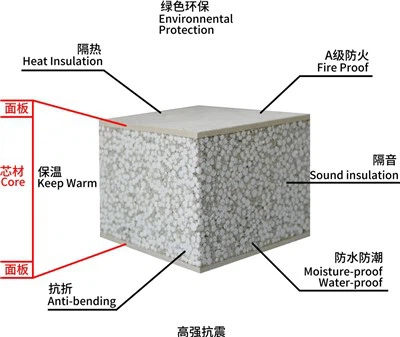
In addition to their anti - static properties, calcium silicate partition walls have many other advantages. They are fire - resistant, which is a must - have in any building. They are also strong and durable, able to withstand normal wear and tear. And they offer good acoustic insulation, which is great for creating a quiet and comfortable environment.
If you're in the market for partition walls and static control is a concern for you, then calcium silicate partition walls are definitely worth considering. Whether you're building a new office, a hospital, or an industrial facility, these walls can provide the protection and performance you need.


I'm here to help you with all your calcium silicate partition wall needs. If you have any questions or want to discuss a specific project, don't hesitate to reach out. I can provide you with more detailed information, samples, and a quote. Let's work together to find the best solution for your building.
References
- Building Materials Handbook: Covers general properties of building materials including calcium silicate.
- Studies on Static Electricity in Buildings: Research on the impact of static charge in different building environments.