
Hey there! As a supplier of EPS Cement Sandwich Panels, I often get asked whether these panels are environmentally friendly. It's a hot - button topic these days, and for good reason. Everyone's trying to do their part for the planet, and building materials play a huge role in that. So, let's dig into this question and see if EPS Cement Sandwich Panels are a green choice.
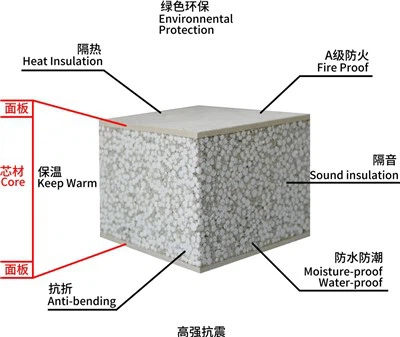
First off, let's talk about what EPS Cement Sandwich Panels are. These panels consist of an expanded polystyrene (EPS) core sandwiched between two layers of cement - based materials. They're used in a variety of construction projects, from residential homes to commercial buildings. You can check out some of our exterior wall options here: Exterior Wall Sandwich Panel.
The Environmental Pros of EPS Cement Sandwich Panels
Energy Efficiency
One of the biggest environmental benefits of EPS Cement Sandwich Panels is their excellent insulation properties. The EPS core acts as a thermal barrier, which means it helps to keep buildings warm in the winter and cool in the summer. When a building is well - insulated, it requires less energy for heating and cooling. This reduction in energy consumption translates to lower greenhouse gas emissions. According to a study by the Building Research Establishment, well - insulated buildings can reduce energy consumption for heating by up to 70%. That's a massive reduction, and it's great news for the environment.
Durability
EPS Cement Sandwich Panels are built to last. They're resistant to weathering, rot, and pests. This durability means that they don't need to be replaced as often as some other building materials. When a material has a long lifespan, it reduces the demand for new materials. Fewer new materials being produced means less energy is used in the manufacturing process, and there's less waste going to landfills. For example, a building with EPS Cement Sandwich Panels can have a service life of 50 years or more, compared to some traditional building materials that may need to be replaced every 10 - 20 years.
Lightweight and Easy to Transport
These panels are relatively lightweight compared to many other building materials. This makes them easier and more fuel - efficient to transport. Less fuel is burned during transportation, which again reduces greenhouse gas emissions. Also, because they're lightweight, they require less heavy - duty equipment for installation, which further cuts down on energy use.
The Environmental Cons of EPS Cement Sandwich Panels
Production of EPS
The production of expanded polystyrene (EPS) is not without its environmental drawbacks. EPS is made from styrene, a petrochemical. The extraction and processing of petrochemicals are energy - intensive processes that contribute to air and water pollution. Additionally, styrene is a known human carcinogen, and there are concerns about its potential release during the production and use of EPS.
Recycling Challenges
While EPS is technically recyclable, it's not always easy to recycle in practice. Many recycling facilities don't have the capacity to handle EPS, and the process of recycling it can be complex and expensive. As a result, a significant amount of EPS waste ends up in landfills. EPS takes a long time to decompose, and it can release harmful chemicals into the environment as it breaks down.


Cement Production
The cement used in the outer layers of the sandwich panels also has an environmental impact. Cement production is responsible for about 8% of global carbon dioxide emissions. The process of making cement involves heating limestone and other materials to very high temperatures, which requires a large amount of energy.
Our Efforts as a Supplier
As a supplier, we're aware of these environmental issues, and we're taking steps to minimize the impact of our products. We're constantly looking for ways to improve the production process of our EPS Cement Sandwich Panels. For example, we're working with our suppliers to source more sustainable materials for the EPS core. Some of these new materials are made from renewable resources, which reduces our reliance on petrochemicals.
We're also promoting the recycling of our products. We're partnering with local recycling facilities to develop better recycling solutions for EPS and cement - based materials. We encourage our customers to return their used panels to us so that we can recycle them properly. You can learn more about our waterproof options here: Waterproof Cement Sandwich Board.
Conclusion
So, is EPS Cement Sandwich Panel environmentally friendly? Well, it's a bit of a mixed bag. On one hand, these panels offer significant environmental benefits in terms of energy efficiency, durability, and reduced transportation emissions. On the other hand, the production of EPS and cement has its environmental drawbacks, and there are challenges with recycling.
Overall, we believe that EPS Cement Sandwich Panels can be a relatively environmentally friendly choice when used in the right way. By using them in energy - efficient building designs and taking steps to recycle them at the end of their life, we can minimize their environmental impact. If you're interested in our 150mm EPS Insulation Board or other EPS Cement Sandwich Panel products, we'd love to talk to you about how they can fit into your next construction project. Whether you're building a small home or a large commercial complex, our panels can offer both environmental and practical benefits.
If you're considering using EPS Cement Sandwich Panels for your next project, don't hesitate to reach out. We're here to answer any questions you might have and to help you make an informed decision. Let's work together to build a more sustainable future.
References
- Building Research Establishment. "Energy Efficiency in Buildings."
- "The Environmental Impact of Cement Production." Journal of Sustainable Construction.
- "Recycling of Expanded Polystyrene (EPS): Challenges and Solutions." Waste Management Journal.