
Hey there! As a supplier of EPS Cement Seismic Panels, I've had a fair share of discussions with clients about the ins and outs of these nifty building materials. Today, I want to dig deep and talk about whether there are any limitations to using EPS Cement Seismic Panels.
What are EPS Cement Seismic Panels?
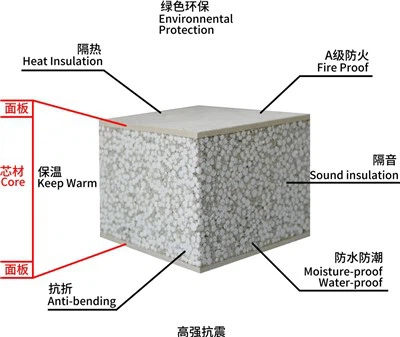
Before we jump into the limitations, let's have a quick refresher. EPS Cement Seismic Panels are composite panels made of expanded polystyrene (EPS) core sandwiched between two cementitious layers. They're known for their excellent insulation properties, lightweight nature, and seismic resistance. These panels have revolutionized the construction industry, making building quicker, more cost - effective, and safer, especially in earthquake - prone areas.
The Upsides First
I mean, there's a reason these panels are so popular. They're super easy to install. You don't need a huge crew or heavy machinery to get them up. They can be cut and shaped on - site with basic tools, which saves a ton of time and money.
In terms of energy efficiency, they're top - notch. The EPS core acts as a great insulator, reducing the need for excessive heating and cooling. This means lower energy bills for building owners in the long run.
And let's not forget about safety. Their seismic resistance is a game - changer. In regions where earthquakes are a real threat, these panels can help buildings withstand the tremors better, protecting lives and property.
So, Are There Any Limitations?
1. Fire Resistance
One of the main limitations is the fire resistance of EPS Cement Seismic Panels. While the cement layers offer some protection, the EPS core is made of polystyrene, which is a combustible material. In a high - intensity fire, the EPS can melt and release toxic gases.
Although manufacturers are constantly working on improving the fire - retardant properties of these panels, it's still something that architects and builders need to be aware of. In some building codes, additional fire - protection measures may be required when using EPS panels. For example, applying fire - resistant coatings or installing fire barriers.
2. Durability in Harsh Environments
In extremely harsh environments, like areas with high humidity, saltwater exposure, or heavy chemical pollution, EPS Cement Seismic Panels may face some durability issues. The cement layers can sometimes crack or deteriorate over time, exposing the EPS core. If the core gets wet, it can lose its structural integrity and insulation properties.


However, if proper maintenance and protective measures are taken, such as regular inspections and applying waterproof coatings, these issues can be mitigated to a large extent.
3. Design Limitations
When it comes to design flexibility, EPS Cement Seismic Panels have a few constraints. They come in standard sizes and shapes, which may not always fit the unique requirements of a complex architectural design. For custom - shaped buildings or structures with intricate details, it can be challenging to use these panels without significant modifications.
But hey, there are ways around this. Some manufacturers offer semi - custom options, where they can cut the panels to specific sizes within certain limits. And with the right engineering, even complex designs can incorporate these panels effectively.
4. Cost - Benefit in Small - Scale Projects
For small - scale construction projects, the cost - benefit ratio of EPS Cement Seismic Panels may not be as favorable. The initial investment in these panels can be a bit higher compared to traditional building materials. Since the real savings in terms of labor and energy efficiency are more pronounced in large - scale projects, smaller projects may not see the same level of return on investment.
However, it's important to consider the long - term benefits, such as reduced maintenance costs and energy savings over the life of the building.
Our Product Range
As a supplier, we offer a wide range of EPS Cement Seismic Panels to suit different needs. We also have related products like the Waterproof EPS Sandwich Panel, which is great for areas where moisture is a concern. Our 120mm Polystyrene Building Panels provide excellent insulation, and our EPS Cement Sandwich Wall Panel is a popular choice for interior and exterior wall construction.
Conclusion
So, to sum it up, while there are some limitations to using EPS Cement Seismic Panels, they can be effectively managed with proper planning, engineering, and maintenance. The benefits of these panels, such as energy efficiency, ease of installation, and seismic resistance, often outweigh the drawbacks.
If you're in the construction industry and thinking about using EPS Cement Seismic Panels for your next project, don't hesitate to reach out. We're here to help you understand how these panels can work for you and address any concerns you may have. Whether you're working on a small residential building or a large commercial complex, we have the expertise and products to support your construction needs. Let's start a conversation and see how we can bring your building project to life.
References
- Building Materials Handbook: A Comprehensive Guide to Construction Materials
- Journal of Seismic Resistant Construction
- Energy Efficiency in Modern Building Materials Research