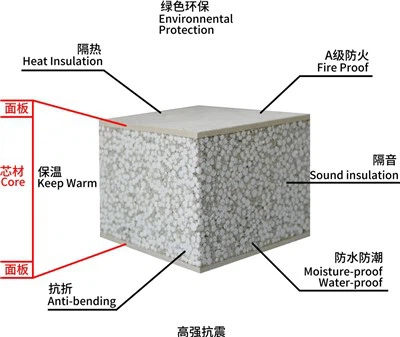

Hey there! As a supplier of Lightweight Partition Wall Panels, I often get asked about the recommended spacing between support studs for these panels. It's a crucial question because getting the spacing right can significantly impact the performance and longevity of your partition walls. In this blog, I'll break down everything you need to know about this topic.
First off, let's understand why support studs are so important. Support studs act as the backbone of your lightweight partition wall panels. They provide the necessary structural support, ensuring that the panels stay in place and can withstand various forces, such as wind pressure, accidental impacts, and even the weight of any fixtures or decorations you might hang on the wall.
Now, the recommended spacing between support studs depends on several factors. One of the most important factors is the type of lightweight partition wall panel you're using. For example, 120mm EPS Wall Panels are quite popular due to their excellent insulation properties and lightweight nature. These panels are relatively sturdy, but they still need proper support.

In general, for 120mm EPS Wall Panels, a spacing of around 400mm to 600mm between support studs is often recommended. This spacing provides a good balance between support and cost - efficiency. If you space the studs too far apart, the panels may not be adequately supported, which could lead to sagging or even damage over time. On the other hand, if you space them too close together, you'll end up using more materials, which can increase the cost of your project.
Another type of panel is the EPS Insulation Panels. These panels are designed primarily for insulation, but they also need to be properly supported. Similar to the 120mm EPS Wall Panels, a spacing of 400mm to 600mm between support studs is usually a good choice. However, if you're using these panels in an area with high wind loads or where there's a higher risk of impact, you might want to consider reducing the spacing to 400mm for added stability.
The Calcium Silicate Cement Board is another option for lightweight partition walls. These boards are known for their fire - resistance and durability. When using Calcium Silicate Cement Boards, a spacing of 600mm between support studs is often sufficient. The boards are relatively rigid, so they can handle a bit more spacing compared to some other types of panels.
But it's not just about the type of panel. The height of the partition wall also plays a role in determining the stud spacing. For shorter walls (up to about 2.4 meters in height), you can usually get away with a slightly wider stud spacing. However, as the height of the wall increases, the panels are subjected to more stress, especially at the top. So, for walls taller than 2.4 meters, it's advisable to reduce the stud spacing to ensure proper support.
The load that the partition wall will bear is yet another factor. If you plan to hang heavy objects on the wall, such as large mirrors or cabinets, you'll need to reduce the stud spacing. This is because the additional weight needs to be distributed evenly across the support structure. A spacing of 400mm or less is often recommended in such cases.
It's also important to consider the local building codes and regulations. Different regions may have specific requirements regarding the spacing of support studs for lightweight partition walls. Make sure you check with your local building authority before starting your project to ensure compliance.
When installing the support studs, it's crucial to use the right materials. The studs should be made of high - quality wood or metal, depending on your preference and the requirements of the project. Wood studs are a popular choice because they're relatively easy to work with and cost - effective. However, metal studs are more resistant to moisture and pests, which can be a significant advantage in some environments.
Proper installation of the support studs is just as important as getting the spacing right. The studs should be installed plumb (perfectly vertical) and level to ensure that the panels fit properly. Any unevenness in the studs can cause the panels to warp or not align correctly, which can affect the overall appearance and performance of the partition wall.
In addition to the spacing between the studs, you also need to pay attention to the connection between the studs and the panels. Make sure you use the appropriate fasteners, such as screws or nails, to secure the panels to the studs. The fasteners should be long enough to penetrate the studs adequately but not so long that they damage the panels.
To sum it up, the recommended spacing between support studs for lightweight partition wall panels varies depending on the type of panel, the height of the wall, the load it will bear, and local building codes. For most common lightweight partition wall panels like 120mm EPS Wall Panels and EPS Insulation Panels, a spacing of 400mm to 600mm is a good starting point. For Calcium Silicate Cement Boards, a spacing of 600mm is often sufficient. However, always adjust the spacing based on the specific requirements of your project.
If you're in the process of planning a project that involves lightweight partition wall panels and you're still unsure about the stud spacing or any other aspect of the installation, don't hesitate to reach out. As a supplier, I have a wealth of experience and can provide you with the guidance you need. Whether you're a DIY enthusiast or a professional contractor, we can work together to ensure that your partition walls are installed correctly and perform well for years to come.
So, if you're interested in purchasing our high - quality lightweight partition wall panels or need more information about the installation process, feel free to contact us. We're here to help you make the right choices for your project.
References
- Building Construction Handbook: This comprehensive handbook provides in - depth information on various construction techniques, including the installation of lightweight partition walls.
- Local Building Codes: As mentioned earlier, local building codes are an important source of information regarding the requirements for support stud spacing. Check with your local building authority for the specific codes in your area.