
As a supplier of exterior wall sandwich panels, I've witnessed firsthand the growing demand for these innovative building materials. One of the most frequently asked questions from our clients is about the impact resistance of exterior wall sandwich panels. In this blog post, I'll delve into this topic, exploring what impact resistance means, how it's measured, and what factors affect it.
Understanding Impact Resistance
Impact resistance refers to a material's ability to withstand sudden forces or impacts without suffering significant damage. In the context of exterior wall sandwich panels, this is crucial for several reasons. Buildings are exposed to various potential sources of impact, such as flying debris during storms, accidental collisions from vehicles or equipment, and even vandalism. A panel with high impact resistance can maintain its structural integrity and appearance, providing long - term protection for the building's interior.
Measuring Impact Resistance
There are several standardized tests used to measure the impact resistance of exterior wall sandwich panels. One common method is the pendulum impact test. In this test, a pendulum with a specific mass and shape is swung against the panel. The height from which the pendulum is released and the resulting damage to the panel are recorded. The test is repeated multiple times at different locations on the panel to ensure consistent results.


Another test is the drop - weight test. A weighted object is dropped from a certain height onto the panel. The height and weight are adjusted based on the type of panel and the expected level of impact in real - world applications. After the impact, the panel is inspected for cracks, dents, or other forms of damage.
Factors Affecting Impact Resistance
Core Material
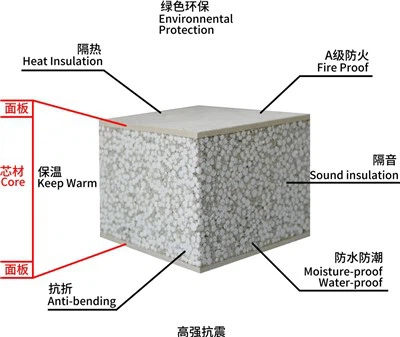
The core material of the sandwich panel plays a significant role in its impact resistance. For example, panels with a EPS Cement Concrete Sandwich Panel core offer good impact resistance. EPS (Expanded Polystyrene) is a lightweight and rigid material that can absorb and distribute impact forces. The cement concrete component adds strength and durability, making the panel more resistant to impacts.
On the other hand, some traditional insulation materials may not provide the same level of impact resistance. For instance, panels with a soft fiberglass core may be more prone to damage from impacts as the fiberglass may not be able to withstand the sudden force as effectively.
Face Sheets
The face sheets of the sandwich panel also contribute to its impact resistance. Metal face sheets, such as steel or aluminum, are known for their high strength and durability. They can act as a shield, protecting the core material from direct impacts. The thickness and quality of the face sheets are important factors. Thicker face sheets generally offer better impact resistance, but they also increase the weight and cost of the panel.
Composite face sheets, which combine different materials, can also provide excellent impact resistance. For example, a face sheet made of a combination of fiberglass and resin can offer a good balance between strength and weight.
Panel Design
The design of the panel, including its size, shape, and connection details, can affect its impact resistance. Larger panels may be more vulnerable to impacts as they have a larger surface area exposed. However, proper reinforcement and support can mitigate this risk.
The connection between the face sheets and the core material is also crucial. A strong bond ensures that the panel behaves as a single unit during an impact, distributing the force evenly throughout the structure. If the bond is weak, the face sheets may delaminate from the core, reducing the panel's impact resistance.
Benefits of High - Impact Resistance Panels
Enhanced Durability
Panels with high impact resistance are more durable and can last longer. They can withstand the wear and tear of daily use and environmental factors, reducing the need for frequent repairs or replacements. This is especially important for commercial and industrial buildings, where the exterior walls are exposed to heavy traffic and potential impacts.
Improved Safety
In the event of an impact, high - impact resistance panels can prevent the spread of damage. They can contain the impact within the panel itself, reducing the risk of debris falling and causing harm to people or property inside the building. This is a critical safety feature, especially in areas prone to natural disasters or high - risk environments.
Aesthetic Appeal
Panels that can resist impacts are more likely to maintain their aesthetic appearance over time. They won't develop unsightly dents or cracks, ensuring that the building looks its best for years to come. This is important for buildings where the exterior appearance is a key factor, such as retail stores or office buildings.
Applications of Exterior Wall Sandwich Panels with Good Impact Resistance
Industrial Buildings
Industrial facilities are often exposed to heavy machinery, forklifts, and other potential sources of impact. Exterior wall sandwich panels with high impact resistance are ideal for these buildings as they can protect the interior from damage and maintain the structural integrity of the building.
Commercial Buildings
Commercial buildings, such as shopping malls and warehouses, also benefit from impact - resistant panels. They can withstand the impact of vehicles, foot traffic, and even accidental collisions, ensuring that the building remains functional and attractive.
Residential Buildings
In residential construction, impact - resistant exterior wall sandwich panels can provide an extra layer of protection. They can withstand the impact of flying debris during storms or accidental collisions from lawn equipment, enhancing the safety and durability of the home.
Our Product Range
At our company, we offer a wide range of exterior wall sandwich panels with excellent impact resistance. Our EPS Partition Wall Panel is a popular choice for both commercial and residential applications. It combines the lightweight and insulating properties of EPS with the strength and durability of high - quality face sheets.
We also have 200mm Thickness EPS Wall Panels that provide enhanced impact resistance. The thicker core and robust face sheets make these panels suitable for high - risk environments and buildings that require extra protection.
Conclusion
The impact resistance of exterior wall sandwich panels is a critical factor to consider when choosing building materials. It affects the durability, safety, and aesthetic appeal of the building. By understanding the factors that influence impact resistance and choosing the right panels for your project, you can ensure that your building is well - protected and built to last.
If you're interested in learning more about our exterior wall sandwich panels or have specific requirements for your project, we'd love to hear from you. Contact us to start a discussion about your procurement needs and find the best solution for your building.
References
- ASTM International. (20XX). Standard Test Methods for Impact Resistance of Building Wall Assemblies and Single - Wall Panels.
- European Committee for Standardization. (20XX). EN XXXX: Test methods for the determination of impact resistance of exterior wall sandwich panels.
- Building Science Corporation. (20XX). Research on the performance of exterior wall sandwich panels under impact loads.