
As a supplier of Fireproof Partition Wall Panels, I've witnessed firsthand the growing demand for reliable fire - prevention solutions in various construction projects. In this blog, I'll delve into the fire - proof mechanism of these essential building materials.
Understanding the Basics of Fire Resistance
Before we explore the specific mechanisms of fireproof partition wall panels, it's crucial to understand what fire resistance means. Fire resistance is the ability of a material or structure to withstand fire and prevent its spread for a specified period. This is measured in terms of time, such as 30 minutes, 60 minutes, or more, depending on the requirements of the building code.
The primary goals of fireproof partition wall panels are to contain the fire within a specific area, protect the structural integrity of the building, and provide sufficient time for occupants to evacuate safely.
Components of Fireproof Partition Wall Panels
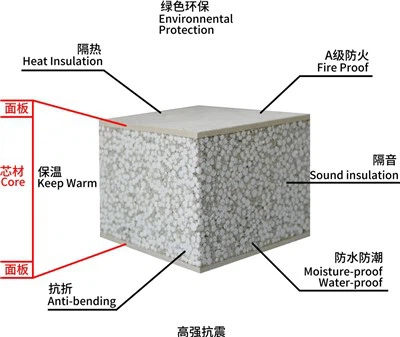
Most fireproof partition wall panels are composite structures, composed of several layers with different functions. These layers work together to achieve the desired fire - proof performance.
Fire - Resistant Core Materials
One of the key components of fireproof partition wall panels is the fire - resistant core material. Materials such as calcium silicate, gypsum, and mineral wool are commonly used.
Calcium silicate is a non - combustible material with excellent thermal insulation properties. It can withstand high temperatures without significant deformation or decomposition. When exposed to fire, calcium silicate forms a protective layer on its surface, which slows down the transfer of heat to the other side of the panel.
Gypsum is another popular choice for fire - resistant cores. It contains a large amount of water in its crystal structure. When heated, the water is released as steam, absorbing a significant amount of heat in the process. This endothermic reaction helps to cool the panel and prevent the spread of fire.
Mineral wool, made from natural or synthetic minerals, is also highly effective in fire prevention. It has a low thermal conductivity, which means it can slow down the transfer of heat. Additionally, mineral wool is non - combustible and can withstand high temperatures for extended periods.
Protective Layers
In addition to the fire - resistant core, fireproof partition wall panels often have protective layers on both sides. These layers can be made of materials such as metal, fiberglass, or cement - based composites.
Metal layers, such as steel or aluminum, provide mechanical strength and can act as a barrier against the physical impact of fire. They also reflect heat, reducing the amount of heat absorbed by the core material.
Fiberglass layers are lightweight and have good thermal insulation properties. They can also enhance the fire - resistance of the panel by preventing the spread of flames and hot gases.
Cement - based composite layers are durable and can provide additional protection against fire. They are often used in combination with other materials to improve the overall performance of the panel.

The Fire - Proof Mechanism in Action
When a fire occurs, the fireproof partition wall panel goes through several stages of response.

Initial Stage: Heat Absorption
In the initial stage of a fire, the panel starts to absorb heat from the flames. The fire - resistant core material, such as calcium silicate, gypsum, or mineral wool, plays a crucial role in this process. As mentioned earlier, gypsum releases water as steam, which absorbs a large amount of heat. Mineral wool and calcium silicate, on the other hand, have low thermal conductivity, which slows down the heat transfer.
Middle Stage: Formation of a Protective Barrier
As the temperature rises, the protective layers of the panel start to play their part. The metal layer reflects heat, reducing the heat load on the core. The fiberglass or cement - based composite layer helps to prevent the spread of flames and hot gases. At the same time, the fire - resistant core material may undergo chemical changes, forming a protective char layer on its surface. This char layer acts as an additional barrier, further slowing down the heat transfer.
Final Stage: Maintaining Structural Integrity
In the final stage of the fire, the panel must maintain its structural integrity to prevent the collapse of the partition. The combination of the fire - resistant core and the protective layers ensures that the panel can withstand the high temperatures and mechanical stress caused by the fire for a specified period. This gives the occupants more time to evacuate and the firefighters more time to control the fire.
Applications and Advantages of Fireproof Partition Wall Panels
Fireproof partition wall panels are widely used in various buildings, including commercial buildings, residential buildings, industrial facilities, and public buildings.
In commercial buildings, such as offices and shopping malls, fireproof partition wall panels can be used to separate different areas, such as offices, stores, and corridors. This helps to prevent the spread of fire and smoke, protecting the lives and property of the occupants.
In residential buildings, fireproof partition wall panels can be used to create fire - resistant rooms, such as bedrooms and living rooms. This provides an extra layer of safety for the residents.
In industrial facilities, fireproof partition wall panels can be used to separate different production areas, storage areas, and control rooms. This helps to prevent the spread of fire in case of an accident, reducing the damage to the equipment and the environment.
In public buildings, such as schools, hospitals, and theaters, fireproof partition wall panels are essential for ensuring the safety of the large number of people who use these buildings.
The advantages of fireproof partition wall panels are numerous. They not only provide excellent fire - prevention performance but also have good sound insulation and thermal insulation properties. For example, our Soundproof EPS Sandwich Panel combines fire - resistance with sound - proofing capabilities, making it an ideal choice for buildings where both fire safety and acoustic comfort are important.
Our 150mm EPS Insulation Board offers high - level thermal insulation, which can help to reduce energy consumption in buildings. And our EPS Insulation Panels are lightweight, easy to install, and cost - effective, making them a popular choice for many construction projects.
Conclusion
In conclusion, the fire - proof mechanism of fireproof partition wall panels is a complex process that involves the interaction of different materials and layers. By understanding how these panels work, architects, engineers, and building owners can make informed decisions when choosing fire - prevention solutions for their projects.
If you're interested in our fireproof partition wall panels or other related products, we encourage you to contact us for more information and to discuss your specific requirements. Our team of experts is ready to provide you with professional advice and high - quality products to meet your needs.
References
- "Fire Resistance of Building Materials and Structures" - National Fire Protection Association
- "Building Construction and Fire Protection" - Society of Fire Protection Engineers
- "Thermal Insulation Materials and Systems" - ASTM International