
As a supplier of EPS Cement Sandwich Wall Panels, I often encounter inquiries from customers in coastal areas regarding the suitability of our products for their construction projects. Coastal regions present unique environmental challenges, such as high humidity, saltwater exposure, and strong winds. In this blog post, I will explore whether EPS Cement Sandwich Wall Panels can be effectively used in coastal areas, taking into account these specific environmental factors.
Understanding EPS Cement Sandwich Wall Panels
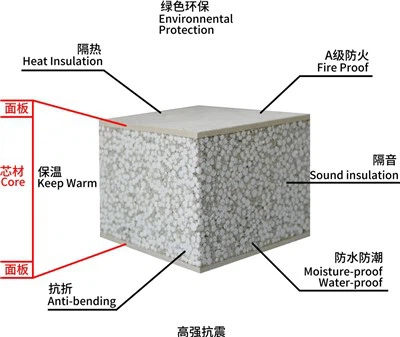
EPS Cement Sandwich Wall Panels are composite building materials that consist of an expanded polystyrene (EPS) core sandwiched between two layers of cement boards. The EPS core provides excellent insulation properties, while the cement boards offer structural strength and durability. These panels are prefabricated in a factory, which allows for precise manufacturing and quality control. They are lightweight, easy to install, and can significantly reduce construction time and costs.

One of the key advantages of EPS Cement Sandwich Wall Panels is their high thermal insulation performance. The EPS core has a low thermal conductivity, which helps to keep the interior of a building cool in the summer and warm in the winter. This can lead to significant energy savings and a more comfortable living or working environment. Additionally, the panels are fire-resistant, soundproof, and have good seismic resistance, making them a popular choice for a wide range of construction projects.
Challenges in Coastal Areas
Coastal areas are characterized by a harsh and corrosive environment. The high humidity and saltwater exposure can cause corrosion and degradation of building materials over time. Saltwater contains chloride ions, which can penetrate the surface of concrete and steel, leading to rust and structural damage. Strong winds and storms are also common in coastal regions, which can exert significant pressure on buildings and cause damage to exterior walls.
Another challenge in coastal areas is the risk of flooding. Rising sea levels and storm surges can lead to water intrusion into buildings, which can cause damage to the interior finishes and electrical systems. In addition, the presence of saltwater in the floodwater can accelerate the corrosion of building materials.
Suitability of EPS Cement Sandwich Wall Panels in Coastal Areas
Despite the challenges posed by the coastal environment, EPS Cement Sandwich Wall Panels can be a viable option for construction in these areas. The cement boards used in these panels are typically made of high-quality materials that are resistant to moisture and corrosion. They are also treated with special coatings or additives to enhance their durability and resistance to saltwater.
The EPS core of the panels is also relatively resistant to moisture and can provide additional insulation against the cold and dampness associated with coastal climates. However, it is important to ensure that the panels are properly installed and sealed to prevent water intrusion. This can be achieved by using high-quality sealants and flashing around the edges of the panels and at all joints and penetrations.

In terms of wind resistance, EPS Cement Sandwich Wall Panels are designed to be structurally strong and can withstand high wind loads. They are typically installed using a framing system that provides additional support and stability. However, it is important to consult with a structural engineer to ensure that the panels are designed and installed to meet the specific wind load requirements of the coastal area.
Protective Measures
To ensure the long-term performance of EPS Cement Sandwich Wall Panels in coastal areas, it is recommended to take the following protective measures:
- Surface Coatings: Apply a high-quality waterproof and anti-corrosion coating to the exterior surface of the panels. This can help to protect the panels from saltwater exposure and prevent the growth of mold and mildew.
- Proper Drainage: Ensure that the building has a proper drainage system in place to prevent water from pooling around the foundation and walls. This can help to reduce the risk of water intrusion and damage to the panels.
- Regular Maintenance: Conduct regular inspections of the panels to check for any signs of damage or deterioration. Repair any cracks or damage promptly to prevent further problems.
- Elevated Construction: Consider elevating the building above the flood level to reduce the risk of water damage. This can be achieved by using a raised foundation or pilings.
Case Studies
There are several successful examples of using EPS Cement Sandwich Wall Panels in coastal areas. For instance, a residential project in a coastal town used 100mm Prefabricated Insulated Wall Panels for its exterior walls. After several years of exposure to the coastal environment, the panels showed minimal signs of damage or deterioration. The homeowners reported significant energy savings due to the excellent insulation properties of the panels.
Another project, a commercial building near the coast, utilized Lightweight Foaming Partition Panel for its interior partitions. The panels provided good sound insulation and were easy to install. The building's management was satisfied with the performance of the panels, especially considering the humid coastal climate.

Conclusion
In conclusion, EPS Cement Sandwich Wall Panels can be used in coastal areas with proper planning and protective measures. The panels offer several advantages, such as excellent insulation, structural strength, and ease of installation. However, it is important to address the specific challenges posed by the coastal environment, such as high humidity, saltwater exposure, and strong winds. By taking the necessary precautions and using high-quality materials, these panels can provide a durable and cost-effective solution for construction in coastal regions.
If you are considering using EPS Cement Sandwich Wall Panels for your coastal construction project, I encourage you to contact us for more information. Our team of experts can provide you with detailed technical specifications, installation guidelines, and cost estimates. We are committed to providing high-quality products and excellent customer service. Let's discuss your project requirements and find the best solution for your needs.
References
- ASTM International. (2023). Standard Specification for Structural Insulated Panels for Building Construction. ASTM C1289.
- National Association of Home Builders. (2022). Coastal Construction Manual.
- Building Science Corporation. (2021). Moisture Control in Coastal Buildings.