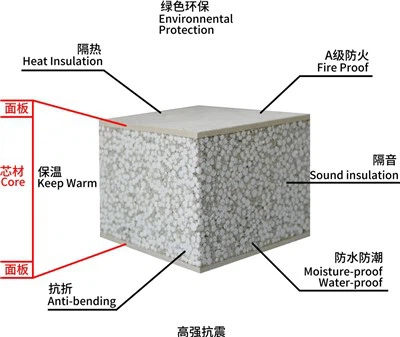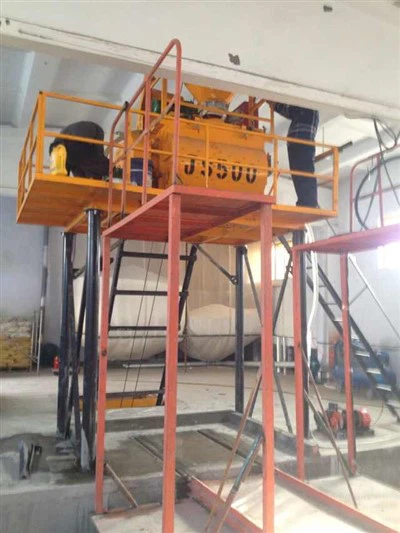

Hey there! As a supplier of Fiber Cement Board Equipment, I often get asked about the elasticity modulus of products made by our machines. So, I thought I'd take a moment to break it down for you.


First off, let's talk about what the elasticity modulus is. In simple terms, it's a measure of how much a material will deform under stress. Think of it like this: if you push on a rubber ball, it'll squish a lot. That's because rubber has a low elasticity modulus. On the other hand, if you push on a steel rod, it won't deform much at all. That's because steel has a high elasticity modulus.
Now, when it comes to fiber cement boards, the elasticity modulus is an important property. It affects how the boards will perform in different applications. For example, if you're using fiber cement boards for roofing, you want them to have a high enough elasticity modulus to withstand the weight of snow and other loads without cracking or breaking.
So, what factors affect the elasticity modulus of fiber cement boards? Well, there are a few. One of the most important is the type of fibers used in the board. Different fibers have different mechanical properties, which can affect the overall elasticity modulus of the board. For example, cellulose fibers are relatively flexible, while glass fibers are stiffer. So, a board made with glass fibers will generally have a higher elasticity modulus than a board made with cellulose fibers.
Another factor that affects the elasticity modulus is the density of the board. Generally speaking, the higher the density of the board, the higher the elasticity modulus. This is because a denser board has more material packed into a given volume, which makes it stiffer and less likely to deform under stress.
The manufacturing process also plays a role in determining the elasticity modulus of fiber cement boards. For example, the way the fibers are distributed in the board can affect its mechanical properties. If the fibers are evenly distributed, the board will have more consistent mechanical properties, including a more uniform elasticity modulus.
Now, let's talk about how our Fiber Cement Board Equipment can help you produce boards with the desired elasticity modulus. Our equipment is designed to give you precise control over the manufacturing process, which allows you to optimize the properties of the boards you produce.
We use advanced mixing and forming technologies to ensure that the fibers are evenly distributed throughout the board. This helps to create a board with consistent mechanical properties, including a more uniform elasticity modulus.
Our equipment also allows you to adjust the density of the board. By controlling the amount of material used and the pressure applied during the manufacturing process, you can produce boards with different densities to meet the specific requirements of your application.
In addition to fiber cement boards, we also offer other related products and equipment. For example, if you're interested in producing sandwich panels, we have the EPS Sandwich Panel Machine. This machine is designed to produce high-quality sandwich panels with excellent insulation properties.
If you're looking for equipment to produce partition panels, we have the Partition Panel Production Equipment. This equipment allows you to produce partition panels with different sizes and thicknesses to meet the needs of your construction projects.
And if you're interested in a complete production line for EPS cement sandwich panels, we offer the EPS Cement Sandwich Panel Production Line. This production line is designed to streamline the manufacturing process and increase production efficiency.
So, if you're in the market for Fiber Cement Board Equipment or any of our other products, we'd love to hear from you. Whether you're a small-scale manufacturer or a large construction company, we can provide you with the equipment and support you need to produce high-quality products.
Don't hesitate to reach out to us if you have any questions or if you'd like to discuss your specific requirements. We're here to help you succeed in your business.
In conclusion, understanding the elasticity modulus of fiber cement boards is crucial for ensuring their performance in different applications. Our Fiber Cement Board Equipment is designed to help you produce boards with the desired elasticity modulus and other mechanical properties. And with our other related products and equipment, we can offer you a comprehensive solution for your manufacturing needs.
References:
- "Materials Science and Engineering: An Introduction" by William D. Callister Jr. and David G. Rethwisch
- "Handbook of Fiber - Reinforced Concrete" by V. C. Li and K. H. Tan