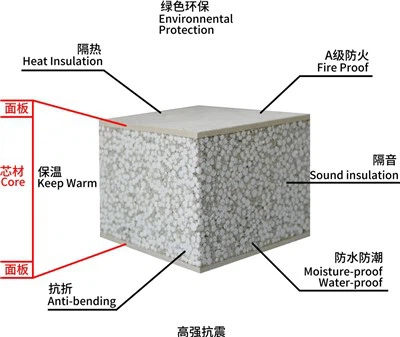

Calcium Silicate Cement Board, a versatile and durable building material, has gained significant popularity in the construction industry. As a supplier of Calcium Silicate Cement Board, I understand the importance of using the right drill bits to ensure efficient and high - quality installation. In this blog, I will recommend several types of drill bits that are well - suited for working with Calcium Silicate Cement Board.
Understanding Calcium Silicate Cement Board
Before delving into the recommended drill bits, it's essential to understand the properties of Calcium Silicate Cement Board. This board is made from a mixture of calcium silicate, cement, and other additives. It offers excellent fire resistance, moisture resistance, and mechanical strength. However, its dense and hard nature can pose challenges when drilling, which is why choosing the appropriate drill bits is crucial.
Types of Drill Bits for Calcium Silicate Cement Board
1. Carbide - Tipped Drill Bits
Carbide - tipped drill bits are a top choice for drilling Calcium Silicate Cement Board. Carbide is an extremely hard material, typically made of tungsten carbide particles bonded together with a metal binder. This hardness allows the drill bit to cut through the dense board with relative ease.
The sharp cutting edges of carbide - tipped drill bits can maintain their sharpness for a long time, even when drilling through tough materials like Calcium Silicate Cement Board. They can produce clean holes with minimal chipping or cracking on the surface of the board. When using carbide - tipped drill bits, it's important to use a slow to moderate drilling speed to prevent overheating, which can damage the carbide tips.
2. Masonry Drill Bits
Masonry drill bits are designed specifically for drilling into hard materials such as brick, concrete, and stone. They are also well - suited for Calcium Silicate Cement Board due to its similar hard and dense properties.
These drill bits usually have a carbide or diamond - tipped point, which helps to penetrate the board effectively. The flutes on masonry drill bits are designed to remove the debris generated during drilling, ensuring smooth and efficient operation. However, it's important to note that masonry drill bits may require more pressure to drill through the board compared to carbide - tipped drill bits.
3. Diamond - Coated Drill Bits
Diamond - coated drill bits are another excellent option for drilling Calcium Silicate Cement Board. Diamond is the hardest known material, and the diamond coating on the drill bit provides exceptional cutting performance.
These drill bits can cut through the board quickly and precisely, leaving a clean and smooth hole. They are especially useful when drilling large - diameter holes or when a high level of accuracy is required. However, diamond - coated drill bits are relatively expensive compared to other types of drill bits.
Factors to Consider When Choosing Drill Bits
1. Hole Size
The size of the hole you need to drill is an important factor in choosing the right drill bit. For small holes (less than 1/4 inch in diameter), carbide - tipped or masonry drill bits with a small diameter can be used. For larger holes, diamond - coated drill bits or larger - sized carbide - tipped drill bits may be more appropriate.
2. Drilling Equipment
The type of drilling equipment you are using also matters. If you are using a handheld drill, you may prefer drill bits that are lightweight and easy to handle. For more heavy - duty drilling tasks, such as drilling multiple holes in a large area, a drill press may be more suitable, and you can choose drill bits that are compatible with the drill press.
3. Cost
Cost is always a consideration when choosing drill bits. Carbide - tipped drill bits are a cost - effective option that offers good performance for most drilling tasks. Masonry drill bits are also relatively affordable, while diamond - coated drill bits are more expensive but offer superior cutting performance.
Tips for Drilling Calcium Silicate Cement Board
1. Mark the Drilling Points
Before drilling, use a pencil or marker to mark the exact locations where you want to drill the holes. This will ensure accuracy and prevent mistakes.


2. Use a Pilot Hole
For larger holes, it's recommended to start with a pilot hole. A pilot hole is a small - diameter hole that serves as a guide for the larger drill bit. This helps to prevent the drill bit from wandering and ensures a more precise hole.
3. Apply Moderate Pressure
When drilling, apply moderate pressure to the drill. Too much pressure can cause the drill bit to overheat or break, while too little pressure may result in slow drilling and poor hole quality.
4. Cool the Drill Bit
To prevent the drill bit from overheating, especially when drilling multiple holes, you can periodically stop and let the drill bit cool down. You can also use a coolant or lubricant to reduce friction and heat.
Related Products
As a supplier of Calcium Silicate Cement Board, we also offer other related products such as EPS Cement Sandwich Panel, Waterproof Cement Sandwich Board, and EPS Partition Wall Panel. These products are designed to meet various construction needs and can be used in conjunction with Calcium Silicate Cement Board for a more comprehensive building solution.
Conclusion
Choosing the right drill bits for Calcium Silicate Cement Board is essential for a successful drilling operation. Carbide - tipped drill bits, masonry drill bits, and diamond - coated drill bits are all good options, each with its own advantages. By considering factors such as hole size, drilling equipment, and cost, you can select the most suitable drill bits for your specific needs.
If you are interested in purchasing Calcium Silicate Cement Board or any of our related products, please feel free to contact us for more information and to discuss your procurement requirements. We are committed to providing high - quality products and excellent customer service.
References
- Building Materials Handbook: A Comprehensive Guide to Construction Materials, John Wiley & Sons
- Drilling Techniques for Hard and Abrasive Materials, American Society of Civil Engineers