
How does the insulation of EPS sandwich panels change over time?
As a supplier of EPS sandwich panels, I've witnessed firsthand the growing popularity of these panels in various construction projects. EPS (Expanded Polystyrene) sandwich panels are known for their excellent insulation properties, lightweight nature, and cost - effectiveness. However, a common question that often arises from our clients is how the insulation of EPS sandwich panels changes over time. In this blog, I'll delve into this topic, exploring the factors that influence the long - term insulation performance of EPS sandwich panels.
Initial Insulation Performance of EPS Sandwich Panels
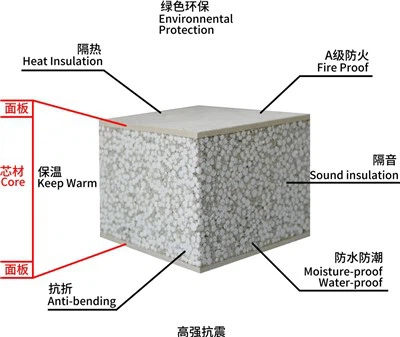
EPS sandwich panels are composed of an EPS core sandwiched between two outer layers, which can be made of materials like metal, cement, or calcium silicate. The EPS core is a closed - cell foam material, which provides high thermal resistance. When the panels are newly installed, they offer outstanding insulation capabilities.
The insulation performance of a material is typically measured by its thermal conductivity, expressed in W/(m·K). EPS has a very low thermal conductivity, usually ranging from 0.033 to 0.041 W/(m·K). This low value means that it is difficult for heat to transfer through the EPS core, making it an ideal insulation material. For example, in a building where energy efficiency is a priority, using 90mm EPS Concrete Sandwich Board can significantly reduce the heat transfer between the interior and exterior, leading to lower energy consumption for heating and cooling.
Factors Affecting the Long - Term Insulation Performance
1. Environmental Conditions
One of the most significant factors that can affect the insulation of EPS sandwich panels over time is the environmental conditions in which they are installed. Exposure to high humidity and moisture can have a detrimental impact on the insulation performance. EPS is a hydrophobic material, which means it repels water to some extent. However, if the panels are continuously exposed to water, moisture can gradually penetrate the EPS core.
Moisture in the EPS core increases its thermal conductivity because water has a much higher thermal conductivity than air trapped in the closed - cell structure of EPS. As a result, the insulation efficiency of the panel decreases. For instance, in coastal areas where the air is humid and there is a high risk of saltwater exposure, the long - term insulation performance of EPS sandwich panels may be more affected compared to arid regions.
2. Physical Damage
Physical damage to the EPS sandwich panels can also lead to a change in insulation performance. If the outer layers of the panel are scratched, dented, or punctured, it can expose the EPS core to the external environment. Once the EPS core is exposed, it becomes more vulnerable to moisture ingress and mechanical damage.
For example, during construction or maintenance work, if the panels are accidentally hit by heavy equipment, the integrity of the outer layers may be compromised. This can allow air and moisture to enter the EPS core, reducing its insulation effectiveness. Regular inspections and proper handling of the panels during installation and use are crucial to prevent physical damage.
3. Aging of the EPS Material
Like all materials, EPS undergoes a natural aging process over time. The chemical and physical properties of EPS can change gradually due to factors such as oxidation, UV radiation, and temperature fluctuations. Oxidation can cause the EPS cells to break down, leading to a reduction in the closed - cell structure that provides insulation.
UV radiation from sunlight can also degrade the EPS material, especially if the panels are not properly protected. Prolonged exposure to sunlight can cause the surface of the EPS to become brittle and discolored. Temperature fluctuations can cause the EPS to expand and contract, which may lead to internal stress and eventually damage the cell structure. However, modern EPS sandwich panels are often treated with additives to improve their resistance to aging. For example, some panels are coated with UV - resistant materials to protect the EPS core from sunlight damage.
Monitoring and Maintaining the Insulation Performance
To ensure the long - term insulation performance of EPS sandwich panels, it is essential to monitor and maintain them regularly. Here are some recommended practices:
1. Visual Inspections
Regular visual inspections of the EPS sandwich panels can help detect any signs of physical damage, such as cracks, scratches, or discoloration on the outer layers. If any damage is found, it should be repaired immediately to prevent further deterioration of the insulation performance.
2. Moisture Testing
Periodic moisture testing of the panels can be carried out to check for moisture ingress. There are various moisture meters available in the market that can be used to measure the moisture content of the EPS core. If the moisture content is found to be higher than normal, appropriate measures should be taken to dry the panels and address the source of moisture.
3. Protection from the Environment
Proper protection of the EPS sandwich panels from the environment can significantly extend their insulation lifespan. This can include installing the panels in a well - ventilated area to reduce humidity, using waterproof coatings on the outer layers, and providing shading to protect the panels from direct sunlight.
Comparison with Other Insulation Materials
When considering the long - term insulation performance of EPS sandwich panels, it is also useful to compare them with other insulation materials. For example, Calcium Silicate Partition Wall and Fireproof EPS Fiber Cement Sandwich Panel are also popular in the construction industry.
Calcium silicate partition walls are known for their high fire resistance and good insulation properties. They are less affected by moisture compared to EPS sandwich panels, but they are generally heavier and more expensive. Fireproof EPS fiber cement sandwich panels combine the fire - resistant properties of fiber cement with the insulation capabilities of EPS. They offer a good balance between fire protection and insulation, but their long - term insulation performance is also subject to the same factors as traditional EPS sandwich panels.
Conclusion
In conclusion, the insulation performance of EPS sandwich panels can change over time due to various factors such as environmental conditions, physical damage, and aging of the EPS material. However, with proper installation, regular maintenance, and protection from the environment, the panels can maintain a relatively stable insulation performance for a long time.


As a supplier of EPS sandwich panels, we are committed to providing high - quality products and offering professional advice on installation and maintenance. If you are interested in our EPS sandwich panels or have any questions about their long - term insulation performance, please feel free to contact us for procurement and further discussion.
References
- ASTM International. "Standard Test Method for Steady - State Thermal Transmission Properties by Means of the Heat Flow Meter Apparatus." ASTM C518.
- Building Research Establishment. "Insulation Materials: Properties and Performance." BRE Report.
- National Institute of Standards and Technology. "Thermal Properties of Building Materials and Envelope Systems." NIST Handbook.