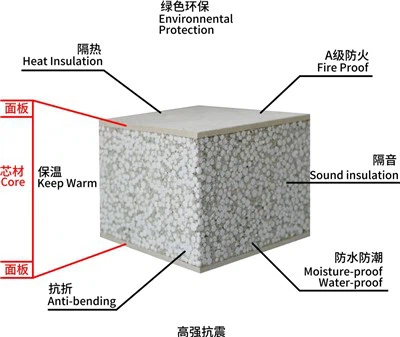

EPS partition wall panels have gained significant popularity in the construction industry due to their numerous advantages, such as lightweight, easy installation, and cost - effectiveness. As a supplier of EPS partition wall panels, I am often asked about their impact on indoor air quality. In this blog, I will explore how EPS partition wall panels affect indoor air quality from multiple aspects.
1. Material Composition and Emissions
EPS, or expanded polystyrene, is the core material of EPS partition wall panels. It is a thermoplastic polymer made from styrene monomers. During the manufacturing process of EPS, strict quality control measures are usually in place to ensure that the final product meets relevant safety standards.
In general, well - manufactured EPS partition wall panels have very low volatile organic compound (VOC) emissions. VOCs are a group of chemicals that can evaporate into the air at room temperature and may cause various health problems, including headaches, dizziness, and irritation of the eyes, nose, and throat. High - quality EPS materials are chemically stable and do not release significant amounts of VOCs over time.
However, it is important to note that if the EPS panels are produced with sub - standard raw materials or under improper manufacturing conditions, there may be a risk of higher VOC emissions. For example, some low - cost EPS products may contain residual styrene monomers or other additives that can slowly volatilize into the indoor air. As a responsible supplier, we ensure that our EPS partition wall panels are produced using high - quality raw materials and advanced manufacturing techniques to minimize VOC emissions.
2. Insulation Properties and Air Quality
One of the key features of EPS partition wall panels is their excellent insulation properties. Good insulation helps to maintain a stable indoor temperature and reduce the need for excessive heating or cooling. This has a positive impact on indoor air quality in several ways.
Firstly, by reducing the energy consumption for heating and cooling, EPS partition wall panels can decrease the amount of outdoor air pollutants that are drawn into the building through ventilation systems. For instance, in areas with high levels of particulate matter or industrial pollutants, less outdoor air intake means less exposure to these harmful substances indoors.
Secondly, stable indoor temperatures can prevent the growth of mold and mildew. Mold and mildew thrive in warm, damp environments, and their presence can release spores and mycotoxins into the air, which are known to cause respiratory problems, allergies, and other health issues. The insulation provided by EPS partition wall panels helps to keep the indoor environment dry and less conducive to mold growth.
3. Fire Resistance and Air Quality
Fire safety is an important consideration in any building. Some EPS partition wall panels are designed with enhanced fire - resistant properties. For example, our Fireproof Partition Wall Panel is engineered to meet strict fire - safety standards.


In the event of a fire, fire - resistant EPS partition wall panels can slow down the spread of flames and smoke. Smoke is a major source of indoor air pollution during a fire, as it contains a complex mixture of toxic gases, such as carbon monoxide, nitrogen oxides, and particulate matter. By preventing or delaying the spread of smoke, fire - resistant EPS panels can help to protect the health of building occupants and reduce the impact of fire - related air pollution on the indoor environment.
4. Sound Insulation and Air Quality
EPS partition wall panels also offer good sound insulation properties. While sound insulation may not seem directly related to air quality, it can have an indirect impact.
A quiet indoor environment is beneficial for the overall well - being of occupants. When people are exposed to excessive noise, it can cause stress, which may weaken the immune system. A weakened immune system makes individuals more susceptible to respiratory infections and other health problems that can be related to poor indoor air quality. Additionally, good sound insulation can reduce the need for open windows to block out external noise. This helps to maintain a more controlled indoor environment and prevent the entry of outdoor pollutants.
5. Installation and Maintenance
Proper installation and maintenance of EPS partition wall panels are crucial for ensuring good indoor air quality. During the installation process, it is important to seal the joints and edges of the panels properly to prevent air leakage. Air leakage can allow outdoor pollutants to enter the building and also lead to energy inefficiencies.
Regular maintenance of the panels is also necessary. For example, if the panels are damaged or cracked, they should be repaired or replaced promptly. Damaged panels may not provide effective insulation or protection against moisture, which can lead to mold growth and other air - quality issues.
6. Comparison with Other Partition Wall Materials
When comparing EPS partition wall panels with other partition wall materials, such as traditional brick or concrete walls, EPS panels have some unique advantages in terms of indoor air quality.
Traditional brick and concrete walls are heavy and may require more energy for construction and transportation. They also have relatively poor insulation properties compared to EPS panels. As a result, buildings with brick or concrete partitions may need more energy for heating and cooling, which can increase the intake of outdoor pollutants.
Another alternative is Foam Concrete Cement Sandwich Panel. While foam concrete cement sandwich panels also offer good insulation and structural properties, EPS partition wall panels are generally lighter and easier to install. The lightweight nature of EPS panels reduces the load on the building structure and can also lead to cost savings in construction.
EPS Cement Seismic Panel is another option that combines the seismic resistance of cement with the insulation properties of EPS. These panels are suitable for areas prone to earthquakes and can also contribute to a good indoor air quality environment similar to other EPS - based products.
7. Conclusion and Call to Action
In conclusion, EPS partition wall panels can have a positive impact on indoor air quality when they are produced, installed, and maintained properly. Their low VOC emissions, excellent insulation, fire - resistant, and sound - insulation properties all contribute to creating a healthier indoor environment.
As a leading supplier of EPS partition wall panels, we are committed to providing high - quality products that meet the highest standards of indoor air quality. Our products are not only environmentally friendly but also offer excellent performance in terms of insulation, fire safety, and soundproofing.
If you are interested in improving the indoor air quality of your building or are looking for a reliable partition wall solution, we invite you to contact us for more information. Our team of experts is ready to assist you in selecting the most suitable EPS partition wall panels for your project and to answer any questions you may have. Let's work together to create a healthier and more comfortable indoor environment.
References
- ASTM International. Standard test methods for determining the emission rate of volatile organic compounds from indoor materials/products using small environmental chambers. ASTM D5116 - 10.
- World Health Organization. Guidelines for indoor air quality: Dampness and mold.
- US Environmental Protection Agency. Indoor air quality guide for building owners and facility managers.