
Hey there! As a supplier of waterproof cement sandwich boards, I often get asked this question: "Does waterproof cement sandwich board emit any harmful substances?" Well, let's dive right into it and break it down.
What is a Waterproof Cement Sandwich Board?
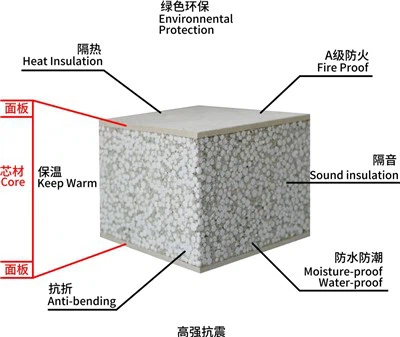
First off, you gotta know what we're talking about. A waterproof cement sandwich board is basically a composite material. It consists of two outer layers of cement-based materials and a middle core. The core can be made from different stuff, like foam concrete or polystyrene.
For instance, our Foam Concrete Cement Sandwich Panel has a core of foam concrete, which gives it great insulation properties. And then there are Polystyrene Wall Panels, where the core is made of polystyrene.


These boards are super popular in construction. They're used for walls, roofs, and partitions because they're lightweight, easy to install, and, of course, waterproof. But the big question remains: are they safe in terms of harmful emissions?
Materials and Their Safety
Let's start with the cement outer layers. Cement is a well - known construction material. It's been around for ages. When it comes to harmful emissions, cement itself doesn't emit any volatile organic compounds (VOCs) once it's cured.
During the curing process, it undergoes a chemical reaction called hydration. Once this reaction is complete, the cement forms a solid structure. Of course, in the early stages of construction, there might be some dust from cutting or sanding the cement boards. But this is a physical hazard rather than a chemical emission problem. Proper precautions like wearing a dust mask can easily tackle this issue.
Now, let's look at the core materials.
If we're talking about foam concrete, it's made by mixing cement, water, and a foaming agent. The foaming agent creates small air bubbles in the concrete, which make it lightweight. Foam concrete is a pretty inert material. It doesn't have any ingredients that would emit harmful substances under normal conditions.
When it comes to polystyrene cores, it's a bit more of a debated topic. Polystyrene is a polymer. In its solid form, like in our Polystyrene Wall Panels, it's generally considered safe. However, if it's exposed to extremely high temperatures (usually above 200°C), it can start to break down and release styrene gas, which is a potential carcinogen.
But here's the thing – in normal construction and daily use of the boards, the temperatures are nowhere near high enough to cause this kind of breakdown. Our panels are designed to withstand normal environmental conditions, and there's no risk of them reaching that critical temperature.
Regulations and Standards
There are strict regulations and standards in the construction industry regarding the safety of building materials. Our waterproof cement sandwich boards comply with all relevant national and international standards.
For example, in the EU, the REACH (Registration, Evaluation, Authorization and Restriction of Chemicals) regulation sets limits on the use and emission of hazardous substances in construction materials. Our products are tested to meet these requirements, ensuring that they are safe for use in both residential and commercial buildings.
In the US, the Environmental Protection Agency (EPA) also has guidelines for indoor air quality and the safety of building materials. Our boards are designed to meet these standards so that you can have peace of mind when using them in your projects.
Testing and Quality Control
At our company, we take product safety seriously. We conduct regular testing on our waterproof cement sandwich boards. These tests include analyzing the composition of the materials, checking for any trace amounts of harmful substances, and measuring the emission levels of any potential pollutants.
We also test the boards under different environmental conditions to simulate real - life situations. For example, we expose the boards to high humidity, different temperatures, and sunlight to make sure that they don't start emitting harmful substances over time.
Our quality control team is constantly monitoring the production process to ensure that every batch of boards meets our high - quality and safety standards.
The Bottom Line
So, does a waterproof cement sandwich board emit any harmful substances? Under normal use and in compliance with proper construction practices, the answer is no.
The cement outer layers are safe and don't emit VOCs after curing. The core materials, whether it's foam concrete or polystyrene, are stable and don't pose a threat of harmful emissions at normal temperatures.
But, like with any construction material, it's important to follow the installation instructions carefully. For example, make sure there's proper ventilation during the installation process to avoid inhaling any dust from cutting the boards.
If you're in the market for high - quality, safe waterproof cement sandwich boards, we've got you covered. We offer a wide range of products, including our 200mm Thickness EPS Wall Panels, which are perfect for insulation and waterproofing needs.
If you're interested in learning more about our products or want to discuss a potential purchase, don't hesitate to reach out. We're always here to answer your questions and help you find the right solution for your construction project.
References
- European Chemicals Agency. (n.d.). REACH. Retrieved from the official European Chemicals Agency website.
- U.S. Environmental Protection Agency. (n.d.). Indoor air quality and building materials. Retrieved from the official EPA website.
- Construction industry standards and guidelines from relevant national and international bodies.