
Hey there! I'm a supplier of 180mm Sandwich Panel Walls, and I often get asked if these panels can be used in high - rise buildings. Well, let's dig into this topic and find out.
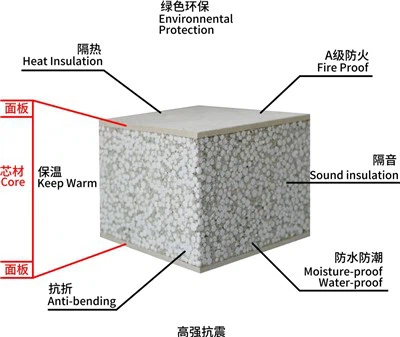
First off, let's talk about what an 180mm Sandwich Panel Wall is. It's basically a composite structure made up of two outer layers and a core in between. The outer layers can be made from various materials like metal, fiber cement, or calcium silicate, while the core can be things like expanded polystyrene (EPS), polyurethane, or rock wool. This combination gives the panel unique properties that make it suitable for different applications.
Advantages for High - Rise Buildings
1. Lightweight
One of the biggest advantages of using 180mm Sandwich Panel Walls in high - rise buildings is their lightweight nature. High - rise structures need to be as light as possible to reduce the load on the foundation. These panels are much lighter compared to traditional brick or concrete walls. For example, a traditional brick wall can weigh several hundred kilograms per square meter, while an 180mm Sandwich Panel Wall might weigh only a fraction of that. This means that the building's structural design can be more efficient, and it can potentially save on construction costs related to the foundation.
2. Thermal Insulation
Thermal insulation is crucial in high - rise buildings. In a tall building, heat loss or gain through the walls can have a significant impact on energy consumption. The 180mm thickness of the sandwich panel provides a good amount of insulation. The core material, such as EPS, has excellent thermal resistance properties. This helps to keep the interior of the building warm in winter and cool in summer, reducing the need for excessive heating and cooling systems. As a result, the building becomes more energy - efficient, which is not only good for the environment but also for the building owner's wallet.
3. Quick Installation
Time is money in the construction industry, especially when it comes to high - rise buildings. 180mm Sandwich Panel Walls are pre - fabricated, which means they can be installed much faster than traditional building materials. Workers can simply lift and attach the panels to the building's frame, reducing the overall construction time. This is a huge advantage as it allows the building to be completed and occupied sooner, generating revenue for the owner.
4. Fire Resistance
Safety is a top priority in high - rise buildings, and fire resistance is a key factor. Some of our Fireproof EPS Fiber Cement Sandwich Panel options are designed to meet strict fire safety standards. The fiber cement outer layers and the fire - resistant core can help prevent the spread of fire, giving occupants more time to evacuate in case of an emergency.
Challenges and Considerations
1. Structural Integrity
While the lightweight nature of the panels is an advantage, it also raises questions about their structural integrity in high - rise buildings. High - rise structures are subject to strong winds, seismic activity, and other external forces. The panels need to be properly designed and installed to ensure they can withstand these loads. This might involve using additional structural supports or choosing panels with higher strength cores.

2. Building Codes and Regulations
High - rise buildings are subject to strict building codes and regulations. Before using 180mm Sandwich Panel Walls, it's essential to ensure that they meet all the local and national requirements. This includes fire safety, sound insulation, and environmental standards. For example, some areas might have specific requirements for the type of core material used in the panels to ensure it's non - toxic and environmentally friendly.

3. Long - Term Durability
In a high - rise building, the exterior walls are exposed to the elements for a long time. The panels need to be durable enough to withstand weathering, UV radiation, and other environmental factors. Some of our Calcium Silicate Exterior Wall Board and Waterproof Calcium Silicate Board options are designed to be highly durable, but proper maintenance is still required to ensure their long - term performance.
Real - World Examples
There are already many high - rise buildings around the world that have successfully used sandwich panel walls. For instance, in some modern office buildings, 180mm Sandwich Panel Walls have been used to create a sleek and energy - efficient exterior. These buildings not only look great but also offer a comfortable working environment for their occupants.
Conclusion
So, can the 180mm Sandwich Panel Wall be used in high - rise buildings? The answer is yes, but with some careful considerations. The panels offer many advantages such as lightweight, thermal insulation, quick installation, and fire resistance. However, challenges like structural integrity, building codes, and long - term durability need to be addressed.
If you're interested in using 180mm Sandwich Panel Walls for your high - rise building project, I'd love to have a chat with you. We can discuss your specific requirements, and I can provide you with more detailed information about our products. Don't hesitate to reach out and start a conversation about how we can work together to make your project a success.
References
- Building Construction Handbook, McGraw - Hill
- International Building Code (IBC)
- Fire Safety Standards for High - Rise Buildings, National Fire Protection Association