
As a supplier of Fiber Cement Sandwich Panels, I've often been asked whether these panels are suitable for cold climates. This question is crucial for clients living in regions with harsh winters or for those planning construction projects in such areas. In this blog, I'll delve into the characteristics of fiber cement sandwich panels and evaluate their performance in cold - weather conditions.
Understanding Fiber Cement Sandwich Panels
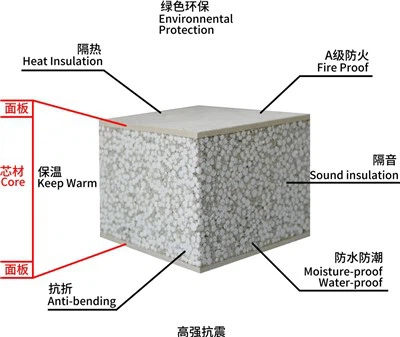
Fiber cement sandwich panels are composite building materials composed of two outer layers of fiber - cement boards and a core material. The core material can vary, but common options include expanded polystyrene (EPS), polyurethane, and mineral wool. Each core material offers different properties, such as insulation, strength, and fire resistance.
The outer fiber - cement layers provide durability, weather resistance, and a smooth finish. They are resistant to rot, insects, and fire, making them a reliable choice for various construction applications. The combination of the outer layers and the core creates a panel that is both strong and lightweight, which simplifies the installation process.
Insulation Properties in Cold Climates
One of the most important factors to consider in cold climates is the insulation performance of building materials. A good insulation material helps to keep the interior of a building warm by reducing heat transfer through the walls. Fiber cement sandwich panels with an EPS core, like our EPS Cement Seismic Panel, offer excellent thermal insulation properties.
EPS is a lightweight and rigid foam material that has a low thermal conductivity. This means that it can effectively slow down the flow of heat from the warm interior of a building to the cold exterior. By using fiber cement sandwich panels with an EPS core, such as Expanded Polystyrene Wall Panels, the energy required to heat a building can be significantly reduced. This not only leads to cost savings for the building owner but also contributes to a more sustainable environment by reducing energy consumption.
Resistance to Freeze - Thaw Cycles
In cold climates, buildings are often exposed to freeze - thaw cycles. During the day, the temperature may rise above freezing, causing any moisture in the building materials to melt. At night, the temperature drops below freezing again, and the water freezes. Repeated freeze - thaw cycles can cause damage to some building materials, leading to cracking, spalling, and reduced structural integrity.
Fiber cement sandwich panels are highly resistant to freeze - thaw cycles. The fiber - cement outer layers are dense and durable, and they can withstand the expansion and contraction caused by freezing and thawing. The core material, especially EPS, also has good dimensional stability under changing temperature conditions. Our Heat Insulation Prefabricated Cement Board is designed to maintain its performance even after multiple freeze - thaw cycles, ensuring the long - term durability of the building.
Structural Integrity in Cold Weather
Cold weather can also have an impact on the structural integrity of building materials. Some materials may become brittle at low temperatures, increasing the risk of fractures and failures. Fiber cement sandwich panels, however, maintain their strength and stiffness in cold climates.
The combination of the fiber - cement outer layers and the core material provides a strong and stable structure. The fiber - cement layers add tensile strength, while the core material provides compressive strength. This makes the panels suitable for use in load - bearing walls and other structural applications in cold - weather regions.
Moisture Management
Moisture is another concern in cold climates. Excess moisture in a building can lead to problems such as mold growth, rot, and reduced insulation performance. Fiber cement sandwich panels have good moisture - resistant properties. The fiber - cement outer layers are relatively impermeable to water, preventing moisture from penetrating into the core material.
In addition, the panels are designed with proper ventilation channels to allow any trapped moisture to escape. This helps to maintain a dry and healthy indoor environment, even in cold and humid conditions.
Installation Considerations in Cold Climates
When installing fiber cement sandwich panels in cold climates, there are a few additional considerations. First, the panels should be stored in a dry and protected area before installation to prevent them from getting wet and damaged. Second, the installation process should be carried out in accordance with the manufacturer's instructions, especially regarding the use of appropriate adhesives and fasteners.
In cold weather, some adhesives may require longer curing times. It's important to ensure that the adhesive has fully cured before subjecting the panels to any loads. Also, the fasteners used to attach the panels should be made of materials that are resistant to corrosion in cold and wet conditions.
Cost - Effectiveness
From a cost - effectiveness perspective, fiber cement sandwich panels are a great choice for cold climates. Although the initial cost of the panels may be slightly higher than some traditional building materials, the long - term savings in energy costs and maintenance make them a worthwhile investment.
The reduced energy consumption due to their excellent insulation properties means lower heating bills over the life of the building. In addition, the durability of the panels reduces the need for frequent repairs and replacements, further saving money in the long run.


Conclusion
In conclusion, fiber cement sandwich panels are highly suitable for cold climates. Their excellent insulation properties, resistance to freeze - thaw cycles, structural integrity, moisture management capabilities, and cost - effectiveness make them an ideal choice for construction projects in regions with cold winters.
If you're planning a construction project in a cold climate and are interested in learning more about our fiber cement sandwich panels, I encourage you to contact us for a detailed discussion. We can provide you with the technical specifications, samples, and pricing information you need to make an informed decision. Our team of experts is ready to assist you in choosing the right panels for your project and ensuring a successful installation.
References
- Building Science Corporation. "Insulation in Cold Climates."
- ASTM International. "Standards for Testing Building Materials in Cold Weather Conditions."
- Manufacturer's Technical Data Sheets for Fiber Cement Sandwich Panels.