
Hey there! I'm a supplier of EPS sandwich panels, and I often get asked whether these panels are affected by temperature changes. Well, let's dive right into it and find out.
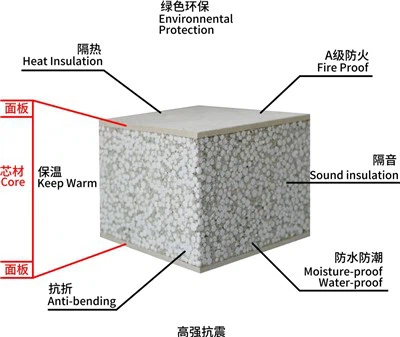
First off, let's understand what EPS sandwich panels are. EPS stands for Expanded Polystyrene, which is a lightweight and rigid foam material. These panels are made by sandwiching an EPS core between two outer layers, usually made of metal, plastic, or other materials. They're popular in construction because they're lightweight, easy to install, and offer good insulation properties.
Now, onto the big question: Are EPS sandwich panels affected by temperature changes? The short answer is yes, but the extent of the impact varies depending on several factors.
Thermal Expansion and Contraction
One of the main ways temperature changes affect EPS sandwich panels is through thermal expansion and contraction. Like most materials, EPS expands when heated and contracts when cooled. This can cause the panels to warp, buckle, or even crack if the temperature changes are extreme or rapid.
For example, if you install EPS sandwich panels in an area with a large temperature difference between day and night, the panels may expand during the day and contract at night. Over time, this repeated expansion and contraction can put stress on the panels and their joints, leading to structural damage.
However, modern EPS sandwich panels are designed to minimize the effects of thermal expansion and contraction. Manufacturers use special additives and manufacturing processes to improve the dimensional stability of the panels. Additionally, proper installation techniques, such as leaving expansion joints between the panels, can help accommodate the movement caused by temperature changes.


Insulation Performance
Another important aspect to consider is how temperature changes affect the insulation performance of EPS sandwich panels. EPS is known for its excellent insulation properties, which help reduce heat transfer and keep buildings warm in the winter and cool in the summer.
As the temperature changes, the insulation performance of EPS sandwich panels may also change slightly. Generally, EPS insulation performs better at lower temperatures. As the temperature rises, the thermal conductivity of EPS may increase slightly, reducing its insulation effectiveness.
However, this change is usually minimal and within acceptable limits for most applications. In fact, EPS sandwich panels still provide good insulation even in high-temperature environments. To ensure optimal insulation performance, it's important to choose panels with a high R-value (a measure of thermal resistance) and to install them correctly.
Fire Resistance
Temperature changes can also have an impact on the fire resistance of EPS sandwich panels. EPS is a flammable material, but most EPS sandwich panels are treated with fire retardants to improve their fire resistance.
In high-temperature environments, the fire retardants in the panels may break down over time, reducing their effectiveness. This can increase the risk of fire and make the panels more vulnerable to ignition.
To mitigate this risk, it's important to choose EPS sandwich panels that meet the relevant fire safety standards and to follow proper installation and maintenance procedures. Regular inspections and maintenance can help ensure that the fire retardants in the panels are still effective and that the panels are in good condition.
Other Considerations
In addition to thermal expansion, insulation performance, and fire resistance, there are a few other factors to consider when it comes to the effects of temperature changes on EPS sandwich panels.
- Moisture Absorption: EPS is a hydrophobic material, which means it doesn't absorb water easily. However, in high-humidity environments, moisture can still penetrate the panels and cause problems. Temperature changes can exacerbate this issue by causing condensation to form inside the panels, leading to mold growth and structural damage.
- UV Exposure: Prolonged exposure to sunlight can cause the outer layers of EPS sandwich panels to degrade over time. Temperature changes can also accelerate this process by causing the materials to expand and contract, leading to cracking and peeling.
To address these issues, it's important to choose EPS sandwich panels that are resistant to moisture and UV exposure. Additionally, proper installation and maintenance, such as using waterproof seals and coatings, can help protect the panels from the elements.
Conclusion
So, to sum it up, EPS sandwich panels are affected by temperature changes, but the extent of the impact depends on several factors. Modern EPS sandwich panels are designed to minimize the effects of thermal expansion and contraction, and they still provide good insulation performance even in high-temperature environments. However, it's important to choose panels that meet the relevant standards and to follow proper installation and maintenance procedures to ensure their long-term performance and durability.
If you're in the market for EPS sandwich panels, I encourage you to check out our Soundproof EPS Sandwich Panel, 200mm Thickness EPS Wall Panels, and Lightweight Precast EPS Cement Sandwich Panel. We offer a wide range of high-quality EPS sandwich panels that are suitable for various applications.
If you have any questions or would like to discuss your specific requirements, please don't hesitate to contact us. We're here to help you find the right solution for your project.
References
- ASTM International. (2021). Standard Specification for Rigid, Cellular Polystyrene Thermal Insulation. ASTM C578-21.
- Building Research Establishment. (2019). Fire Performance of EPS Sandwich Panels. BRE Report 477.
- International Code Council. (2021). International Building Code. ICC-2021.