
As a supplier of 100mm lightweight sandwich panels, I am often asked about the materials used in these innovative building components. In this blog post, I will delve into the various materials that make up a 100mm lightweight sandwich panel, exploring their properties, advantages, and applications.
The Structure of a Sandwich Panel
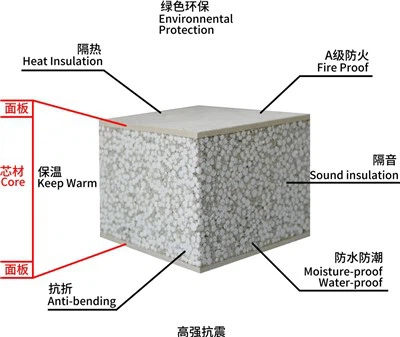
Before we discuss the specific materials, it's important to understand the basic structure of a sandwich panel. A sandwich panel consists of three main layers: two outer skins and a core material in between. The outer skins provide strength, durability, and protection, while the core material offers insulation, lightweight properties, and additional structural support.
Outer Skins
The outer skins of a 100mm lightweight sandwich panel can be made from a variety of materials, each with its own unique characteristics. Some of the most common materials used for outer skins include:
Metal
Metal skins, such as steel or aluminum, are widely used in sandwich panels due to their high strength, durability, and fire resistance. Steel skins are particularly popular for industrial and commercial applications, as they can withstand harsh environmental conditions and heavy loads. Aluminum skins, on the other hand, are lighter in weight and more corrosion-resistant, making them a good choice for residential and architectural applications.
Fiberglass Reinforced Plastic (FRP)
FRP skins are made from a combination of fiberglass and resin, which provides excellent strength, stiffness, and corrosion resistance. FRP skins are also lightweight, making them ideal for applications where weight is a concern, such as in the aerospace and automotive industries. Additionally, FRP skins can be easily molded into complex shapes, allowing for greater design flexibility.
Cement Board
Cement board skins are made from a mixture of cement, sand, and fibers, which provides good fire resistance, moisture resistance, and durability. Cement board skins are commonly used in construction applications, such as wall cladding and roofing, as they can withstand the elements and provide a long-lasting finish.
Core Materials
The core material of a 100mm lightweight sandwich panel is responsible for providing insulation, lightweight properties, and additional structural support. Some of the most common materials used for core materials include:
Expanded Polystyrene (EPS)
EPS is a lightweight, rigid foam material that is made from expanded polystyrene beads. EPS is widely used in sandwich panels due to its excellent insulation properties, low cost, and ease of installation. EPS core panels are commonly used in residential and commercial construction applications, such as wall insulation, roofing insulation, and floor insulation. You can find more information about Soundproof EPS Sandwich Panel on our website.
Polyurethane (PU)
PU is a high-performance foam material that is made from a combination of polyol and isocyanate. PU is known for its excellent insulation properties, high strength, and durability. PU core panels are commonly used in industrial and commercial construction applications, such as cold storage facilities, clean rooms, and food processing plants.
Mineral Wool
Mineral wool is a fibrous insulation material that is made from natural or synthetic minerals, such as rock wool or glass wool. Mineral wool is known for its excellent fire resistance, sound insulation properties, and environmental friendliness. Mineral wool core panels are commonly used in construction applications where fire safety is a concern, such as in high-rise buildings and industrial facilities.

Honeycomb
Honeycomb core materials are made from a series of hexagonal cells that are arranged in a honeycomb pattern. Honeycomb core materials are known for their high strength-to-weight ratio, excellent stiffness, and lightweight properties. Honeycomb core panels are commonly used in aerospace, automotive, and marine applications, where weight reduction and structural performance are critical.
Advantages of 100mm Lightweight Sandwich Panels
100mm lightweight sandwich panels offer several advantages over traditional building materials, including:
- Lightweight: The use of lightweight materials in sandwich panels reduces the overall weight of the building, making it easier to transport and install.
- Insulation: The core material in sandwich panels provides excellent insulation properties, reducing energy consumption and heating and cooling costs.
- Strength and Durability: The combination of outer skins and core material provides high strength and durability, making sandwich panels suitable for a wide range of applications.
- Fire Resistance: Many sandwich panels are designed to be fire-resistant, providing an additional layer of safety in the event of a fire.
- Design Flexibility: Sandwich panels can be easily customized to meet the specific requirements of a project, allowing for greater design flexibility.
Applications of 100mm Lightweight Sandwich Panels
100mm lightweight sandwich panels are used in a wide range of applications, including:
- Residential Construction: Sandwich panels are commonly used in residential construction for wall insulation, roofing insulation, and floor insulation. They can also be used for exterior wall cladding and interior partitions.
- Commercial Construction: Sandwich panels are widely used in commercial construction for industrial buildings, warehouses, cold storage facilities, and clean rooms. They can also be used for office buildings, schools, and hospitals.
- Industrial Applications: Sandwich panels are used in industrial applications for machinery enclosures, soundproofing panels, and thermal insulation. They can also be used for transportation vehicles, such as trucks, trailers, and trains.
- Architectural Applications: Sandwich panels are increasingly being used in architectural applications for their aesthetic appeal and design flexibility. They can be used for exterior facades, canopies, and interior finishes.
Conclusion
In conclusion, 100mm lightweight sandwich panels are a versatile and innovative building material that offers several advantages over traditional building materials. The choice of materials for the outer skins and core material depends on the specific requirements of the application, such as strength, insulation, fire resistance, and cost. As a supplier of 100mm lightweight sandwich panels, I am committed to providing high-quality products that meet the needs of my customers. If you are interested in learning more about our products or have any questions about the materials used in sandwich panels, please do not hesitate to contact me. We are always happy to discuss your project requirements and provide you with a customized solution. Whether you are looking for a Soundproof EPS Sandwich Panel, a 90mm Waterproof EPS Sandwich Panel, or a Calcium Silicate Board for Prefabricated Houses, we have the expertise and products to meet your needs. Let's start a conversation today and explore how our sandwich panels can enhance your next project.
References
- "Building Materials Handbook" by McGraw-Hill
- "Insulation Materials and Systems" by ASTM International
- "Composite Materials: Design and Applications" by CRC Press