
What is the wind resistance of EPS Cement Sandwich Wall Panel?
As a leading supplier of EPS Cement Sandwich Wall Panels, I often encounter inquiries about the wind resistance of our products. Wind resistance is a crucial factor, especially in regions prone to high - speed winds, hurricanes, or strong gusts. In this blog, I will delve into the wind resistance of EPS Cement Sandwich Wall Panels, exploring the factors that influence it and how our panels perform under different wind conditions.
Understanding EPS Cement Sandwich Wall Panels
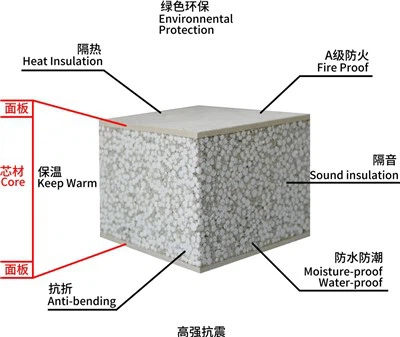
Before discussing wind resistance, let's briefly understand what EPS Cement Sandwich Wall Panels are. These panels consist of an expanded polystyrene (EPS) core sandwiched between two layers of cement - based materials. The EPS core provides excellent thermal insulation, while the cement outer layers offer strength, durability, and fire resistance.
Our company offers a variety of EPS Cement Sandwich Wall Panels, including EPS Cement Waterproof Wall Panels for Hospital, which are designed to meet the specific requirements of healthcare facilities, and Fireproof Partition Wall Panel, ideal for creating safe partitions in buildings. We also have Calcium Silicate Exterior Wall Board, which combines the benefits of calcium silicate with the sandwich panel structure.
Factors Affecting Wind Resistance
Panel Thickness
The thickness of the EPS Cement Sandwich Wall Panel plays a significant role in its wind resistance. Thicker panels generally have higher strength and can withstand greater wind pressures. Our panels come in different thicknesses, and we can recommend the appropriate thickness based on the wind load requirements of your project. For example, in areas with mild wind conditions, a thinner panel may be sufficient, while in coastal regions with high - speed winds, a thicker panel is advisable.
Core Density
The density of the EPS core also affects the panel's wind resistance. A higher - density EPS core provides more structural support, making the panel more resistant to wind forces. Our manufacturing process allows us to control the density of the EPS core precisely, ensuring that our panels meet the required wind resistance standards.
Connection System
The connection system used to install the panels is crucial for wind resistance. A robust connection system ensures that the panels are securely attached to the building structure, preventing them from being dislodged by strong winds. Our panels are designed with a reliable connection system that distributes the wind load evenly across the panels and the building structure.
Building Configuration
The shape and size of the building can influence the wind resistance of the panels. Buildings with irregular shapes or large overhangs may experience higher wind pressures in certain areas. Our engineering team can analyze the building configuration and recommend the best installation methods and panel types to ensure optimal wind resistance.
Testing and Standards
To ensure the reliability of our EPS Cement Sandwich Wall Panels' wind resistance, we conduct rigorous testing in accordance with international standards. These tests simulate different wind conditions, including high - speed winds and turbulent gusts. The panels are subjected to static and dynamic wind load tests to measure their performance and ensure they meet or exceed the required standards.
Some of the key standards we adhere to include ASTM (American Society for Testing and Materials) standards for building materials and EN (European Norm) standards. By following these standards, we can provide our customers with high - quality panels that offer reliable wind resistance in various applications.
Performance in Different Wind Conditions
Mild Wind Areas
In areas with mild wind conditions, such as inland regions with average wind speeds, our EPS Cement Sandwich Wall Panels provide excellent structural support. The panels are able to withstand normal wind pressures without any significant deformation or damage. The insulation properties of the EPS core also help to maintain a comfortable indoor environment, reducing energy consumption for heating and cooling.
Moderate Wind Areas
In regions with moderate wind speeds, our panels are designed to handle the additional wind load. The combination of the high - strength cement outer layers and the EPS core provides a stable structure that can resist wind forces. The connection system ensures that the panels remain firmly in place, preventing any loosening or movement.
High - Speed Wind Areas
For areas prone to high - speed winds, such as coastal regions or mountainous areas with strong gusts, our thickest and highest - density panels are recommended. These panels are engineered to withstand extreme wind pressures and are often used in hurricane - prone areas. The panels are tested to ensure they can resist wind speeds of up to [specific wind speed] miles per hour, providing reliable protection for the building and its occupants.
Advantages of Our EPS Cement Sandwich Wall Panels in Wind Resistance
Lightweight
Despite their high strength, our EPS Cement Sandwich Wall Panels are lightweight. This makes them easier to install and reduces the overall load on the building structure. In high - wind situations, the lightweight nature of the panels can be an advantage, as they are less likely to cause additional stress on the building during wind - induced vibrations.
Durability
The cement outer layers of our panels provide excellent durability, protecting the EPS core from environmental damage. This durability ensures that the panels maintain their wind resistance over time, even in harsh weather conditions. The panels are also resistant to moisture, mold, and pests, further enhancing their long - term performance.
Energy Efficiency
In addition to their wind resistance, our panels offer excellent energy efficiency. The EPS core provides thermal insulation, reducing heat transfer through the walls. This helps to keep the indoor temperature stable, reducing the need for excessive heating or cooling. In high - wind areas, the energy - efficient properties of the panels can be particularly beneficial, as they can help to offset the energy losses caused by wind - induced air infiltration.


Contact Us for Your Project
If you are considering using EPS Cement Sandwich Wall Panels for your construction project and have questions about their wind resistance or other properties, please do not hesitate to contact us. Our team of experts is ready to provide you with detailed information, technical support, and customized solutions based on your project requirements. Whether you are building a hospital, a residential building, or an industrial facility, our panels can offer reliable performance and protection against the elements.
References
- ASTM International. (20XX). Standards for building materials related to wind resistance.
- European Committee for Standardization. (20XX). EN standards for building components.
- [Other relevant industry reports or research papers]