
Hey there! As a supplier of EPS insulation panels, I often get asked about the water vapor permeability of these panels. So, I thought I'd take some time to break it down for you in this blog post.
First off, let's understand what water vapor permeability is. In simple terms, it's the ability of a material to allow water vapor to pass through it. This is super important when it comes to insulation because if water vapor gets trapped inside a building, it can lead to all sorts of problems like mold growth, rotting of wood, and a decrease in the insulation's effectiveness.


Now, let's talk about EPS insulation panels. EPS stands for expanded polystyrene, which is a lightweight and rigid foam material. It's commonly used for insulation in buildings because it has excellent thermal insulation properties. But what about its water vapor permeability?
EPS insulation panels have a relatively low water vapor permeability. This means that they don't let a whole lot of water vapor pass through them. The closed - cell structure of EPS is what gives it this property. These closed cells act as barriers, preventing water vapor from easily moving through the material.
One of the benefits of low water vapor permeability in EPS insulation panels is that it helps to keep the interior of a building dry. For example, in a cold climate, when warm, moist air from inside the building comes into contact with the cold exterior walls, there's a risk of condensation. But with EPS insulation panels, the low water vapor permeability reduces the chances of this happening.
Another advantage is that it helps to maintain the long - term performance of the insulation. When water vapor is kept out, the insulation doesn't get wet, which could otherwise reduce its R - value (a measure of thermal resistance). So, you can count on EPS insulation panels to keep your building well - insulated for a long time.
However, it's important to note that while EPS has low water vapor permeability, it's not completely impermeable. In some cases, if there's a large amount of water vapor in the environment or if there are leaks in the building envelope, some water vapor can still find its way through the panels.
Let's take a look at the factors that can affect the water vapor permeability of EPS insulation panels. The thickness of the panel is one factor. Thicker panels generally have lower water vapor permeability because there are more closed cells for the water vapor to pass through. The density of the EPS also plays a role. Higher - density EPS panels tend to have lower water vapor permeability compared to lower - density ones.
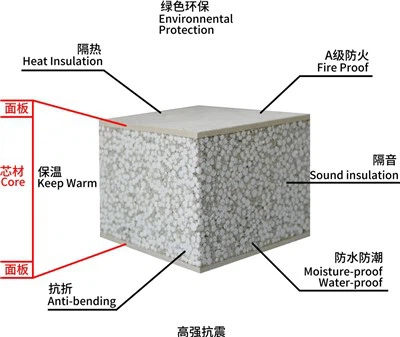
Now, I'd like to mention some of our products. We offer a range of EPS insulation panels, including the Calcium Silicate Exterior Wall Board. This product combines the low water vapor permeability of EPS with the durability of calcium silicate, making it a great choice for exterior walls.
Our 100mm EPS Sandwich Panel is another popular option. With its 100mm thickness, it offers excellent thermal insulation and relatively low water vapor permeability. It's suitable for a variety of applications, from industrial buildings to residential homes.
If you're looking for a fire - resistant option, our Fireproof Foamed EPS Sandwich Panel is a great pick. It not only has good fire - proofing properties but also maintains the low water vapor permeability characteristic of EPS.
In terms of installation, proper installation is crucial to ensure the best performance of the EPS insulation panels in terms of water vapor permeability. The panels should be installed tightly, with no gaps or joints that could allow water vapor to seep through. Sealing around the edges and any penetrations is also important.
We've conducted some tests on our EPS insulation panels to measure their water vapor permeability. The results have consistently shown that our panels meet industry standards for low water vapor permeability. This gives you peace of mind knowing that you're getting a high - quality product.
When it comes to comparing EPS insulation panels with other insulation materials, EPS generally has an edge in terms of water vapor permeability. For example, some fibrous insulation materials like fiberglass may have higher water vapor permeability, which could lead to more issues with condensation and moisture.
In conclusion, the water vapor permeability of EPS insulation panels is an important characteristic that offers many benefits for building insulation. Its low water vapor permeability helps to keep buildings dry, maintain insulation performance, and prevent moisture - related problems.
If you're in the market for high - quality EPS insulation panels, we'd love to have a chat with you. Whether you're a builder, an architect, or a homeowner, we can provide you with the right products and advice for your project. Contact us to start the procurement process and let's work together to make your building more energy - efficient and comfortable.
References
- Building Science Corporation. "Insulation and Moisture".
- ASTM International. "Standards related to insulation materials and their properties".