
EPS partition wall panels have gained significant popularity in the construction industry due to their numerous advantages, such as lightweight, easy installation, and cost - effectiveness. One crucial aspect that often concerns builders, architects, and end - users is the water absorption rate of these panels. As a supplier of EPS partition wall panels, I will delve into this topic to provide you with a comprehensive understanding.
Understanding EPS Partition Wall Panels
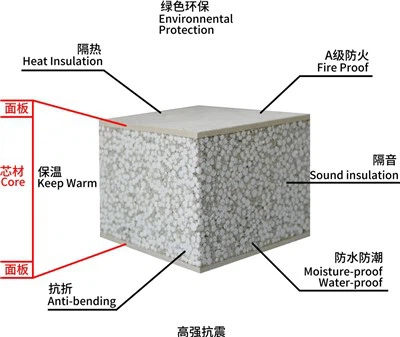
EPS, or Expanded Polystyrene, is a lightweight foam plastic material made from expanded polystyrene beads. EPS partition wall panels are typically composed of an EPS core sandwiched between two layers of facing materials, such as Calcium Silicate Board for Prefabricated Houses. These panels are widely used in both interior and exterior construction projects, including residential buildings, commercial spaces, and industrial facilities.
The main functions of EPS partition wall panels are to separate spaces, provide insulation, and contribute to the overall structural integrity of the building. They are designed to be easy to install, which can significantly reduce construction time and labor costs. Moreover, their lightweight nature makes them suitable for use in buildings where load - bearing capacity is a concern.
Importance of Water Absorption Rate
The water absorption rate of EPS partition wall panels is a critical factor that affects their performance and durability. When a panel absorbs water, several negative consequences can occur. Firstly, water absorption can lead to a decrease in the panel's insulation properties. Since EPS is known for its excellent thermal insulation, any reduction in this property can result in increased energy consumption for heating or cooling the building.
Secondly, water can cause the panel to swell, which may lead to structural damage over time. Swelling can also affect the panel's dimensional stability, causing it to warp or buckle. This can compromise the aesthetic appearance of the wall and may even pose a safety hazard if the panel fails to maintain its structural integrity.


In addition, water - absorbed panels are more prone to mold and mildew growth. Mold and mildew not only look unsightly but can also have adverse effects on indoor air quality, which can be harmful to the health of the building's occupants.
Measuring the Water Absorption Rate
The water absorption rate of EPS partition wall panels is typically measured by immersing a sample of the panel in water for a specified period and then weighing it before and after immersion. The difference in weight is expressed as a percentage of the panel's original weight.
The standard test method for measuring water absorption is usually carried out in accordance with relevant international or national standards. For example, in some countries, the test involves immersing the panel in water at a specific temperature for 24 hours or 72 hours. After the immersion period, the panel is removed from the water, and the surface water is wiped off. The panel is then weighed, and the water absorption rate is calculated using the following formula:
Water Absorption Rate (%) = [(Weight after immersion - Weight before immersion) / Weight before immersion] × 100
It's important to note that different types of EPS partition wall panels may have different water absorption rates depending on factors such as the density of the EPS core, the type of facing materials, and the manufacturing process.
Factors Affecting the Water Absorption Rate
Density of EPS Core
The density of the EPS core plays a significant role in determining the water absorption rate. Generally, higher - density EPS cores have lower water absorption rates. This is because higher - density EPS has a more compact structure, which makes it more difficult for water molecules to penetrate the material.
Type of Facing Materials
The type of facing materials used on the panel also affects the water absorption rate. For example, Calcium Silicate Board for Prefabricated Houses is known for its good water - resistance properties. When used as a facing material, it can act as a barrier to prevent water from entering the EPS core. On the other hand, some other facing materials may be more porous and allow water to pass through more easily.
Manufacturing Process
The manufacturing process of the EPS partition wall panels can also influence the water absorption rate. A well - manufactured panel with proper sealing and bonding between the EPS core and the facing materials is less likely to absorb water. For example, if the edges of the panel are not properly sealed, water can seep into the core more easily.
Typical Water Absorption Rates of EPS Partition Wall Panels
In general, the water absorption rate of high - quality EPS partition wall panels is relatively low. For panels with a high - density EPS core and water - resistant facing materials, the water absorption rate can be as low as 1% - 3% after 24 hours of immersion. However, panels with lower - density EPS cores or less water - resistant facing materials may have water absorption rates of up to 5% - 10% or even higher.
It's important to choose EPS partition wall panels with a low water absorption rate to ensure their long - term performance and durability. As a supplier, we always strive to provide panels with the best possible water - resistance properties to meet the needs of our customers.
Our Products and Their Water Absorption Performance
At our company, we offer a wide range of Expanded Polystyrene Wall Panels that are designed to have excellent water - resistance properties. Our panels are manufactured using high - density EPS cores and high - quality facing materials, such as Calcium Silicate Board for Prefabricated Houses.
Through strict quality control measures, we ensure that our panels meet or exceed the industry standards for water absorption. Our tests have shown that our panels typically have a water absorption rate of less than 2% after 24 hours of immersion, which is well below the average for similar products in the market.
In addition to the low water absorption rate, our panels also offer other advantages, such as high insulation performance, excellent fire resistance, and good sound insulation. These features make our EPS partition wall panels a top choice for various construction projects.
Applications and Considerations
EPS partition wall panels with low water absorption rates are suitable for a wide range of applications. They can be used in both interior and exterior walls of residential, commercial, and industrial buildings. For exterior applications, they can be combined with other waterproofing materials, such as Exterior Wall Sandwich Panel, to provide enhanced protection against water ingress.
When using EPS partition wall panels, it's important to take proper precautions during installation and maintenance. For example, the panels should be installed in a dry environment, and all joints should be properly sealed to prevent water from entering. Regular inspections should also be carried out to check for any signs of water damage or mold growth.
Conclusion
The water absorption rate of EPS partition wall panels is a crucial factor that affects their performance, durability, and overall quality. As a supplier of EPS partition wall panels, we understand the importance of providing products with low water absorption rates. Our panels are designed and manufactured to meet the highest standards in terms of water resistance, insulation, and structural integrity.
If you are considering using EPS partition wall panels for your construction project, we encourage you to contact us for more information. Our team of experts can provide you with detailed product specifications, technical support, and guidance on choosing the right panels for your specific needs. We are committed to helping you achieve a successful construction project with our high - quality EPS partition wall panels.
References
- International Organization for Standardization (ISO). Relevant standards for testing water absorption of building materials.
- National Building Code of [Country name]. Regulations and guidelines for the use of EPS partition wall panels.
- Technical literature provided by EPS panel manufacturers. Information on product properties and performance.