
Hey there! As a supplier of 150mm EPS insulation boards, I often get asked about the sound transmission class (STC) of these boards. So, I thought I'd write this blog to share some insights on what the STC of a 150mm EPS insulation board is and why it matters.
First off, let's talk about what STC actually means. Sound transmission class is a rating system that measures how well a material or construction assembly can reduce the transmission of airborne sound. The higher the STC rating, the better the material is at blocking sound. It's a crucial factor when it comes to creating quiet and comfortable indoor spaces, whether it's in residential buildings, offices, or commercial establishments.
Now, onto the 150mm EPS insulation board. EPS, or expanded polystyrene, is a lightweight and versatile insulation material that's widely used in the construction industry. It's known for its excellent thermal insulation properties, but it also has some soundproofing capabilities.
The STC of a 150mm EPS insulation board can vary depending on a few factors. One of the main factors is the density of the EPS. Generally, higher - density EPS boards tend to have better sound insulation performance. A 150mm EPS board with a relatively high density can achieve an STC rating in the range of 30 - 40.
To put that into perspective, an STC rating of 30 means that the board can reduce the sound level by about 30 decibels. This can significantly cut down on the amount of noise that passes through the wall or partition where the board is installed. For example, if there's a noisy street outside a building, a 150mm EPS insulation board with an STC of 30 can make a noticeable difference in the amount of traffic noise that reaches the inside of the building.
Another factor that affects the STC of a 150mm EPS insulation board is the installation method. Proper installation is key to maximizing the soundproofing potential of the board. If the board is installed with gaps or if there are poor seals around the edges, sound can easily leak through, reducing the overall STC rating.
When it comes to construction applications, 150mm EPS insulation boards can be used in a variety of ways to improve sound insulation. For instance, they can be installed within interior walls to create a sound - barrier between different rooms. They can also be used in exterior walls to block out external noise sources like traffic or industrial activity.
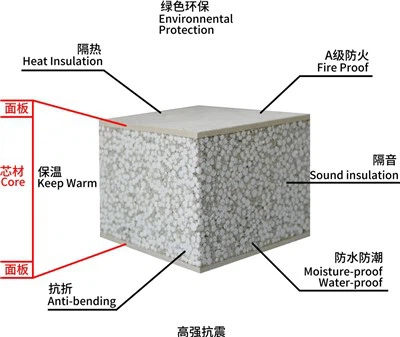
If you're in the market for high - quality EPS insulation products, we offer a range of options. Check out our Lightweight Precast EPS Cement Sandwich Panel. These panels combine the benefits of EPS insulation with the strength of cement, providing both thermal and acoustic insulation.
Our EPS Insulation Panels come in different thicknesses and densities, allowing you to choose the one that best suits your specific soundproofing and insulation needs. And if you're looking for a slightly thinner option, our 120mm EPS Cement Sandwich Panel is also a great choice.
So, why should you consider using 150mm EPS insulation boards for sound insulation? Well, besides their decent STC ratings, they're also cost - effective. Compared to some other soundproofing materials, EPS boards are relatively inexpensive, making them a great option for budget - conscious projects. They're also easy to install, which can save you time and labor costs.


In addition, EPS insulation boards are lightweight, which means they won't add excessive weight to the building structure. This is especially important in multi - story buildings where the weight of the building materials needs to be carefully considered.
If you're interested in learning more about our 150mm EPS insulation boards or any of our other products, we'd love to hear from you. Whether you're a contractor, an architect, or a homeowner, we can provide you with the information and support you need to make the right choice for your project. Reach out to us and let's start a conversation about how our products can meet your soundproofing and insulation requirements.
References
- Building Acoustics Handbook, various authors
- Research papers on EPS insulation and sound transmission properties from industry - related journals