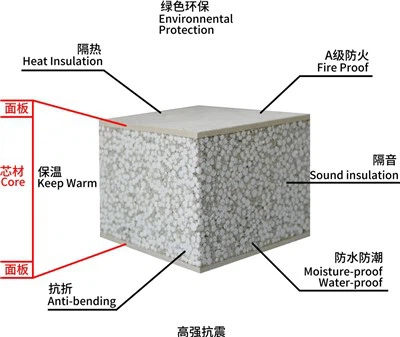

As a supplier of exterior wall sandwich panels, I often encounter inquiries about the radiation resistance of these panels. In this blog post, I will delve into what radiation resistance means in the context of exterior wall sandwich panels, the factors that affect it, and why it matters for various applications.
Understanding Radiation Resistance
Radiation resistance in exterior wall sandwich panels refers to the ability of these panels to block or reduce the penetration of different types of radiation. Radiation can come in various forms, including electromagnetic radiation such as ultraviolet (UV) rays from the sun, and in some industrial or special - environment scenarios, ionizing radiation like gamma rays or X - rays.
For most common building applications, the primary concern is UV radiation. Prolonged exposure to UV rays can cause degradation of the panel materials. For instance, it can lead to color fading, embrittlement, and a reduction in the mechanical properties of the panels over time. High - quality exterior wall sandwich panels with good radiation resistance can maintain their appearance and structural integrity for a longer period.


Factors Affecting Radiation Resistance
Panel Materials
The choice of materials in the construction of exterior wall sandwich panels plays a crucial role in determining their radiation resistance.
- Outer Layers: Many exterior wall sandwich panels use metal sheets, such as galvanized steel or aluminum, as the outer layer. These metals have inherent properties that can reflect a significant portion of UV radiation. For example, galvanized steel has a zinc coating that provides a protective barrier against UV rays, preventing them from reaching the inner core of the panel.
- Core Materials: The core of the sandwich panel also contributes to its overall radiation resistance. Some popular core materials include expanded polystyrene (EPS). EPS has a relatively low absorption rate of UV radiation. However, it is often protected by the outer layers to prevent any long - term damage. You can learn more about Expanded Polystyrene Wall Panels on our website.
Surface Treatments
Surface treatments can enhance the radiation resistance of exterior wall sandwich panels.
- Paint and Coatings: Applying special UV - resistant paints or coatings on the outer surface of the panels can significantly improve their ability to block UV radiation. These coatings are formulated to absorb or reflect UV rays, protecting the underlying panel materials. For example, some high - performance coatings contain UV absorbers that convert the UV energy into heat and dissipate it, reducing the impact on the panel.
- Laminates: Laminating the outer surface with a radiation - resistant film is another effective way to enhance radiation resistance. These films are designed to have high UV - blocking capabilities and can be customized to meet different aesthetic and performance requirements.
Importance of Radiation Resistance
Aesthetic Preservation
In architectural applications, the appearance of the building is of great importance. Exterior wall sandwich panels with good radiation resistance can maintain their original color and finish for many years. This is especially important for commercial buildings, where a well - maintained facade can enhance the building's curb appeal and brand image. For example, a shopping mall with vibrant - colored exterior panels that do not fade over time will attract more customers.
Structural Integrity
Radiation, especially UV radiation, can cause damage to the panel materials, leading to a reduction in their mechanical properties. For instance, UV - induced embrittlement can make the panels more prone to cracking and breaking under stress. By having good radiation resistance, the panels can maintain their strength and durability, ensuring the long - term structural stability of the building.
Energy Efficiency
In some cases, radiation resistance can also contribute to energy efficiency. For example, panels that reflect a significant portion of solar radiation can reduce the amount of heat transferred into the building. This can lower the cooling load in hot climates, resulting in energy savings for the building owner.
Our Product Offerings
As a leading supplier of exterior wall sandwich panels, we offer a range of products with excellent radiation resistance.
- Waterproof Calcium Silicate Board: Our Waterproof Calcium Silicate Board is designed to provide not only good radiation resistance but also high waterproofing performance. The calcium silicate material has a stable structure that can withstand long - term exposure to UV radiation without significant degradation.
- Waterproof EPS Sandwich Panel: Our Waterproof EPS Sandwich Panel combines the lightweight and insulating properties of EPS with a waterproof and radiation - resistant outer layer. The outer layer is treated with special coatings to ensure maximum protection against UV rays and other environmental factors.
Contact Us for Procurement
If you are interested in purchasing high - quality exterior wall sandwich panels with excellent radiation resistance, we invite you to contact us for a detailed discussion. Our team of experts can provide you with comprehensive information about our products, including their technical specifications, performance data, and pricing. We can also offer customized solutions to meet your specific project requirements. Whether you are working on a small - scale residential building or a large - scale commercial development, we have the right products for you.
References
- ASTM International. Standard Test Methods for Evaluating the Resistance of Building Materials to Ultraviolet Radiation.
- Building Science Corporation. "The Impact of Solar Radiation on Building Envelopes."
- International Building Code. Requirements for Exterior Wall Assemblies and Their Resistance to Environmental Factors.