
Hey there! As a supplier of Soundproof EPS Panels for Walls, I often get asked about the maximum sound reduction these panels can achieve. So, I thought I'd dive deep into this topic and share some insights with you all.
Understanding Soundproof EPS Panels
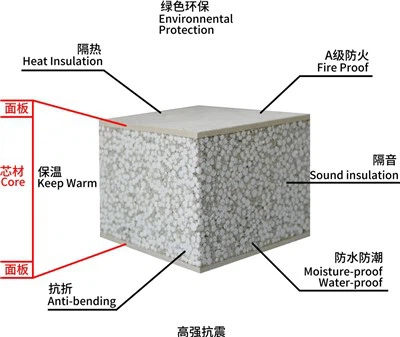
First off, let's talk a bit about what Soundproof EPS (Expanded Polystyrene) panels are. EPS is a lightweight, rigid foam material made from expanded polystyrene beads. These panels are designed to be installed on walls to reduce the amount of sound that passes through them. They work by absorbing and dampening sound waves, preventing them from traveling freely through the wall and into the room.
The structure of these panels plays a crucial role in their soundproofing capabilities. Most Soundproof EPS panels for walls have a multi - layer design. The EPS core is usually the main sound - absorbing layer, while the outer layers can provide additional strength and protection. Some panels may also have special coatings or treatments to enhance their soundproofing performance.


Factors Affecting Sound Reduction
Now, let's get into the factors that determine how much sound these panels can actually reduce.
Panel Thickness
One of the most important factors is the thickness of the panel. Generally speaking, thicker panels tend to offer better sound reduction. A thicker EPS core means more material for the sound waves to interact with, which leads to greater absorption and damping. For example, a 150mm EPS Insulation Board will usually provide better soundproofing than a thinner panel. The extra thickness gives the sound waves more space to dissipate their energy as they travel through the panel.
Density of EPS
The density of the EPS material also matters. Higher - density EPS has a more compact structure, which can be more effective at blocking sound. Denser panels can better resist the transmission of sound waves, as the molecules in the material are closer together. This makes it harder for the sound to pass through, resulting in greater sound reduction.
Installation Quality
Even the best - designed soundproof panels won't perform at their best if they're not installed correctly. Proper installation is crucial for achieving maximum sound reduction. The panels need to be installed tightly against the wall, with no gaps or spaces between them. Any gaps can allow sound to leak through, reducing the overall effectiveness of the soundproofing. Additionally, the joints between the panels should be sealed properly to prevent sound from seeping through.
Room Acoustics
The acoustics of the room itself also play a role. The size, shape, and contents of the room can all affect how sound behaves. A room with hard, reflective surfaces will tend to have more echo and reverberation, which can make it seem like the soundproofing is less effective. On the other hand, a room with soft, absorbent materials like carpets, curtains, and acoustic panels can help to reduce echo and improve the overall sound quality.
Measuring Sound Reduction
Sound reduction is typically measured in decibels (dB). A decibel is a unit used to measure the intensity of sound. The greater the number of decibels reduced, the better the soundproofing.
When we talk about the maximum sound reduction achievable with Soundproof EPS panels for walls, it's important to note that there's no one - size - fits - all answer. The actual sound reduction will depend on the factors we discussed earlier. However, in ideal conditions, with high - quality panels properly installed, it's possible to achieve a sound reduction of up to 50 dB or more.
Let's put this into perspective. A normal conversation typically has a sound level of around 60 - 70 dB. If you can reduce the sound by 50 dB, that means the sound coming through the wall will be reduced to a very low level, almost like a faint whisper.
Comparing with Other Soundproofing Materials
There are other soundproofing materials available on the market, such as acoustic foams, fiberglass insulation, and mass - loaded vinyl. So, how do Soundproof EPS panels stack up against them?
Acoustic Foams
Acoustic foams are known for their excellent sound absorption properties. They're often used in recording studios and home theaters. However, they may not be as effective at blocking sound transmission as Soundproof EPS panels. EPS panels have a more rigid structure, which can better resist the passage of sound waves.
Fiberglass Insulation
Fiberglass insulation is a popular choice for home insulation, including soundproofing. It can provide good sound absorption, but it may not be as durable as EPS panels. EPS panels are more resistant to moisture and pests, which can be a significant advantage in some applications.
Mass - Loaded Vinyl
Mass - loaded vinyl is a dense material that can effectively block sound. However, it can be heavy and difficult to install. Soundproof EPS panels are lightweight and easy to handle, making them a more convenient option for many users.
Applications of Soundproof EPS Panels
Soundproof EPS panels for walls have a wide range of applications.
Residential Buildings
In homes, these panels can be used to create a more peaceful living environment. They can be installed in bedrooms, home offices, and media rooms to reduce noise from outside or from other parts of the house. For example, if you live in a noisy neighborhood, installing Soundproof EPS panels on your bedroom walls can help you get a better night's sleep.
Commercial Buildings
In commercial settings, such as offices, restaurants, and hotels, soundproofing is also important. These panels can be used to create private meeting rooms, quiet dining areas, or comfortable guest rooms. They can help to improve the overall customer experience and increase productivity in the workplace.
Industrial Buildings
Even in industrial buildings, where there's a lot of noise from machinery and equipment, Soundproof EPS panels can be useful. They can be installed on the walls of factories and warehouses to reduce noise pollution and protect the hearing of workers.
Our Product Range
As a supplier, we offer a variety of Soundproof EPS panels for walls. Our Anti - seismic Cement Sandwich Panel is a great option for areas prone to earthquakes. It combines the soundproofing properties of EPS with the strength and seismic resistance of cement.
We also have the 90mm EPS Concrete Sandwich Board, which provides a good balance between thickness, weight, and soundproofing performance. This panel is suitable for a wide range of applications, from residential to commercial buildings.
Conclusion
In conclusion, the maximum sound reduction achievable with Soundproof EPS panels for walls depends on several factors, including panel thickness, density, installation quality, and room acoustics. In ideal conditions, it's possible to achieve a sound reduction of up to 50 dB or more. These panels offer a number of advantages over other soundproofing materials, such as durability, ease of installation, and resistance to moisture and pests.
If you're interested in learning more about our Soundproof EPS panels for walls or are considering a purchase, don't hesitate to get in touch. We'd be more than happy to discuss your specific needs and provide you with a customized solution. Whether you're a homeowner looking to create a quieter living space or a business owner in need of soundproofing for your commercial property, we've got you covered.
References
- "Building Acoustics: Sound Insulation" by Colin H. Hansen
- "Soundproofing Basics" by the American Society of Heating, Refrigerating and Air - Conditioning Engineers (ASHRAE)