
Hey there! As a supplier of EPS Cement Sandwich Panels, I often get asked about the heat - storage capacity of these panels. So, I thought I'd take the time to break it down for you in this blog post.
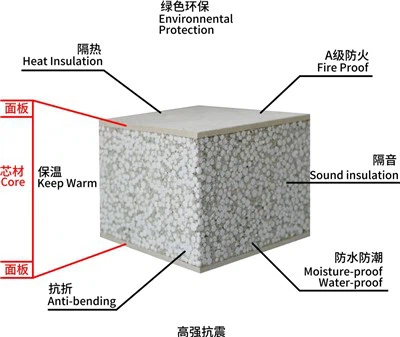
First off, let's understand what EPS Cement Sandwich Panels are. EPS stands for Expanded Polystyrene, which is a lightweight and rigid foam plastic. The sandwich panel consists of an EPS core sandwiched between two layers of cement - based materials. These panels are widely used in construction because they're easy to install, cost - effective, and have some great properties.
Now, let's dive into the heat - storage capacity. Heat storage capacity, also known as thermal mass, is the ability of a material to absorb, store, and release heat over time. For buildings, having a good heat - storage capacity is super important. It helps to regulate the indoor temperature, making the space more comfortable and reducing the need for excessive heating or cooling.
The EPS core in the sandwich panel doesn't have a high heat - storage capacity on its own. EPS is a great insulator, which means it resists the flow of heat. It slows down the transfer of heat from the outside to the inside of a building (or vice - versa), but it doesn't store a lot of heat. However, the cement layers on either side of the EPS core play a crucial role here.
Cement - based materials have a relatively good heat - storage capacity. They can absorb heat during the day when the temperature is high and release it at night when the temperature drops. This natural heat - storage and release cycle helps to keep the indoor temperature more stable. When combined with the insulating properties of the EPS core, the EPS Cement Sandwich Panel becomes a powerful tool for energy - efficient building design.
Let's talk about some factors that affect the heat - storage capacity of these panels. The thickness of the cement layers is a big one. Thicker cement layers can store more heat. But there's a balance to strike because if the cement layers are too thick, the panel becomes heavier and more expensive. Also, the density of the cement matters. Higher - density cement generally has a higher heat - storage capacity.
Another factor is the type of cement used. Different types of cement have different thermal properties. For example, some cements may have additives that enhance their heat - storage capabilities. The manufacturing process of the panel also plays a role. A well - made panel with a uniform distribution of materials will perform better in terms of heat storage.
Now, let's look at some real - world applications. In regions with large diurnal temperature variations, like deserts, EPS Cement Sandwich Panels can be a game - changer. During the hot day, the cement layers absorb the heat, preventing it from quickly entering the building. At night, when the outside temperature drops, the stored heat is released, keeping the indoor space warm.
In colder climates, these panels can help reduce heating costs. The heat - storage capacity of the cement layers, combined with the insulation of the EPS core, means that less energy is needed to keep the building warm. In warmer climates, they can reduce the need for air - conditioning by keeping the indoor temperature cooler during the day.
If you're interested in specific products, we have some great options. Check out our 180mm Sandwich Panel Wall. It offers a good balance between insulation and heat - storage capacity. Our Fiber Cement Sandwich Panel is another great choice. The fiber in the cement can enhance its strength and may also have some positive effects on heat storage. And for exterior applications, our Calcium Silicate Exterior Wall Board provides good heat - storage and weather - resistance.
So, if you're in the market for building materials and want to improve the energy efficiency of your construction project, EPS Cement Sandwich Panels are definitely worth considering. Their unique combination of insulation and heat - storage capacity can lead to significant cost savings in the long run.
Whether you're a builder, an architect, or a homeowner looking to renovate, we're here to help. We can provide you with detailed information about the heat - storage capacity of our panels, as well as other technical specifications. We can also offer advice on which panel is the best fit for your specific project.
If you're interested in learning more or making a purchase, don't hesitate to reach out. Just start a conversation with us, and we'll be more than happy to assist you in finding the right EPS Cement Sandwich Panels for your needs.


References
- Building Science Corporation. "Thermal Mass in Buildings."
- ASTM International. Standards related to cement - based building materials and their thermal properties.