
As a supplier of EPS Cement Sandwich Wall Panels, I often encounter inquiries about the chemical resistance of these panels. Chemical resistance is a crucial factor when considering the suitability of building materials for various environments. In this blog, I will delve into what the chemical resistance of EPS Cement Sandwich Wall Panels entails, why it matters, and how it can impact your construction projects.
Understanding EPS Cement Sandwich Wall Panels
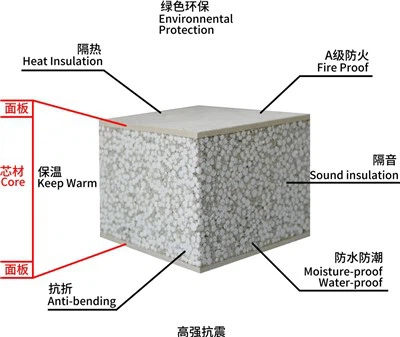
Before we discuss chemical resistance, let's briefly understand what EPS Cement Sandwich Wall Panels are. These panels consist of an expanded polystyrene (EPS) core sandwiched between two layers of cement-based materials. The EPS core provides excellent insulation properties, while the cement layers offer structural strength and durability. They are widely used in both residential and commercial construction due to their lightweight, energy - efficient, and easy - to - install nature.
What is Chemical Resistance?
Chemical resistance refers to a material's ability to withstand the effects of various chemicals without significant degradation. When it comes to EPS Cement Sandwich Wall Panels, chemical resistance is about how well the panels can resist the action of substances such as acids, alkalis, solvents, and salts.
Resistance to Acids
Acids can be present in industrial environments, areas with acid rain, or certain cleaning agents. EPS Cement Sandwich Wall Panels generally have a good level of resistance to weak acids. The cement layer acts as a barrier, protecting the EPS core. However, strong acids can potentially react with the cement components over time. For example, sulfuric acid can react with calcium hydroxide in the cement, leading to the formation of gypsum. This can cause the cement layer to soften and lose its strength. In applications where exposure to strong acids is possible, additional protective coatings may be required.
Resistance to Alkalis
Alkalis are commonly found in construction materials such as cement itself, as well as in some industrial processes. EPS Cement Sandwich Wall Panels are relatively resistant to alkalis. The cement layer is alkaline in nature, and the EPS core is not significantly affected by alkalis under normal conditions. This makes these panels suitable for use in environments where there may be contact with alkaline substances.
Resistance to Solvents
Solvents can be used in cleaning processes or in industrial settings. The resistance of EPS Cement Sandwich Wall Panels to solvents depends on the type of solvent. Some organic solvents, such as benzene and toluene, can dissolve the EPS core if they come into direct contact. However, the cement layer provides a certain degree of protection. If the panels are to be used in an environment with potential solvent exposure, it is important to choose a panel with a well - formed and dense cement layer.
Resistance to Salts
Salts are prevalent in coastal areas and areas with high soil salinity. Saltwater can penetrate the cement layer and cause corrosion of any metal components within the panel (if present). Additionally, the crystallization of salts within the pores of the cement can lead to cracking and spalling. EPS Cement Sandwich Wall Panels need to be designed to resist salt ingress. This can be achieved through proper mix design of the cement layer and the use of additives that reduce the permeability of the cement.
Importance of Chemical Resistance in Construction
The chemical resistance of EPS Cement Sandwich Wall Panels is of utmost importance in construction for several reasons.
Durability
In construction, durability is a key factor. Panels with good chemical resistance will last longer, reducing the need for frequent replacements. This is especially important in industrial and coastal areas where the panels are exposed to harsh chemical environments. For example, in a coastal factory, the panels need to withstand the corrosive effects of saltwater over many years.
Structural Integrity
Chemical degradation can compromise the structural integrity of the panels. If the cement layer is damaged by chemicals, it can no longer provide the necessary support to the EPS core. This can lead to panel failure, which can be dangerous in a building. Ensuring proper chemical resistance helps maintain the structural integrity of the building.


Energy Efficiency
The EPS core of the panel is responsible for its energy - efficient properties. If the EPS core is damaged by chemicals, the insulation performance of the panel will be reduced. This can lead to increased energy consumption for heating or cooling the building. By ensuring chemical resistance, we can maintain the energy efficiency of the building over its lifespan.
Applications and Considerations
EPS Cement Sandwich Wall Panels are used in a wide range of applications, each with its own chemical exposure considerations.
Residential Construction
In residential construction, the panels are mainly exposed to common household chemicals such as cleaning agents. These are usually weak acids or alkalis, and the panels can generally withstand such exposure without significant damage. However, in areas where there is a risk of accidental spillage of stronger chemicals, proper protection should be considered.
Commercial Construction
Commercial buildings can have more diverse chemical exposure. For example, in a restaurant, the panels may be exposed to cooking oils and cleaning agents. In an office building, they may be exposed to inks and solvents from printing equipment. The choice of panels should take into account the specific chemical environment of the building.
Industrial Construction
Industrial environments pose the greatest challenge in terms of chemical exposure. Factories may produce or use a variety of chemicals, including strong acids, alkalis, and solvents. In such cases, it is essential to choose EPS Cement Sandwich Wall Panels with high - performance chemical resistance. Additional protective measures, such as lining the panels with Waterproof Calcium Silicate Board, can also be taken.
Coastal Construction
In coastal areas, the panels are exposed to saltwater and salt spray. The high salt content can cause corrosion and damage to the panels. Panels used in coastal construction should have a low permeability cement layer and may be coated with a waterproof and anti - salt agent. Anti - seismic Cement Sandwich Panel can also be considered, as they often have enhanced durability features that can help with chemical resistance.
Enhancing Chemical Resistance
There are several ways to enhance the chemical resistance of EPS Cement Sandwich Wall Panels.
Material Selection
Choosing high - quality cement and EPS materials is the first step. The cement should have a low permeability and high strength. The EPS core should be of good quality and have a uniform structure. Additionally, additives can be incorporated into the cement mix to improve its chemical resistance. For example, silica fume can be added to reduce the permeability of the cement and increase its resistance to acids.
Protective Coatings
Applying protective coatings to the panels can significantly enhance their chemical resistance. There are various types of coatings available, such as epoxy coatings, polyurethane coatings, and silicone coatings. These coatings can provide an additional barrier against chemicals, protecting the cement layer and the EPS core.
Design Considerations
Proper panel design can also improve chemical resistance. For example, ensuring a sufficient thickness of the cement layer and a tight bond between the cement layer and the EPS core can prevent chemicals from penetrating the panel. Additionally, the use of drainage channels and proper ventilation can reduce the accumulation of moisture and chemicals on the panel surface.
Conclusion
The chemical resistance of EPS Cement Sandwich Wall Panels is a complex but important aspect of their performance. These panels offer a good level of resistance to many common chemicals, but additional measures may be required in harsh environments. As a supplier, we understand the importance of providing panels that meet the specific chemical resistance requirements of our customers. Whether you are building a residential home, a commercial building, or an industrial facility, our EPS Insulation Panels can be customized to provide the necessary chemical protection.
If you are interested in learning more about our EPS Cement Sandwich Wall Panels or have specific requirements for your construction project, please feel free to contact us for a detailed discussion and procurement negotiation. We are committed to providing you with the best - suited products for your needs.
References
- Neville, A. M. (1995). Properties of Concrete. Pearson Education.
- Mehta, P. K., & Monteiro, P. J. M. (2013). Concrete: Microstructure, Properties, and Materials. McGraw - Hill Education.
- ASTM International. (2021). ASTM standards related to building materials and their chemical resistance.