
Fiber cement sandwich panels have gained significant popularity in the construction industry due to their versatility, durability, and excellent performance characteristics. As a leading supplier of fiber cement sandwich panels, I am often asked about the chemical composition of these innovative building materials. In this blog post, I will delve into the details of the chemical components that make up fiber cement sandwich panels, highlighting their roles and contributions to the overall performance of the panels.
1. The Core Components of Fiber Cement Sandwich Panels
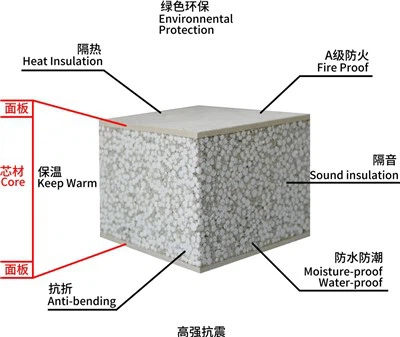
Fiber cement sandwich panels typically consist of three main layers: two outer layers of fiber cement and a core material sandwiched between them. Each layer has a distinct chemical composition that contributes to the panel's structural integrity, thermal insulation, fire resistance, and other properties.
Outer Layers: Fiber Cement
The outer layers of fiber cement sandwich panels are made primarily of a mixture of cement, cellulose fibers, and various additives. Cement, usually Portland cement, serves as the binding agent that holds the other components together. Portland cement is a hydraulic cement that hardens when mixed with water through a chemical process called hydration. It provides the panel with strength, durability, and resistance to weathering.
Cellulose fibers, derived from wood pulp or other plant sources, are added to the cement matrix to enhance the panel's toughness, flexibility, and resistance to cracking. These fibers act as reinforcement, distributing stress evenly throughout the panel and preventing the propagation of cracks. They also improve the panel's workability during manufacturing and installation.
In addition to cement and cellulose fibers, the outer layers may contain various additives to improve specific properties. For example, water repellents can be added to enhance the panel's resistance to water penetration, while pigments can be used to achieve different colors and aesthetic effects. Other additives may include accelerators to speed up the curing process, retarders to slow it down, and plasticizers to improve the panel's workability.
Core Material
The core material of fiber cement sandwich panels plays a crucial role in determining the panel's thermal insulation, soundproofing, and lightweight properties. There are several types of core materials commonly used in fiber cement sandwich panels, each with its own unique chemical composition and characteristics.
One of the most popular core materials is expanded polystyrene (EPS). EPS is a lightweight, rigid foam made from expandable polystyrene beads. These beads are heated and expanded to form a closed-cell structure, which provides excellent thermal insulation and soundproofing properties. EPS is also resistant to moisture, mold, and mildew, making it a suitable choice for a wide range of applications.
Another common core material is polyurethane foam (PU). PU is a versatile polymer that can be formulated to have different densities and properties. It is known for its high thermal insulation efficiency, strength, and durability. PU foam can be sprayed or injected into the panel during manufacturing, allowing for a seamless and uniform core structure.
In addition to EPS and PU, other core materials such as mineral wool, glass wool, and honeycomb structures may also be used in fiber cement sandwich panels. These materials offer different combinations of thermal insulation, soundproofing, fire resistance, and lightweight properties, depending on the specific requirements of the application.
2. Chemical Reactions and Interactions
During the manufacturing process of fiber cement sandwich panels, several chemical reactions and interactions take place that contribute to the formation and properties of the final product.
Hydration of Cement
As mentioned earlier, the hydration of cement is a crucial chemical reaction that occurs when cement is mixed with water. During hydration, the cement particles react with water to form hydrated calcium silicates, calcium hydroxide, and other hydration products. These products gradually harden and bind the other components of the panel together, forming a strong and durable matrix.
The rate and extent of hydration depend on several factors, including the type of cement, the water-cement ratio, the temperature, and the presence of additives. Proper control of these factors is essential to ensure the optimal performance of the panel.
Bonding between Layers
The bonding between the outer layers and the core material is another important aspect of fiber cement sandwich panel manufacturing. The bonding strength depends on the surface properties of the materials, the type of adhesive used, and the manufacturing process.
In some cases, a chemical adhesive may be used to bond the layers together. This adhesive typically contains polymers that react with the surfaces of the materials to form a strong and durable bond. In other cases, mechanical interlocking or physical adhesion may be used to hold the layers together.
Interaction between Components
The different components of fiber cement sandwich panels may also interact with each other in various ways. For example, the cellulose fibers in the outer layers may absorb moisture from the environment, which can affect the hydration of the cement and the performance of the panel. Similarly, the core material may release volatile organic compounds (VOCs) during the manufacturing process or over time, which can have an impact on indoor air quality.
To minimize these interactions and ensure the long-term performance of the panel, it is important to select compatible materials and to follow proper manufacturing and installation procedures.
3. Advantages of Fiber Cement Sandwich Panels
The unique chemical composition of fiber cement sandwich panels offers several advantages over traditional building materials.
Structural Integrity
The combination of the strong outer layers of fiber cement and the lightweight core material provides fiber cement sandwich panels with excellent structural integrity. The panels are able to withstand high loads and stresses, making them suitable for use in a wide range of applications, including walls, roofs, floors, and partitions.
Thermal Insulation
The core material of fiber cement sandwich panels, such as EPS or PU foam, provides excellent thermal insulation properties. This helps to reduce energy consumption and heating and cooling costs in buildings. The panels can also help to maintain a comfortable indoor temperature, even in extreme weather conditions.
Soundproofing
Fiber cement sandwich panels are also effective in reducing noise transmission. The core material acts as a sound barrier, absorbing and dampening sound waves. This makes the panels ideal for use in buildings where noise reduction is important, such as hospitals, schools, and offices.


Fire Resistance
The outer layers of fiber cement sandwich panels are made of cement, which is a non-combustible material. This provides the panels with a high level of fire resistance, helping to prevent the spread of fire in buildings. In addition, some core materials, such as mineral wool, are also fire-resistant, further enhancing the panel's fire performance.
Durability and Weather Resistance
Fiber cement sandwich panels are highly durable and resistant to weathering. The outer layers of fiber cement are resistant to moisture, UV radiation, and other environmental factors, while the core material is protected from damage by the outer layers. This makes the panels suitable for use in both interior and exterior applications, even in harsh climates.
4. Applications of Fiber Cement Sandwich Panels
Due to their excellent properties, fiber cement sandwich panels are widely used in a variety of construction applications.
Building Envelopes
Fiber cement sandwich panels are commonly used as exterior wall cladding and roofing materials in commercial and residential buildings. They provide a cost-effective and energy-efficient solution for improving the thermal performance and aesthetic appearance of buildings.
Interior Partitions
The lightweight and soundproofing properties of fiber cement sandwich panels make them ideal for use as interior partitions in offices, hospitals, schools, and other buildings. They can help to create separate spaces while reducing noise transmission between rooms.
Industrial Buildings
Fiber cement sandwich panels are also used in industrial buildings, such as factories, warehouses, and cold storage facilities. They provide a high level of structural integrity, thermal insulation, and fire resistance, making them suitable for use in demanding industrial environments.
Prefabricated Buildings
The modular nature of fiber cement sandwich panels makes them well-suited for use in prefabricated buildings. They can be easily manufactured off-site and assembled on-site, reducing construction time and costs.
5. Conclusion and Call to Action
In conclusion, the chemical composition of fiber cement sandwich panels is a complex and carefully designed combination of materials that provides the panels with a wide range of excellent properties. As a supplier of [Product name], we are committed to providing high-quality products that meet the needs of our customers. Whether you are looking for a solution for your next construction project or simply want to learn more about fiber cement sandwich panels, we are here to help.
If you are interested in our [Product name], please visit our website to explore our Lightweight Precast EPS Cement Sandwich Panel, EPS Partition Wall Panel, and Calcium Silicate Exterior Wall Board. Our team of experts is ready to assist you with your inquiries and provide you with detailed information about our products and services. Contact us today to start a discussion about your project requirements and explore how our fiber cement sandwich panels can meet your needs.
References
- Neville, A. M. (1995). Properties of Concrete. Pearson Education.
- Mindess, S., Young, J. F., & Darwin, D. (2003). Concrete. Prentice Hall.
- ASTM International. (2021). Standards for Fiber Cement Products. ASTM International.