
Hey there! As a supplier of Fiber Cement Sandwich Panels, I often get asked about the bonding strength of these panels. It's a crucial aspect that determines how well the panels will perform in different applications. So, let's dive right into it and explore what the bonding strength of fiber cement sandwich panels really means.
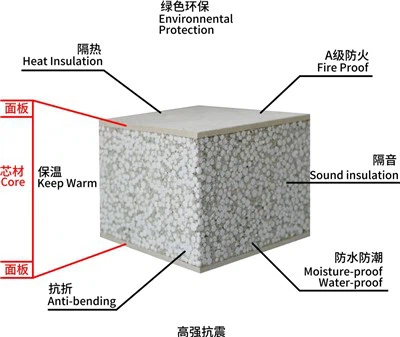
First off, what exactly are fiber cement sandwich panels? Well, they're composite panels made up of a core material sandwiched between two layers of fiber cement. The core can be made from various materials like expanded polystyrene (EPS), polyurethane foam, or mineral wool, each offering different properties such as insulation, fire resistance, and soundproofing.
The bonding strength of these panels refers to how well the core material is attached to the fiber cement layers. A strong bond is essential because it ensures the structural integrity of the panel. If the bond is weak, the panel might delaminate over time, leading to a loss of performance and potentially compromising the safety of the structure it's used in.
There are several factors that can affect the bonding strength of fiber cement sandwich panels. One of the most important is the type of adhesive used. The adhesive needs to be compatible with both the core material and the fiber cement. It should have good adhesion properties and be able to withstand environmental factors like temperature changes and moisture.
For example, when we're using EPS as the core material, we need an adhesive that can bond well with the smooth surface of EPS. Some adhesives are specifically formulated for this purpose, and they play a key role in creating a strong bond between the EPS and the fiber cement layers.
Another factor is the surface preparation of the materials. Before the panels are bonded together, the surfaces of the fiber cement and the core need to be clean and free of any contaminants. Even a small amount of dust or grease can reduce the bonding strength. So, we take great care in preparing the surfaces to ensure a proper bond.
The manufacturing process also has a significant impact on the bonding strength. The pressure and temperature applied during the bonding process need to be carefully controlled. If the pressure is too low, the adhesive might not spread evenly, resulting in weak spots. On the other hand, if the temperature is too high, it could damage the core material or the adhesive.
At our company, we've spent a lot of time and effort optimizing our manufacturing process to ensure the highest possible bonding strength. We use state - of - the - art equipment and follow strict quality control measures to make sure each panel meets our high standards.


Now, let's talk about some of the benefits of having strong bonding strength in fiber cement sandwich panels. One of the main advantages is improved durability. A panel with a strong bond can withstand more wear and tear over time. It's less likely to crack or separate, which means it will last longer and require less maintenance.
In terms of insulation, a well - bonded panel performs better. When the core is firmly attached to the fiber cement layers, there are fewer gaps or air pockets that could allow heat to escape. This results in better energy efficiency, which is a big plus for both residential and commercial buildings.
Fire resistance is another area where strong bonding strength matters. In a fireproof panel, the bond between the layers helps to prevent the spread of flames and smoke. If the bond is weak, the panel might not be able to provide the same level of fire protection.
We offer a range of fiber cement sandwich panels with different core materials and properties. For example, our EPS Cement Sandwich Insolation Board is a popular choice for its excellent insulation properties. The strong bond between the EPS core and the fiber cement layers ensures long - lasting performance.
Our Fireproof Foam Sandwich Partition Board is designed for areas where fire safety is a top priority. The high - quality adhesive used in this panel creates a strong bond that helps to contain fires and protect the building and its occupants.
And if you're looking for a specific thickness, our 90mm EPS Concrete Sandwich Board offers the right combination of strength and insulation. The strong bonding in this panel makes it suitable for a variety of construction projects.
To test the bonding strength of our panels, we use industry - standard methods. One common test is the pull - off test, where a force is applied to try to separate the layers of the panel. We also conduct shear tests to measure the panel's ability to resist forces that act parallel to the bonding surface.
These tests give us a clear picture of how well our panels are bonded and allow us to make any necessary adjustments to our manufacturing process. We're constantly looking for ways to improve the bonding strength and the overall quality of our panels.
In conclusion, the bonding strength of fiber cement sandwich panels is a critical factor that affects their performance, durability, and safety. At our company, we're committed to providing high - quality panels with strong bonds. Whether you're building a new home, an office building, or an industrial facility, our fiber cement sandwich panels can meet your needs.
If you're interested in learning more about our products or would like to discuss a potential project, we'd love to hear from you. You can reach out to us to start a conversation about your requirements and how our panels can fit into your plans.
References:
- ASTM International standards on testing the bonding strength of composite panels.
- Research papers on adhesive technology for fiber cement sandwich panels.