
How to adjust the pressure in fiber cement board equipment?
As a supplier of Fiber Cement Board Equipment, I understand the critical role that pressure adjustment plays in the production of high - quality fiber cement boards. In this blog, I will share some professional insights on how to properly adjust the pressure in fiber cement board equipment.
Understanding the Importance of Pressure in Fiber Cement Board Production
Pressure is a key factor that directly affects the density, strength, and surface quality of fiber cement boards. Appropriate pressure ensures that the fibers, cement, and other additives are well - combined, resulting in a board with uniform structure and excellent performance. Insufficient pressure may lead to loose boards with low strength and poor water - resistance. On the other hand, excessive pressure can damage the fibers, cause cracking of the board, and increase energy consumption.
Factors Affecting Pressure Adjustment
- Raw Material Properties
The characteristics of raw materials, such as the type and fineness of cement, the length and strength of fibers, and the moisture content of the mixture, have a significant impact on the required pressure. For example, if the cement has a high fineness, it may require less pressure to achieve good compaction. Fibers with longer lengths generally need more pressure to be evenly distributed and bonded. - Board Thickness and Density Requirements
Different thicknesses and density requirements of fiber cement boards call for different pressure settings. Thicker boards usually need higher pressure to ensure proper compaction throughout the entire thickness. Higher - density boards also require increased pressure to achieve the desired weight per unit area. - Equipment Type and Condition
The type of fiber cement board equipment, such as the press mechanism (hydraulic press, mechanical press, etc.), and its current condition can affect pressure adjustment. A well - maintained press with accurate pressure sensors and control systems is more likely to provide stable and precise pressure.
Steps for Pressure Adjustment
- Initial Pressure Setting
Before starting the production, based on the raw material properties, board specifications, and equipment characteristics, a preliminary pressure value should be set. This can be determined through previous production experience or reference to the equipment manufacturer's guidelines. For example, for a standard 6 - mm thick fiber cement board with a medium density, the initial pressure might be set at around 5 - 8 MPa. - Test Production
Conduct a test production run with the initial pressure setting. Produce a small batch of boards and carefully inspect their quality. Check for surface smoothness, density uniformity, and strength. If the boards show signs of insufficient compaction, such as visible voids or low density, the pressure needs to be increased. Conversely, if there are cracks or excessive deformation on the boards, the pressure should be reduced. - Fine - Tuning
Based on the test results, make small adjustments to the pressure. Each adjustment should be in small increments, typically around 0.1 - 0.5 MPa, to avoid over - correction. After each adjustment, produce another small batch of boards for inspection. Repeat this process until the desired board quality is achieved. - Monitoring and Maintenance
During continuous production, regularly monitor the pressure to ensure its stability. Check the pressure sensors and control systems for any malfunctions. Also, maintain the equipment properly, including lubricating the press components and replacing worn - out parts, to ensure that the pressure adjustment remains accurate.
Special Considerations
- Temperature and Humidity
Environmental factors such as temperature and humidity can affect the raw material properties and the performance of the equipment. High humidity may increase the moisture content of the raw materials, which may require a slight increase in pressure. In cold temperatures, the viscosity of the hydraulic oil in a hydraulic press may increase, affecting the pressure delivery. Therefore, appropriate adjustments should be made according to the actual environmental conditions. - Product Diversification
If your production includes different types of fiber cement boards, such as fire - resistant boards or acoustic boards, each type may have different pressure requirements. It is necessary to adjust the pressure separately for each product to meet its specific performance needs.
Related Equipment and Their Role in Pressure - Related Processes
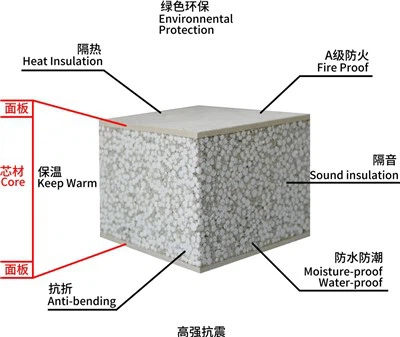
In addition to fiber cement board equipment, other related equipment can also play a role in the overall production process related to pressure. For example, EPS Conctret Sandwich Panel Production Equipment and EPS Cement Wall Panel Making Machine may have similar pressure - related processes in the production of sandwich panels and wall panels. Although the specific pressure requirements and adjustment methods may vary, the basic principles of pressure adjustment, such as considering raw material properties and product specifications, are applicable.
Conclusion
Proper pressure adjustment in fiber cement board equipment is crucial for producing high - quality fiber cement boards. By understanding the factors affecting pressure, following the correct adjustment steps, and considering special circumstances, manufacturers can achieve stable and efficient production. As a supplier of fiber cement board equipment, we are committed to providing our customers with not only high - quality equipment but also professional technical support to help them optimize the pressure adjustment process.
If you are interested in our Fiber Cement Board Equipment or have any questions about pressure adjustment in the production process, please feel free to contact us for further discussion and procurement negotiation. We look forward to working with you to achieve excellent production results.


References
- "Fiber Cement Board Manufacturing Technology" - Industry research report
- Equipment operation manuals provided by fiber cement board equipment manufacturers