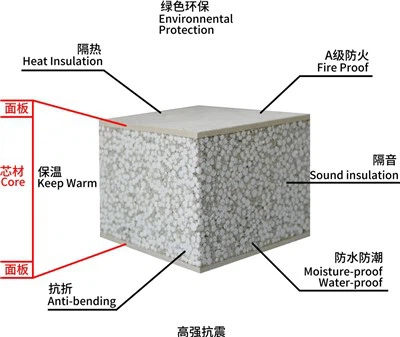

Hey there! I'm a supplier of EPS Cement Sandwich Panels, and I'm super excited to take you behind the scenes and show you how these amazing panels are manufactured.
1. Raw Material Preparation
First things first, we need to gather all the raw materials. For EPS Cement Sandwich Panels, the main components are expanded polystyrene (EPS) beads, cement, and various additives.
The EPS beads are like the heart of the panel. They're lightweight, have excellent insulation properties, and come in different sizes. We source high - quality EPS beads from reliable suppliers. These beads are stored in large silos until they're ready to be used.
Cement is another crucial ingredient. We usually use Portland cement, which is known for its strength and durability. It acts as the binder that holds everything together. Along with cement, we also add some additives. These additives can improve the workability of the mixture, enhance the panel's fire resistance, and increase its water - proofing capabilities.


2. Mixing the Cement Mortar
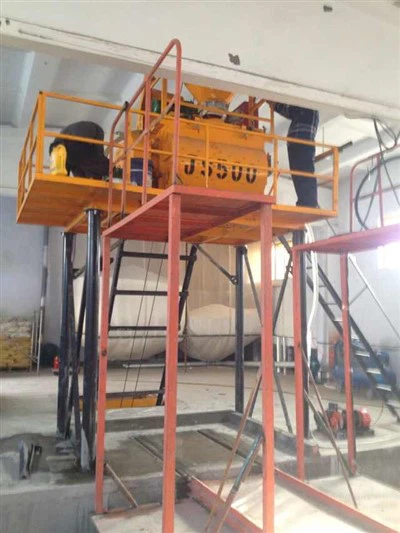
Once we have all the raw materials, it's time to mix the cement mortar. We start by putting the cement into a large mixer. Then, we add water gradually while the mixer is running. The amount of water is carefully measured to ensure the right consistency of the mortar.
Next, we add the additives. These are added in specific proportions based on the desired properties of the final panel. For example, if we're making a Fireproof Partition Wall Panel, we'll add more fire - resistant additives. The mixer runs for a certain period, usually around 10 - 15 minutes, to make sure the mortar is well - blended.
3. Preparing the EPS Core
While the cement mortar is being mixed, we prepare the EPS core. The EPS beads are first pre - expanded in a pre - expansion machine. This process involves heating the beads with steam, causing them to expand and become lighter.
After pre - expansion, the beads are left to rest for a while to allow them to cool down and stabilize. Then, they're transferred to a molding machine. In the molding machine, the beads are further expanded and fused together to form the EPS core in the desired shape and size. The most common sizes for EPS cores are for 120mm EPS Wall Panels, but we can also customize the size according to our customers' requirements.
4. Applying the Cement Mortar to the EPS Core
Once the EPS core is ready and the cement mortar is well - mixed, it's time to combine them. We use a special machine to apply the cement mortar to both sides of the EPS core. The machine spreads the mortar evenly, ensuring a uniform thickness on each side.
The thickness of the cement layer can vary depending on the application of the panel. For panels used in exterior walls, we usually apply a thicker layer of cement to provide better protection against the elements. For interior partitions, a thinner layer may be sufficient.
5. Curing Process
After the cement mortar is applied to the EPS core, the panels go through a curing process. Curing is essential as it allows the cement to harden and gain strength. We usually place the panels in a curing chamber where the temperature and humidity are carefully controlled.
The curing time can range from a few days to a week, depending on various factors such as the type of cement used and the environmental conditions. During this time, we regularly check the panels to make sure they're curing properly.
6. Quality Control
Once the panels are cured, they go through a strict quality control process. We check the panels for various parameters such as strength, insulation properties, fire resistance, and dimensional accuracy.
We use specialized testing equipment to measure the strength of the panels. For insulation properties, we use thermal conductivity meters to ensure that the panels meet the required standards. Fire resistance is tested in a fire - testing laboratory, where the panels are exposed to high temperatures to see how they perform.
Any panels that don't meet our quality standards are rejected and recycled. We take quality very seriously because we want to provide our customers with the best - quality EPS Cement Sandwich Panels.
7. Finishing and Packaging
After passing the quality control tests, the panels are ready for finishing. We can add a smooth or textured finish to the panels, depending on the customer's preference. Some customers may also want the panels to be painted or coated with a special protective layer.
Once the finishing touches are done, the panels are carefully packaged. We use sturdy packaging materials to protect the panels during transportation. The packaged panels are then stored in our warehouse until they're ready to be shipped to our customers.
Why Choose Our EPS Cement Sandwich Panels?
Our EPS Cement Sandwich Panels have several advantages. Firstly, they're extremely lightweight, which makes them easy to handle and install. This can significantly reduce the labor cost and installation time.
Secondly, they have excellent insulation properties. The EPS core provides great thermal insulation, which can help reduce energy consumption in buildings. Our Heat Insulation Prefabricated Cement Board is a perfect example of this.
Thirdly, they're fire - resistant. Thanks to the special additives we use in the cement mortar, our panels can withstand high temperatures for a certain period, providing an extra layer of safety in case of a fire.
We also offer customized solutions. Whether you need a specific size, shape, or finish for your panels, we can work with you to meet your requirements.
If you're interested in our EPS Cement Sandwich Panels, whether it's for a small - scale renovation project or a large - scale construction project, don't hesitate to reach out. We're here to answer all your questions and help you with your procurement needs. Let's start a conversation and see how we can work together to make your project a success.
References
- Building Materials Handbook: A comprehensive guide on the properties and manufacturing processes of various building materials.
- Construction Technology Journal: Articles on the latest advancements in construction panel manufacturing.