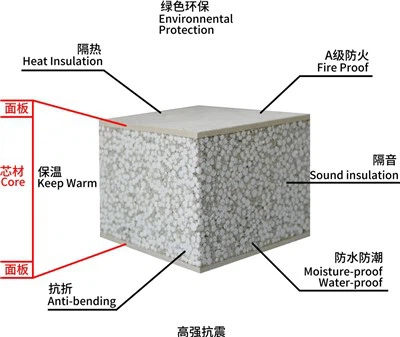

Hey there! As a supplier of Calcium Silicate Cement Board, I often get asked how these boards can stand up to extreme temperatures. Well, let's dive right into it and explore the fascinating science behind their heat resistance.
First off, what exactly is Calcium Silicate Cement Board? It's a composite material made from a mix of calcium silicate, which is formed by the reaction of lime and silica. This combination gives the board some really cool properties, especially when it comes to dealing with high and low temperatures.
The Science of Heat Resistance
At the heart of the board's ability to withstand extreme temperatures is its chemical composition. Calcium silicate has a high melting point. Unlike some other materials that start to soften or deform at relatively low temperatures, calcium silicate remains stable even when things get hot. When the board is exposed to heat, the calcium silicate structure acts like a shield, preventing the heat from quickly penetrating through the board.
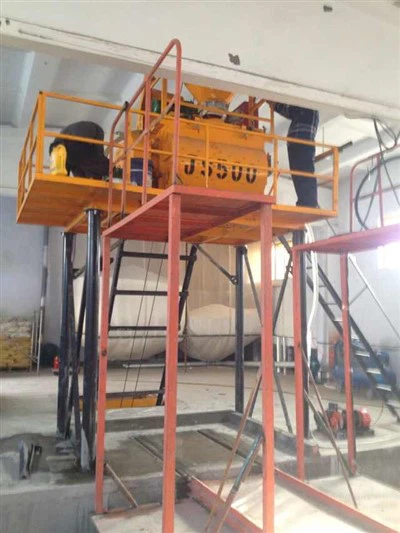
The way the board is manufactured also plays a crucial role. During the production process, the materials are carefully mixed and formed under specific conditions. This results in a dense and uniform structure. The density of the board helps in reducing the transfer of heat. Heat transfer occurs through three main mechanisms: conduction, convection, and radiation. In the case of Calcium Silicate Cement Board, its dense structure limits conduction. Conduction is the transfer of heat through a material by direct contact of its molecules. Since the molecules in the board are tightly packed, it's harder for heat to move from one side of the board to the other.
Let's talk about high - temperature scenarios. In industrial settings or areas prone to wildfires, the ability of a material to resist heat is of utmost importance. Calcium Silicate Cement Board can handle temperatures well above what most common building materials can. For example, in a fire situation, the board can act as a barrier, slowing down the spread of flames and heat. This gives people more time to evacuate and can also protect the structure of a building from collapsing too quickly.
On the other hand, in cold environments, the board also performs admirably. It has good insulation properties, which means it can keep the heat inside a building. This is because the same dense structure that resists heat transfer in hot conditions also works to prevent the loss of heat in cold conditions. So, whether it's a freezing winter day or a sweltering summer afternoon, Calcium Silicate Cement Board has your back.
Real - World Applications
Now, let's look at some real - world applications where the heat - resistant properties of Calcium Silicate Cement Board come in handy. One of the popular uses is in prefabricated houses. Calcium Silicate Board for Prefabricated Houses is a great option because it can provide both structural support and insulation. Prefabricated houses are often built quickly and need materials that can withstand different environmental conditions. The heat resistance of the board ensures that the house remains comfortable and safe, no matter the temperature outside.
Another application is in sandwich panel walls. 180mm Sandwich Panel Wall often use Calcium Silicate Cement Board as one of the outer layers. The board adds an extra layer of protection against heat and fire. Sandwich panels are commonly used in commercial buildings, warehouses, and even some residential structures. The heat - resistant properties of the board help in maintaining the integrity of the panel and the overall building.
EPS Cement Sandwich Panels are also a common application. EPS Cement Sandwich Panel combines the insulation properties of EPS (Expanded Polystyrene) with the strength and heat resistance of Calcium Silicate Cement Board. This combination makes the panel suitable for a wide range of construction projects, from energy - efficient homes to large - scale industrial buildings.
Advantages Over Other Materials
When compared to other building materials, Calcium Silicate Cement Board has some distinct advantages in terms of heat resistance. For example, wood is a common building material, but it catches fire easily and loses its strength when exposed to high temperatures. On the other hand, Calcium Silicate Cement Board is non - combustible and retains its structural integrity even at high temperatures.


Gypsum boards are also widely used, but they have a lower heat resistance compared to Calcium Silicate Cement Board. Gypsum starts to break down at relatively low temperatures, releasing water vapor and losing its strength. In contrast, Calcium Silicate Cement Board remains stable and can continue to perform its function as a building material.
Quality Control and Testing
As a supplier, we take quality control very seriously. Our Calcium Silicate Cement Boards undergo rigorous testing to ensure they meet the highest standards of heat resistance. We use specialized equipment to simulate extreme temperature conditions and measure the board's performance. This includes testing for fire resistance, thermal conductivity, and long - term durability under different temperature cycles.
We also work closely with independent testing laboratories to validate the results. These third - party tests give our customers the confidence that they are getting a product that will perform as expected in real - world situations. By investing in quality control and testing, we can guarantee that our Calcium Silicate Cement Boards are reliable and safe for use in a variety of construction projects.
Conclusion
So, there you have it! Calcium Silicate Cement Board is an amazing building material that can withstand extreme temperatures thanks to its unique chemical composition, dense structure, and careful manufacturing process. Whether you're building a prefabricated house, a commercial building, or an industrial facility, this board can provide the heat resistance and insulation you need.
If you're interested in learning more about our Calcium Silicate Cement Boards or are looking to make a purchase, don't hesitate to reach out. We're here to answer any questions you might have and to help you find the right solution for your construction project. Let's work together to build structures that are safe, energy - efficient, and built to last.
References
- ASTM International Standards on Building Materials
- Journal of Building and Construction Materials Research