
When it comes to soundproofing a space, there are various materials available in the market. As a supplier of Soundproof EPS Panels for Walls, I've had the opportunity to closely examine and understand the performance, advantages, and disadvantages of these panels compared to other commonly used soundproofing materials. In this blog, I will delve into a detailed comparison to help you make an informed decision for your soundproofing needs.
What is Soundproofing and Why is it Important?
Soundproofing is the process of reducing the amount of sound transmitted from one area to another. It is crucial in various settings, such as residential buildings, where it can enhance privacy and improve the quality of life by reducing noise from the outside environment or between different rooms. In commercial spaces like offices, schools, and hospitals, soundproofing can create a more productive and comfortable environment.
Soundproof EPS Panels for Walls: An Overview
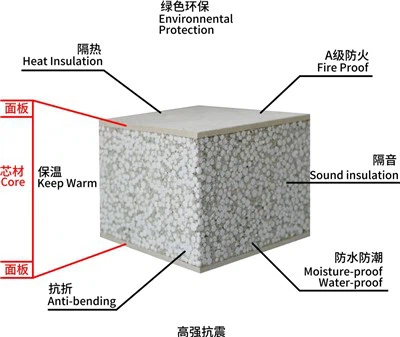
Soundproof EPS (Expanded Polystyrene) panels for walls are made from expanded polystyrene beads that are fused together under heat and pressure. These panels are lightweight, easy to install, and have excellent insulation properties, both for heat and sound. They come in different thicknesses and densities, allowing for customization based on the specific soundproofing requirements of a project.
One of the key advantages of Soundproof EPS Panels for Walls is their affordability. Compared to many other soundproofing materials, they offer a cost - effective solution without compromising on performance. Additionally, they are fire - resistant, non - toxic, and have a long lifespan, making them a sustainable choice for soundproofing applications.
Comparison with Other Soundproofing Materials
Fiberglass Insulation
Fiberglass insulation is a popular choice for soundproofing. It consists of fine glass fibers that trap air and absorb sound waves. Fiberglass insulation is effective at reducing airborne noise, such as voices and traffic sounds.


However, fiberglass has some drawbacks when compared to soundproof EPS panels. First, fiberglass can be irritating to the skin, eyes, and respiratory system during installation. In contrast, soundproof EPS panels are much safer to handle. Second, fiberglass insulation can sag over time, especially in moist environments, which can reduce its soundproofing effectiveness. Soundproof EPS panels, on the other hand, maintain their shape and performance over the long term. Moreover, Soundproof EPS Panels for Walls are more lightweight than fiberglass, making them easier to install on walls.
Mass - Loaded Vinyl
Mass - loaded vinyl (MLV) is a heavy, flexible material that is used to block sound. It works by adding mass to a wall, floor, or ceiling, which helps to reduce the transmission of sound waves. MLV is very effective at blocking low - frequency noises, such as machinery vibrations.
But MLV is relatively expensive compared to soundproof EPS panels. The cost of materials and installation of MLV can quickly add up, especially for large - scale projects. Also, MLV can be difficult to install on irregular surfaces, while soundproof EPS panels can be easily cut and shaped to fit any wall design. Soundproof EPS Panels for Walls also provide additional thermal insulation, which MLV does not offer.
Acoustic Foam
Acoustic foam is a porous material that is designed to absorb sound waves. It is often used in recording studios and home theaters to improve the acoustics of a room. Acoustic foam comes in various shapes and sizes, such as pyramids and wedges, to maximize sound absorption.
Although acoustic foam is effective at reducing echoes and reverberation, it has limited effectiveness in blocking sound transmission through walls. Soundproof EPS panels, on the other hand, can both absorb and block sound, providing a more comprehensive soundproofing solution. Acoustic foam can also be relatively fragile and may need to be replaced more frequently compared to the durable Soundproof EPS Panels for Walls.
120mm Polystyrene Building Panels
120mm polystyrene building panels are similar to soundproof EPS panels but may have different applications and performance characteristics. The 120mm panels are often used for general building insulation, including both heat and sound. However, soundproof EPS panels are specifically engineered to optimize soundproofing performance.
Soundproof EPS panels typically have a more advanced cell structure and a higher density in some cases, which allows them to better absorb and dampen sound waves compared to standard 120mm polystyrene building panels. Also, soundproof EPS panels are designed with a focus on wall installation, while 120mm polystyrene building panels may be used in various parts of the building, including roofs and floors.
Anti - seismic Cement Sandwich Panel
Anti - seismic cement sandwich panels are a type of structural panel that combines cement with an insulating core. These panels are mainly used for their anti - seismic properties and provide some level of soundproofing as well.
Compared to soundproof EPS panels, anti - seismic cement sandwich panels are much heavier. The additional weight can make installation more challenging and may require a stronger support structure. Also, the soundproofing performance of cement sandwich panels is often less targeted than that of Soundproof EPS Panels for Walls. While they can reduce some sound transmission, they may not be as effective in creating a truly quiet environment.
Applications of Soundproof EPS Panels for Walls
Soundproof EPS panels for walls are suitable for a wide range of applications. In residential buildings, they can be used to soundproof bedrooms, home offices, and home theaters. In commercial buildings, they can be installed in conference rooms, call centers, and classrooms to reduce noise disturbance.
Their easy installation process makes them a great choice for both new construction projects and retrofit applications. For example, if you want to soundproof an existing office space without major structural changes, soundproof EPS panels can be quickly and easily installed on the existing walls.
Conclusion
In conclusion, soundproof EPS panels for walls offer a unique combination of affordability, performance, and ease of installation when compared to other soundproofing materials. They outperform many materials in terms of safety, durability, and insulation capabilities, while also being cost - effective. Whether you are a homeowner looking to create a quiet bedroom or a commercial developer working on a large - scale project, Soundproof EPS Panels for Walls are a reliable choice.
If you are interested in our soundproof EPS panels for walls or have any questions about soundproofing solutions, we are here to help. We can provide you with more detailed information, offer samples, and assist you in choosing the right product for your specific needs. Contact us today to start a discussion about your soundproofing project.
References
- Building Materials Handbook by McGraw - Hill
- Soundproofing Principles and Applications by David W. Herrin