
When it comes to constructing buildings, the choice of wall materials is a crucial decision that can significantly impact the overall project. One of the key factors to consider is the weight of the wall materials, as it can affect everything from transportation costs to the structural integrity of the building. In this blog, as a supplier of Expanded Polystyrene (EPS) Wall Panels, I'll delve into how EPS wall panels compare in terms of weight to other common wall materials.
Understanding Expanded Polystyrene Wall Panels
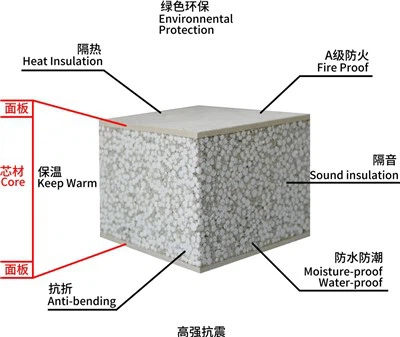
Expanded Polystyrene is a lightweight, rigid foam material made from expanded polystyrene beads. EPS wall panels are created by molding these beads together to form large, solid panels. These panels are known for their excellent insulation properties, cost - effectiveness, and ease of installation.
The weight of EPS wall panels is primarily determined by their density. Generally, EPS wall panels have a low density, which results in a relatively light weight. For example, a standard 120mm EPS wall panel has a density ranging from 15 to 30 kg/m³. This low density makes them an attractive option for many construction projects. You can explore our 120mm Polystyrene Building Panels for more details.
Comparing with Traditional Brick Walls
Brick walls are one of the oldest and most traditional wall - building materials. Bricks are made from clay or shale and are fired in a kiln. The weight of a brick can vary depending on its size and type, but on average, a standard brick weighs around 2.5 to 3.5 kg.
For a typical brick wall, which might have a thickness of 230mm, the weight per square meter can be quite substantial. A solid brick wall can weigh anywhere from 400 to 600 kg/m². In contrast, an EPS wall panel of similar thickness would weigh only a fraction of that. The lightweight nature of EPS wall panels means that less structural support is required, reducing the overall load on the building's foundation. This can lead to significant cost savings in terms of foundation construction and can also be beneficial in seismic - prone areas, as lighter structures are generally more resistant to earthquake damage.
Comparison with Concrete Walls
Concrete is another widely used wall material. It is a composite material made from cement, aggregates (such as sand and gravel), and water. The weight of a concrete wall depends on its density, which is typically around 2200 - 2400 kg/m³.
A 150mm thick concrete wall can weigh approximately 330 - 360 kg/m². In comparison, an EPS wall panel of the same thickness would weigh much less. The light weight of EPS wall panels simplifies the construction process, as they are easier to handle and install. Workers can move and position EPS panels more quickly than heavy concrete elements, reducing labor costs and construction time. Additionally, the transportation of EPS wall panels is more cost - effective due to their lower weight, as fewer trips are needed to deliver the required materials to the construction site.
Comparison with Timber Framing
Timber framing is a popular choice for residential construction, especially in areas with a plentiful supply of wood. Timber frames are made from wooden studs, plates, and joists, which are then covered with sheathing materials such as plywood or oriented strand board (OSB).
The weight of a timber - framed wall depends on the size and spacing of the studs, as well as the type of sheathing used. On average, a timber - framed wall with 16 - inch on - center studs and 1/2 - inch OSB sheathing weighs around 15 - 25 kg/m². While EPS wall panels and timber - framed walls are both relatively lightweight, EPS panels have some advantages. EPS panels offer better insulation properties compared to many timber - framed wall systems, and they are also more resistant to pests and rot. Our Waterproof EPS Sandwich Panel is a great option for those looking for a waterproof and lightweight wall solution.


Comparison with Prefabricated Cement Boards
Prefabricated cement boards are becoming increasingly popular in the construction industry. These boards are made from a mixture of cement, cellulose fibers, and other additives. They are pre - fabricated in a factory and then transported to the construction site for installation.
The weight of prefabricated cement boards can vary depending on their thickness and composition. A typical 12mm thick cement board weighs around 10 - 12 kg/m². However, when considering a wall system constructed with cement boards, additional layers such as insulation and finishing materials need to be taken into account. EPS wall panels, on the other hand, often come with integrated insulation, which simplifies the construction process. Our Heat Insulation Prefabricated Cement Board combines the benefits of insulation and pre - fabrication, offering a lightweight and energy - efficient solution.
Advantages of Lightweight EPS Wall Panels
The lightweight nature of EPS wall panels offers several advantages. Firstly, as mentioned earlier, it reduces transportation costs. Less fuel is required to transport lighter materials, which is not only cost - effective but also more environmentally friendly.
Secondly, the ease of handling and installation of EPS wall panels can lead to significant savings in labor costs. Workers can install EPS panels more quickly and with less physical effort compared to heavier wall materials. This can speed up the construction process, allowing projects to be completed on time or even ahead of schedule.
In addition, the lower weight of EPS wall panels places less stress on the building's structure. This can be particularly important in high - rise buildings or in structures built on soft or unstable ground. The reduced load on the foundation means that the foundation can be designed to be smaller and less expensive.
Conclusion
In conclusion, Expanded Polystyrene wall panels offer a clear advantage in terms of weight when compared to other common wall materials such as brick, concrete, timber, and prefabricated cement boards. Their low density and lightweight nature result in lower transportation costs, easier installation, and reduced structural requirements.
If you are considering a construction project and are looking for a lightweight, cost - effective, and energy - efficient wall solution, I encourage you to explore our range of EPS wall panels. Whether you need 120mm Polystyrene Building Panels, Waterproof EPS Sandwich Panel, or Heat Insulation Prefabricated Cement Board, we have the products to meet your needs.
If you are interested in purchasing our EPS wall panels or would like to discuss your project requirements further, please feel free to contact us for a detailed consultation and quotation. We look forward to working with you on your next construction project.
References
- "Building Materials: Properties, Uses, and Performance" by David C. Croll
- "Construction Materials: Types, Uses, and Selection" by S.K. Duggal
- Industry reports on construction materials from leading market research firms.