
Hey there! As a supplier of lightweight partition wall panels, I often get asked whether these panels require a vapor barrier. It's a great question, and one that can have a big impact on the performance and longevity of your walls. So, let's dive in and explore this topic together.
First off, let's understand what a vapor barrier is and what it does. A vapor barrier is a material that's designed to prevent water vapor from passing through it. In the context of walls, this is important because water vapor can cause all sorts of problems, like mold growth, rot, and damage to the wall structure. When warm, moist air comes into contact with a cold surface, like an exterior wall in the winter, the water vapor in the air can condense and turn into liquid water. If this happens inside a wall cavity, it can lead to some serious issues.
Now, let's talk about lightweight partition wall panels. These panels are popular for a lot of reasons. They're easy to install, cost - effective, and can offer good insulation properties. But do they need a vapor barrier? Well, it depends on a few factors.
Climate
The climate you're in plays a huge role in determining whether you need a vapor barrier. In a cold climate, where the temperature difference between the inside and outside of the building is significant, a vapor barrier can be really important. For example, in regions with long, cold winters, warm, moist indoor air can try to escape through the walls. Without a vapor barrier, this moisture can get trapped in the wall cavity, causing condensation and potential damage.
On the other hand, in a hot and humid climate, the situation is a bit different. Here, the concern is more about preventing outside moisture from getting into the building. In some cases, a vapor barrier might not be necessary or could even cause problems if it traps moisture inside the wall. For instance, in a tropical climate, where the air is constantly warm and humid, moisture can build up inside the wall if there's no way for it to escape.
Panel Material
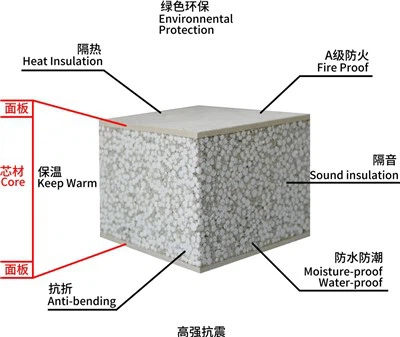
The material of the lightweight partition wall panel also matters. Some of the panels we supply, like the Soundproof EPS Sandwich Panel, have inherent moisture - resistant properties. EPS (Expanded Polystyrene) is a closed - cell foam, which means it doesn't absorb water easily. This can act as a bit of a natural barrier against moisture. However, even with these panels, in certain climates, an additional vapor barrier might still be beneficial.
The EPS Cement Seismic Panel is another example. The cement component can provide some protection against moisture, but it's still porous to some extent. In a high - humidity environment, adding a vapor barrier can help prevent moisture from seeping into the panel and causing damage over time.
Our Foam Concrete Cement Sandwich Panel is also worth considering. Foam concrete has different moisture characteristics compared to other materials. It can absorb some moisture, and if left unchecked, this can lead to problems like cracking or a reduction in the panel's structural integrity. A vapor barrier can be a good way to manage this moisture absorption.
Building Design and Usage
The design of the building and how it's used also influence the need for a vapor barrier. If a building has a lot of moisture - generating activities, like a commercial kitchen or a swimming pool area, the risk of moisture buildup in the walls is higher. In these cases, a vapor barrier is likely a good idea, even if the panels themselves have some moisture - resistant properties.
On the other hand, if the building is used in a relatively dry environment, like an office with good ventilation, the need for a vapor barrier might be less critical. However, it's still something to think about, especially if the building is located in a climate where there are significant temperature and humidity fluctuations.
Installation Considerations
Even if you decide that a vapor barrier is necessary, proper installation is key. A poorly installed vapor barrier can be worse than no vapor barrier at all. It should be installed without any gaps or tears, and it needs to be properly sealed around all penetrations, like electrical outlets and pipes.
When installing lightweight partition wall panels, make sure to follow the manufacturer's instructions. Some panels might have specific recommendations regarding vapor barriers. For example, some panels might require a certain type of vapor barrier to be installed on one side or the other.
Benefits of Using a Vapor Barrier
If used correctly, a vapor barrier can offer several benefits. It can improve the energy efficiency of the building by reducing heat transfer through the walls. When moisture is trapped in the wall, it can lower the insulation value of the panel. By preventing moisture buildup, the vapor barrier helps the panels maintain their insulating properties.


A vapor barrier also helps protect the structural integrity of the walls. As mentioned earlier, moisture can cause mold growth, rot, and damage to the panel material. By keeping moisture out, the panels will last longer and require less maintenance.
Drawbacks of Using a Vapor Barrier
However, there are also some potential drawbacks. If a vapor barrier is installed in a situation where it's not needed, it can trap moisture inside the wall, leading to the very problems it's supposed to prevent. Additionally, adding a vapor barrier can increase the cost and complexity of the installation process.
So, to sum it up, whether lightweight partition wall panels require a vapor barrier is not a simple yes or no answer. It depends on the climate, panel material, building design, and usage. As a supplier, I always recommend consulting with a professional contractor or building scientist. They can assess your specific situation and give you the best advice.
If you're in the market for lightweight partition wall panels and have questions about vapor barriers or any other aspect of our products, don't hesitate to reach out. We're here to help you make the right choices for your project. Whether you're building a small home or a large commercial building, we've got the expertise and the products to meet your needs. Contact us today to start the conversation about your partition wall panel requirements.
References
- Building Science Corporation. "Moisture Control Strategies for Building Enclosures."
- ASHRAE Handbook of Fundamentals. "Moisture and Air Movement in Buildings."