
Can waterproof cement sandwich board be used for partition walls? This is a question that many people in the construction and interior design industries often ask. As a supplier of Waterproof Cement Sandwich Boards, I'd like to delve into this topic and provide you with a comprehensive analysis.
Characteristics of Waterproof Cement Sandwich Boards
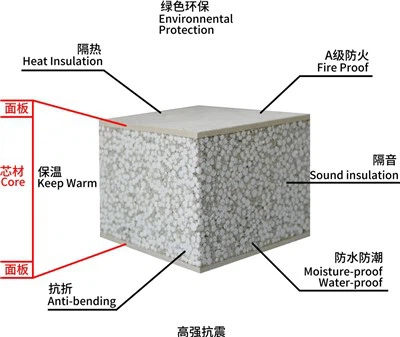
Waterproof cement sandwich boards are composite materials that typically consist of two outer layers of cement-based panels and a core material. The cement outer layers offer high strength, durability, and fire resistance. The core material, which can vary, provides additional insulation properties, such as thermal insulation and sound insulation.
One of the most significant advantages of waterproof cement sandwich boards is their waterproof performance. This makes them suitable for use in areas with high humidity or potential water exposure, such as bathrooms, kitchens, and basements. In addition, they are resistant to mold and mildew growth, which is crucial for maintaining a healthy indoor environment.
Suitability for Partition Walls
Structural Integrity
When considering using waterproof cement sandwich boards for partition walls, structural integrity is a primary concern. These boards are generally strong enough to serve as partition walls in both residential and commercial buildings. Their rigid structure can withstand normal impacts and loads, providing a stable partition that separates different areas.
For example, in an office building, waterproof cement sandwich boards can be used to create private offices or meeting rooms. They can effectively bear the weight of wall-mounted items such as shelves, whiteboards, and decorations. In a residential setting, they can be used to divide bedrooms, living rooms, and other spaces, offering a solid and long - lasting partition solution.
Insulation Properties
Partition walls are not only for separation but also for providing insulation. Waterproof cement sandwich boards have good thermal insulation capabilities. The core material in the sandwich board helps to reduce heat transfer between different areas, which can contribute to energy savings. For instance, in a building with central heating or cooling systems, using these boards as partition walls can help maintain a more stable indoor temperature, reducing the energy consumption of the HVAC system.
Moreover, these boards also offer sound insulation benefits. They can block out noise from adjacent areas, creating a quieter and more comfortable environment. Whether it's the noise from a busy street outside or the chatter in a neighboring room, waterproof cement sandwich boards can significantly reduce the sound transmission. You can check out our Soundproof EPS Sandwich Panel for more advanced sound insulation options.
Aesthetic Appeal
In addition to functionality, the aesthetic aspect is also important for partition walls. Waterproof cement sandwich boards can be finished in various ways to match different interior design styles. They can be painted, wallpapered, or covered with decorative panels to achieve the desired look. Whether you prefer a modern, minimalist style or a more traditional look, these boards can be customized to meet your aesthetic requirements.
Installation Considerations
When installing waterproof cement sandwich boards for partition walls, there are several key points to keep in mind. First, proper installation techniques are crucial to ensure the structural integrity and performance of the partition. The boards should be installed on a flat and stable surface, and the joints should be properly sealed to prevent water leakage.
Second, it is important to follow the manufacturer's installation instructions. Different types of waterproof cement sandwich boards may have specific installation requirements, such as the use of certain adhesives or fasteners. Professional installation is recommended to ensure that the partition walls are installed correctly and safely.
Comparison with Other Partition Wall Materials
Compared with Traditional Brick Walls
Traditional brick walls are heavy and time - consuming to build. They also require a large amount of labor and materials. In contrast, waterproof cement sandwich boards are lightweight and easy to install. They can significantly reduce the construction time and cost. For example, in a renovation project, installing waterproof cement sandwich boards as partition walls can be completed much faster than building a brick wall, allowing the project to be completed on schedule.
Compared with Gypsum Boards
Gypsum boards are commonly used for partition walls, but they have limited waterproof and fire - resistant properties. Waterproof cement sandwich boards, on the other hand, are more suitable for areas with high humidity or fire risks. They can provide better protection against water damage and fire, making them a more reliable choice in certain environments. You can explore our EPS Cement Sandwich Wall Panel for a high - quality alternative to gypsum boards.
Cost - effectiveness
The cost - effectiveness of using waterproof cement sandwich boards for partition walls is another important factor. Although the initial cost of these boards may be slightly higher than some other partition wall materials, their long - term benefits outweigh the cost. Their durability means that they do not need to be replaced frequently, reducing the overall maintenance and replacement costs.
In addition, their energy - saving and sound - insulation properties can lead to cost savings in the long run. For example, the reduced energy consumption due to better thermal insulation can result in lower utility bills over time. And the improved sound insulation can enhance the comfort level of the building, potentially increasing its value.
Applications in Different Settings
Residential Buildings
In residential buildings, waterproof cement sandwich boards can be used in a variety of applications. In addition to the common partition wall uses in bedrooms and living rooms, they are especially suitable for bathrooms and kitchens. These areas are prone to water splashes and high humidity, and the waterproof property of the boards makes them an ideal choice. They can prevent water damage to the partition walls, avoiding issues such as mold growth and wall deterioration.
Commercial Buildings
Commercial buildings such as hotels, restaurants, and shopping malls also benefit from using waterproof cement sandwich boards as partition walls. In a hotel, they can be used to create guest rooms, bathrooms, and corridors. The sound insulation properties can ensure the privacy of guests, while the waterproof feature is essential for areas like bathrooms. In a restaurant, they can be used to separate dining areas, kitchens, and storage rooms, providing a clean and functional partition solution.
Our Product Range
We offer a wide range of waterproof cement sandwich boards to meet different customer needs. Our EPS Cement Sandwich Wall Panel is a popular choice, which combines the advantages of EPS core material with high - strength cement outer layers. It offers excellent thermal and sound insulation, as well as waterproof performance.


We also have Lightweight Foaming Partition Panel, which is even lighter in weight, making it easier to install and handle. These panels are suitable for various partition wall applications in both small - scale and large - scale projects.
Conclusion
In conclusion, waterproof cement sandwich boards are a viable option for partition walls. They offer excellent structural integrity, insulation properties, and aesthetic appeal. Their waterproof and fire - resistant features make them suitable for a wide range of applications in both residential and commercial buildings.
If you are considering using waterproof cement sandwich boards for your partition wall project, we are here to provide you with high - quality products and professional advice. We welcome you to contact us for more information and to discuss your specific requirements. Our team of experts will be happy to assist you in finding the best partition wall solution for your project.
References
- Building Construction Handbook, McGraw - Hill
- Insulation Materials and Applications, Elsevier
- Handbook of Cement - Based Composites, CRC Press