
Hey there! As a supplier of Fiber Cement Sandwich Panels, I often get asked a crucial question: Can fiber cement sandwich panels be used in wet areas? Well, let's dive right into this topic and find out.
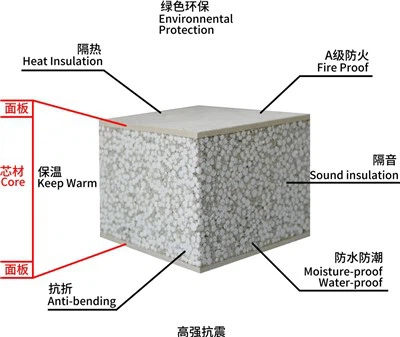
First off, let's understand what fiber cement sandwich panels are. These panels typically consist of a core material, like expanded polystyrene (EPS), sandwiched between two layers of fiber cement boards. The fiber cement boards are made from a mixture of cement, cellulose fibers, and other additives, which gives them strength and durability. The EPS core provides excellent insulation properties. For example, our 120mm EPS Cement Sandwich Panel and EPS Cement Sandwich Insolation Board are popular choices in the market.
Now, when it comes to using these panels in wet areas, it's a bit of a mixed bag. On one hand, fiber cement itself has some great qualities that make it suitable for wet environments. Fiber cement is highly resistant to rot, decay, and termites. It doesn't absorb water like wood does, which means it won't warp, swell, or delaminate when exposed to moisture. This makes it a reliable choice for areas where there's a risk of water damage, such as bathrooms, kitchens, and basements.
The fiber cement boards on the outer layers of the sandwich panel act as a protective barrier. They prevent water from seeping into the core material, which is usually sensitive to moisture. However, the key here is proper installation and maintenance. If the panels are installed correctly with proper sealing and flashing, they can withstand wet conditions quite well.
But, we can't ignore the potential challenges. The core material, especially EPS, is not completely waterproof. If water manages to penetrate the outer fiber cement layers and reach the core, it can cause problems. EPS can absorb water over time, which can reduce its insulation properties and even lead to mold growth. So, it's crucial to ensure that the panels are installed in a way that minimizes the risk of water intrusion.
Another factor to consider is the level of humidity in the wet area. High humidity can create a damp environment that may not be ideal for the panels. In such cases, additional ventilation may be required to keep the area dry. For instance, in a bathroom, installing an exhaust fan can help remove moisture from the air and prevent it from accumulating on the panels.


Let's talk about some real - world applications. In commercial buildings, fiber cement sandwich panels are sometimes used in areas like laundry rooms and food preparation areas. These are wet areas, but with proper design and installation, the panels can perform well. In residential settings, they can be used in basements that are prone to flooding or in exterior areas near swimming pools.
Our 90mm EPS Concrete Sandwich Board is a great option for these types of applications. It offers a good balance between insulation and moisture resistance. The thicker panel provides more protection against water penetration, and the fiber cement outer layers keep the core safe.
When it comes to installation, here are some tips. First, make sure the surface where the panels will be installed is clean, dry, and level. Use high - quality sealants around the edges and joints of the panels to prevent water from getting in. It's also a good idea to install a vapor barrier behind the panels in areas with high humidity.
Regular maintenance is also important. Check the panels periodically for any signs of water damage, such as discoloration or soft spots. If you notice any issues, address them immediately to prevent further damage.
In conclusion, fiber cement sandwich panels can be used in wet areas, but it's not without its challenges. With proper installation, maintenance, and design considerations, they can be a great choice for both commercial and residential projects. They offer the benefits of durability, insulation, and resistance to rot and pests.
If you're considering using fiber cement sandwich panels in your project, whether it's a wet area or not, I'd love to chat with you. We have a wide range of products to meet your needs, and our team of experts can provide you with all the information and support you need. Don't hesitate to reach out to us to start the conversation about your next project.
References
- Building Materials Handbook, 5th Edition
- Guide to Waterproofing in Construction
- Research on the Performance of Fiber Cement Products in Wet Environments