
Can calcium silicate partition walls be used in factories? This is a question that many factory owners and decision - makers often ask. As a supplier of Calcium Silicate Partition Walls, I am well - versed in the properties and applications of these products, and I'm here to provide a comprehensive analysis.
1. Advantages of Calcium Silicate Partition Walls in Factory Settings
1.1 Fire Resistance
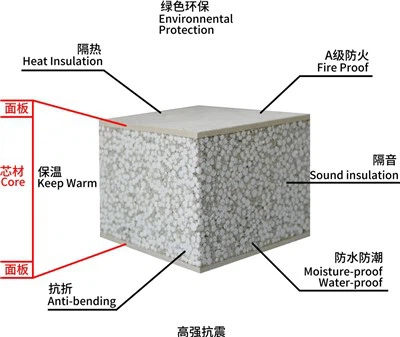
One of the most significant advantages of calcium silicate partition walls is their excellent fire - resistant properties. Factories often have various fire hazards, such as electrical equipment, flammable materials, and high - temperature processes. Calcium silicate is a non - combustible material. It can withstand high temperatures for an extended period without catching fire or releasing toxic gases. This is crucial in a factory environment, as it can help prevent the spread of fire, giving workers more time to evacuate and reducing the potential for property damage. According to fire safety standards, calcium silicate partition walls can provide a certain level of fire - rating, which is essential for meeting safety regulations in industrial facilities.
1.2 Sound Insulation
In a factory, there are usually a lot of noisy machines and equipment. Excessive noise can not only affect the working environment but also cause hearing damage to workers. Calcium silicate partition walls have good sound - insulating properties. They can effectively block the transmission of sound waves, creating a relatively quiet working area. For example, in areas where precision work or meetings are held, installing calcium silicate partition walls can significantly reduce the interference of external noise, improving work efficiency and the overall quality of the working environment.
1.3 Durability
Factory environments can be harsh, with possible impacts from moving equipment, vibrations, and changes in temperature and humidity. Calcium silicate partition walls are highly durable. They are resistant to moisture, mold, and mildew, which is especially important in factories where there may be damp conditions. Additionally, they have high mechanical strength and can withstand a certain degree of impact without being easily damaged. This means that once installed, these partition walls can serve for a long time, reducing the need for frequent repairs and replacements.
1.4 Easy Installation
Time is money in the factory industry. Calcium silicate partition walls are relatively easy to install. They are pre - fabricated panels that can be quickly assembled on - site. This reduces the installation time and minimizes disruptions to the normal operation of the factory. Compared with traditional brick - and - mortar partitions, the installation process of calcium silicate partition walls is much faster and more convenient.
2. Considerations for Using Calcium Silicate Partition Walls in Factories
2.1 Cost
While calcium silicate partition walls offer many advantages, cost is always a consideration. The initial cost of calcium silicate partition walls may be higher than some other types of partition materials. However, when considering the long - term benefits such as durability, fire resistance, and sound insulation, the overall cost - effectiveness is quite high. Factory owners need to balance the upfront investment with the long - term savings and benefits.
2.2 Compatibility with Existing Structures
Before installing calcium silicate partition walls, it is necessary to ensure that they are compatible with the existing factory structures. For example, the load - bearing capacity of the building needs to be considered. If the partition walls are too heavy for the existing structure, additional reinforcement may be required. Also, the connection between the partition walls and the existing walls, floors, and ceilings needs to be carefully designed to ensure a stable installation.
2.3 Special Requirements of Different Factory Types
Different types of factories have different requirements. For example, in a food - processing factory, the partition walls need to meet strict hygiene standards. Calcium silicate partition walls can be a good choice as they are easy to clean and can resist the growth of bacteria. In a chemical factory, on the other hand, the partition walls need to be resistant to chemical corrosion. In such cases, special coatings or treatments may be required for the calcium silicate partition walls.
3. Comparison with Other Partition Materials
3.1 Comparison with EPS Partition Wall Panels
EPS Partition Wall Panel is another popular partition material. EPS panels are lightweight and have good insulation properties. However, they are not as fire - resistant as calcium silicate partition walls. In a factory with high fire - safety requirements, calcium silicate partition walls are a more reliable choice. EPS panels may also be more prone to damage from impacts and have a relatively shorter service life compared to calcium silicate partition walls.
3.2 Comparison with Heat Insulation Prefabricated Cement Board
Heat Insulation Prefabricated Cement Board is similar to calcium silicate partition walls in some aspects, such as durability and fire resistance. However, calcium silicate partition walls generally have better sound - insulation properties. Also, calcium silicate partition walls are lighter in weight, which can be an advantage in terms of installation and reducing the load on the building structure.
3.3 Comparison with EPS Cement Waterproof Wall Panels for Hospital
EPS Cement Waterproof Wall Panels for Hospital are mainly designed for hospital settings, focusing on waterproof and hygienic properties. In a factory, while waterproofing may also be a concern, the requirements for fire resistance, sound insulation, and durability are often more prominent. Calcium silicate partition walls can better meet these comprehensive requirements in a factory environment.
4. Conclusion
In conclusion, calcium silicate partition walls can be a very suitable choice for factories. Their advantages in fire resistance, sound insulation, durability, and easy installation make them well - suited to the complex and demanding factory environment. Although there are some considerations such as cost and compatibility, the long - term benefits far outweigh the potential drawbacks.
If you are a factory owner or involved in factory construction and renovation, and you are considering using partition walls, I highly recommend calcium silicate partition walls. They can not only improve the safety and comfort of your factory but also enhance the overall efficiency of your operations. If you have any questions or are interested in purchasing calcium silicate partition walls, please feel free to contact us for further discussion. We are committed to providing you with the best products and services to meet your specific needs.


References
- Building Materials Handbook: Properties, Selection, and Application. McGraw - Hill Education.
- Fire Safety Standards for Industrial Buildings. National Fire Protection Association.
- Sound Insulation in Industrial Environments: A Technical Guide. Acoustical Society of America.