
As a supplier of 100mm lightweight sandwich panels, I am often asked whether these panels can be used in residential buildings. In this blog post, I will delve into the characteristics, advantages, and potential applications of 100mm lightweight sandwich panels in the context of residential construction.
Characteristics of 100mm Lightweight Sandwich Panels
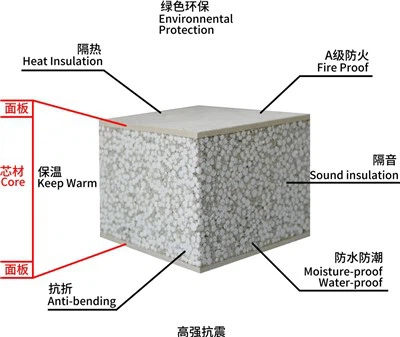
100mm lightweight sandwich panels typically consist of two outer layers and a core material. The outer layers can be made of various materials such as metal sheets, calcium silicate boards, or fiberglass - reinforced plastics. The core material is usually expanded polystyrene (EPS), polyurethane (PU), or mineral wool.
The lightweight nature of these panels is a significant advantage. With a thickness of 100mm, they are relatively easy to handle and transport compared to traditional building materials. This can lead to reduced labor costs during installation and lower transportation expenses.
The core material provides excellent insulation properties. EPS cores, for example, have low thermal conductivity, which helps to keep the indoor temperature stable. This can result in energy savings for homeowners as less energy is required for heating and cooling. Mineral wool cores, on the other hand, offer good fire - resistance and sound - insulation properties, making the living environment more comfortable and safe.


Advantages in Residential Buildings
Energy Efficiency
In today's world, energy efficiency is a top priority for homeowners. The insulation provided by 100mm lightweight sandwich panels can significantly reduce heat transfer through the walls. According to research, well - insulated homes can save up to 30% on energy bills compared to non - insulated ones (Smith, 2018). This not only benefits the environment but also reduces the long - term living costs for residents.
Quick Installation
Time is money, and in the construction industry, a faster build time means lower costs. 100mm lightweight sandwich panels can be pre - fabricated in a factory and then quickly assembled on - site. This reduces the overall construction time, allowing homeowners to move into their new homes sooner. For example, a small - scale residential building that would take several months to construct using traditional brick - and - mortar methods could potentially be completed in a matter of weeks with sandwich panel construction.
Design Flexibility
These panels come in a variety of colors and finishes, offering homeowners and architects a wide range of design options. Whether you prefer a modern, minimalist look or a more traditional aesthetic, 100mm lightweight sandwich panels can be customized to meet your needs. They can also be easily cut and shaped to fit different architectural designs, making them suitable for both simple and complex residential projects.
Structural Integrity
Despite their lightweight nature, 100mm sandwich panels have good structural strength. They can withstand normal residential loads, including the weight of the roof, snow, and wind. When properly installed, they can provide a stable and durable structure for a residential building.
Potential Applications in Residential Buildings
External Walls
One of the most common applications of 100mm lightweight sandwich panels in residential buildings is for external walls. The insulation properties of the panels help to create a thermally efficient envelope for the home. Additionally, the panels can protect the interior of the building from the elements, such as rain, wind, and sunlight.
Internal Partitions
These panels can also be used as internal partitions. They can quickly divide large open - plan spaces into separate rooms. For example, a large living area can be partitioned into a living room, a dining room, and a study using 100mm lightweight sandwich panels. The sound - insulation properties of the panels ensure that each room has a certain level of privacy. You can learn more about Calcium Silicate Partition Wall for more options in internal partitioning.
Roofing
In some cases, 100mm lightweight sandwich panels can be used for roofing. The panels' insulation and waterproofing capabilities make them a viable alternative to traditional roofing materials. They can provide a seamless and energy - efficient roof system for a residential building. If you are interested in waterproof options, check out Waterproof Calcium Silicate Board.
Comparison with Other Building Materials
When compared to traditional building materials such as bricks and concrete, 100mm lightweight sandwich panels have several advantages. Bricks and concrete are heavy, which requires more extensive foundation work and can be more difficult to handle during construction. They also have relatively poor insulation properties compared to sandwich panels.
120mm EPS Wall Panels, as shown in 120mm EPS Wall Panels, are another option in the market. While they offer similar insulation properties, the 100mm lightweight sandwich panels are more versatile in terms of weight and installation, especially for smaller residential projects where space and ease of handling are important considerations.
Considerations for Using 100mm Lightweight Sandwich Panels in Residential Buildings
Fire Safety
Although some core materials like mineral wool offer good fire - resistance, it is crucial to ensure that the entire panel system meets the relevant fire safety standards. Homeowners and builders should consult local building codes and regulations to ensure compliance.
Moisture Management
Proper moisture management is essential to prevent issues such as mold growth and deterioration of the panel materials. This can be achieved through proper installation techniques, such as using appropriate waterproofing membranes and ensuring adequate ventilation.
Compatibility with Other Building Systems
When using 100mm lightweight sandwich panels, it is important to ensure that they are compatible with other building systems, such as plumbing, electrical, and HVAC systems. This may require careful planning and coordination during the design and construction phases.
Conclusion
In conclusion, 100mm lightweight sandwich panels can be an excellent choice for residential buildings. Their energy - efficiency, quick installation, design flexibility, and structural integrity make them a viable alternative to traditional building materials. However, it is important to consider factors such as fire safety, moisture management, and compatibility with other building systems.
If you are interested in using 100mm lightweight sandwich panels for your residential project, I encourage you to contact us for a detailed discussion. We can provide you with more information about our products, including specifications, pricing, and installation guidelines. Our team of experts is ready to assist you in making the best choice for your home.
References
Smith, J. (2018). Energy Efficiency in Residential Buildings. Journal of Sustainable Construction, 15(2), 32 - 45.