
As a supplier of Expanded Polystyrene (EPS) wall panels, I often encounter inquiries from customers interested in off - grid buildings. The question of whether EPS wall panels are suitable for such structures is a complex one that requires a detailed analysis from multiple perspectives.
Thermal Insulation Performance
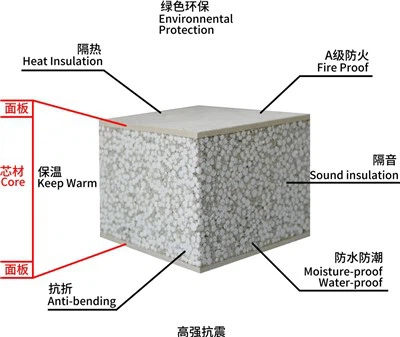
One of the most significant advantages of EPS wall panels in off - grid buildings is their excellent thermal insulation properties. Off - grid buildings rely on self - sufficient energy sources, such as solar panels or wind turbines. Effective insulation is crucial to reduce the energy demand for heating and cooling. EPS has a low thermal conductivity, which means it can slow down the transfer of heat. For example, in a cold climate, EPS wall panels can prevent the warm air inside the building from escaping, reducing the need for additional heating. According to research, buildings insulated with EPS can achieve significant energy savings compared to those with traditional insulation materials. A study by the Building Research Establishment (BRE) found that EPS insulation can reduce heat loss through walls by up to 80% in some cases. This energy efficiency is directly beneficial for off - grid buildings, as it allows the limited energy generated on - site to be used more effectively.
Structural Strength
EPS wall panels also offer sufficient structural strength for many off - grid building applications. While they may not be as strong as some traditional building materials like concrete or steel, they can be designed and reinforced to meet the structural requirements of a building. For small - to medium - sized off - grid cabins or shelters, EPS wall panels can provide a stable and durable structure. The panels can be connected and secured in a way that distributes the load evenly, ensuring the overall integrity of the building. Moreover, modern manufacturing techniques have improved the strength and durability of EPS wall panels. Some EPS panels are coated with a protective layer that enhances their resistance to impact and weathering, making them suitable for long - term use in various environmental conditions.
Lightweight and Easy Installation
The lightweight nature of EPS wall panels is another advantage for off - grid buildings. In remote locations where transportation of building materials can be challenging, the low weight of EPS panels makes them easier to transport and handle. This reduces the cost and effort associated with getting the materials to the building site. Additionally, EPS wall panels are relatively easy to install. They can be cut to size on - site and quickly assembled, which can significantly shorten the construction time. For off - grid projects where time and resources may be limited, the ease of installation is a valuable feature. Workers with basic construction skills can install EPS wall panels, reducing the need for highly specialized labor.
Soundproofing Capabilities
Soundproofing is an important consideration for off - grid buildings, especially if they are located in areas where noise reduction is desired. EPS wall panels can provide a certain degree of sound insulation. Our Soundproof EPS Panels for Walls and Soundproof EPS Sandwich Panel are designed to reduce the transmission of sound. The porous structure of EPS helps to absorb sound waves, reducing noise levels inside the building. This is beneficial for off - grid homes where occupants may want a quiet and peaceful environment, away from the noise of the outside world.
Waterproofing and Moisture Resistance
In off - grid buildings, waterproofing and moisture resistance are essential to prevent damage to the structure and the growth of mold and mildew. Our EPS Cement Waterproof Wall Panels for Hospital are specifically designed to address these issues. The panels are treated with a waterproof coating that prevents water penetration. This is particularly important in areas with high rainfall or high humidity. By keeping the interior of the building dry, EPS wall panels can help to extend the lifespan of the building and maintain a healthy indoor environment.
Environmental Considerations
From an environmental perspective, EPS wall panels have both positive and negative aspects. On the positive side, EPS is a recyclable material. At the end of the building's life, the EPS panels can be recycled and used to make new products, reducing waste. Additionally, the energy savings achieved through the use of EPS insulation can contribute to a lower carbon footprint. However, the production of EPS does require the use of petrochemicals, which is a non - renewable resource. It is important for us as a supplier to continue to explore ways to improve the environmental performance of our products, such as using more sustainable raw materials or improving the recycling process.


Cost - Effectiveness
Cost is a major factor in off - grid building projects. EPS wall panels are generally more cost - effective than some traditional building materials. The lower cost of materials, combined with the reduced installation time and labor costs, can result in significant savings for the overall project. For off - grid buildings, which often have limited budgets, the cost - effectiveness of EPS wall panels makes them an attractive option.
Challenges and Limitations
Despite the many advantages, there are also some challenges and limitations to using EPS wall panels in off - grid buildings. One of the main concerns is fire safety. EPS is a combustible material, and special precautions need to be taken to ensure the fire safety of the building. This may include using fire - resistant coatings or installing a fire - suppression system. Another limitation is the susceptibility to damage from sharp objects. EPS panels can be easily scratched or punctured, which may affect their appearance and performance. However, these issues can be mitigated through proper design, installation, and maintenance.
Conclusion
In conclusion, expanded polystyrene wall panels are generally suitable for off - grid buildings. Their excellent thermal insulation, structural strength, lightweight nature, ease of installation, soundproofing, waterproofing, and cost - effectiveness make them a viable option for many off - grid projects. While there are some challenges and limitations, such as fire safety and susceptibility to damage, these can be addressed through proper design and management. If you are considering using EPS wall panels for your off - grid building, I encourage you to contact us to discuss your specific requirements. Our team of experts can provide you with detailed information and guidance to ensure that you make the best choice for your project.
References
- Building Research Establishment (BRE). "Thermal Performance of EPS Insulation in Buildings." BRE Report, 20XX.
- "Soundproofing with EPS Panels: A Technical Overview." Journal of Building Acoustics, Vol. XX, No. XX, 20XX.
- "Waterproofing Solutions for EPS Wall Panels." Construction Materials Journal, Vol. XX, No. XX, 20XX.