
EPS partition wall panels have gained significant popularity in the construction industry due to their numerous advantages, such as lightweight, excellent insulation properties, and ease of installation. One common concern among potential users is whether these panels are resistant to scratches. As a supplier of EPS partition wall panels, I am here to provide you with a comprehensive analysis of this issue.
Understanding EPS Partition Wall Panels
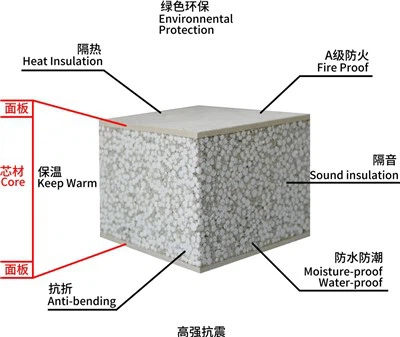
EPS, or expanded polystyrene, is a lightweight and rigid foam material made from polystyrene beads. These beads are expanded and fused together to form a solid panel with a closed-cell structure. EPS partition wall panels typically consist of an EPS core sandwiched between two layers of facing materials, such as cement board, gypsum board, or metal sheets.
The facing materials play a crucial role in determining the scratch resistance of the panels. Different facing materials have different levels of hardness, durability, and surface finish, which can affect their ability to withstand scratches. For example, cement board is generally more durable and scratch-resistant than gypsum board, while metal sheets offer the highest level of scratch resistance.
Factors Affecting Scratch Resistance
Several factors can influence the scratch resistance of EPS partition wall panels. Understanding these factors can help you make an informed decision when choosing the right panels for your project.
Facing Material
As mentioned earlier, the facing material is one of the most important factors affecting scratch resistance. Cement board, for instance, has a hard and dense surface that can resist scratches from normal wear and tear. Gypsum board, on the other hand, is relatively softer and more prone to scratches. Metal sheets, such as galvanized steel or aluminum, are extremely durable and scratch-resistant, making them ideal for high-traffic areas.
Surface Finish
The surface finish of the facing material also plays a role in scratch resistance. Smooth and glossy finishes are generally more resistant to scratches than rough or textured finishes. However, smooth finishes may also show scratches more easily, as they reflect light and make any imperfections more visible.
Panel Thickness
The thickness of the panel can also affect its scratch resistance. Thicker panels are generally more durable and less likely to be scratched than thinner panels. However, thicker panels may also be heavier and more expensive, so you need to consider your specific requirements and budget when choosing the panel thickness.
Installation Method
The installation method can also have an impact on the scratch resistance of the panels. Improper installation can cause scratches or damage to the panels, especially during handling and transportation. It is important to follow the manufacturer's installation instructions carefully and use the appropriate tools and techniques to ensure a smooth and scratch-free installation.
Testing Scratch Resistance
To determine the scratch resistance of EPS partition wall panels, various testing methods can be used. One common method is the pencil hardness test, which involves using pencils of different hardness levels to scratch the surface of the panel. The hardness of the pencil that leaves a scratch on the panel indicates the scratch resistance of the panel.
Another method is the Taber abrasion test, which involves rotating a sample of the panel against an abrasive wheel under a specified load. The amount of material removed from the panel after a certain number of rotations is measured to determine the abrasion resistance of the panel.
These tests can provide valuable information about the scratch resistance of EPS partition wall panels. However, it is important to note that the results of these tests may not always reflect the actual performance of the panels in real-world applications. Factors such as the type of contact, the force applied, and the frequency of scratching can all affect the scratch resistance of the panels.
Applications and Scratch Resistance Requirements
The scratch resistance requirements of EPS partition wall panels depend on the specific application and the level of traffic in the area. In low-traffic areas, such as residential bedrooms or offices, the panels may not need to be highly scratch-resistant. However, in high-traffic areas, such as commercial buildings, schools, or hospitals, the panels need to be more durable and scratch-resistant to withstand the wear and tear of daily use.


For example, in a hospital setting, the partition wall panels need to be able to resist scratches from medical equipment, wheelchairs, and other objects. In this case, metal-faced panels or panels with a hard and durable facing material may be the best choice. On the other hand, in a residential living room, where the traffic is relatively low, gypsum board-faced panels may be sufficient.
Our EPS Partition Wall Panels and Scratch Resistance
As a supplier of EPS partition wall panels, we offer a wide range of products with different facing materials and surface finishes to meet the diverse needs of our customers. Our Fireproof Foamed EPS Sandwich Panel features a fireproof EPS core and a durable facing material, providing excellent scratch resistance and fire protection. Our Exterior Wall Sandwich Panel is designed for outdoor use and is highly resistant to scratches, weathering, and UV radiation. And our EPS Cement Concrete Sandwich Panel combines the strength of cement concrete with the lightweight and insulation properties of EPS, offering superior scratch resistance and structural integrity.
We also conduct rigorous quality control tests on all our products to ensure that they meet the highest standards of scratch resistance and durability. Our panels are manufactured using advanced technology and high-quality materials, and we are committed to providing our customers with the best products and services.
Conclusion
In conclusion, the scratch resistance of EPS partition wall panels depends on several factors, including the facing material, surface finish, panel thickness, and installation method. By understanding these factors and choosing the right panels for your specific application, you can ensure that your partition walls are durable, scratch-resistant, and long-lasting.
As a supplier of EPS partition wall panels, we are dedicated to providing our customers with high-quality products that meet their needs and expectations. If you are interested in learning more about our products or have any questions about scratch resistance, please feel free to contact us. We would be happy to assist you with your project and help you choose the right panels for your needs.
References
- ASTM D3363 - Standard Test Method for Film Hardness by Pencil Test
- ASTM D4060 - Standard Test Method for Abrasion Resistance of Organic Coatings by the Taber Abraser