
As a supplier of 120mm EPS wall panels, I often get asked about the pest resistance of our products. This is a crucial aspect for many customers, as pests can cause significant damage to building materials over time. In this blog, I'll delve into the science behind the pest resistance of 120mm EPS wall panels, backed by industry knowledge and real - world experience.
Understanding 120mm EPS Wall Panels
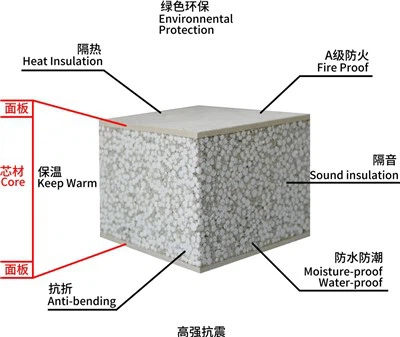
EPS, or Expanded Polystyrene, is a lightweight and rigid foam material made from expanded polystyrene beads. Our 120mm EPS wall panels are engineered with a specific thickness to provide excellent insulation, structural integrity, and durability. These panels are widely used in various construction projects, from residential homes to commercial buildings.
The manufacturing process of EPS involves expanding polystyrene beads using steam and then molding them into the desired panel shape. This results in a closed - cell structure that gives EPS its unique properties, including low thermal conductivity, high strength - to - weight ratio, and resistance to moisture.
The Nature of Pests and Their Impact on Building Materials
Pests such as termites, rodents, and insects can cause extensive damage to building materials. Termites, for example, feed on cellulose - based materials like wood, causing structural weakening over time. Rodents can chew through wires, insulation, and even some types of building panels, leading to safety hazards and costly repairs. Insects like carpenter ants can also bore into wood and other materials, creating tunnels and compromising the integrity of the structure.
Why 120mm EPS Wall Panels Are Resistant to Pests
1. Lack of Nutritional Value
EPS is a synthetic material that does not contain cellulose or other substances that pests typically feed on. Unlike wood or some natural fibers, there is no nutritional incentive for pests to target 120mm EPS wall panels. Termites, which rely on cellulose for sustenance, will not find EPS panels a suitable food source. This lack of nutritional value acts as a natural deterrent for many common pests.
2. Physical Structure
The closed - cell structure of EPS makes it difficult for pests to penetrate. The cells are tightly packed together, creating a barrier that pests cannot easily break through. Rodents, for instance, would have a hard time chewing through the dense and rigid EPS material compared to softer, more porous materials. This physical resistance helps protect the panels from damage caused by pest infestations.
3. Chemical Resistance
EPS is chemically stable and does not emit substances that attract pests. Some building materials may release volatile organic compounds (VOCs) or other chemicals that can act as attractants for insects and rodents. In contrast, 120mm EPS wall panels do not have such emissions, further reducing the likelihood of pest infestations.


Real - World Evidence of Pest Resistance
In numerous construction projects where our 120mm EPS wall panels have been used, there have been few reports of pest - related issues. For example, in a residential housing development in a region known for termite activity, the use of EPS wall panels significantly reduced the risk of termite damage compared to traditional wood - framed structures. Homeowners reported fewer pest sightings and no signs of structural damage caused by pests over several years of occupancy.
Comparing with Other Building Materials
When compared to other common building materials, 120mm EPS wall panels have a clear advantage in terms of pest resistance.
Wood
Wood is a popular building material but is highly susceptible to pest damage. Termites can quickly infest wooden structures, causing significant structural problems. Carpenter ants can also cause damage by creating galleries in the wood. In contrast, EPS panels are not affected by these pests, providing long - term protection for the building.
Fiberglass Insulation
Fiberglass insulation can be attractive to rodents, which may use it for nesting. Rodents can also damage the insulation by chewing through it, reducing its effectiveness. EPS wall panels, on the other hand, are not appealing to rodents and maintain their insulation properties over time.
Additional Benefits of 120mm EPS Wall Panels
Apart from pest resistance, our 120mm EPS wall panels offer several other benefits.
Insulation
The high thermal insulation properties of EPS help reduce energy consumption in buildings. By keeping the interior temperature stable, it reduces the need for heating and cooling, resulting in lower energy bills.
Lightweight and Easy to Install
EPS panels are lightweight, which makes them easy to handle and install. This reduces labor costs and construction time, making them a cost - effective choice for construction projects.
Versatility
Our 120mm EPS wall panels can be used in a variety of applications, including exterior walls, interior partitions, and even in cold storage facilities. They can be easily customized to fit different building designs and requirements.
Related Products
If you are interested in other types of panels, we also offer Waterproof Cement Sandwich Board, Fireproof Foam Sandwich Partition Board, and Foam Concrete Cement Sandwich Panel. These products also have their unique features and benefits, and they can be used in combination with our 120mm EPS wall panels to meet different construction needs.
Conclusion
In conclusion, 120mm EPS wall panels are highly resistant to pests due to their lack of nutritional value, physical structure, and chemical stability. They offer a reliable and long - lasting solution for construction projects, protecting buildings from the damage caused by common pests. If you are considering using wall panels for your next construction project, our 120mm EPS wall panels are an excellent choice.
If you have any questions or are interested in purchasing our 120mm EPS wall panels, please feel free to contact us for a detailed consultation. We look forward to working with you on your construction projects.
References
- "Building Materials and Technology Handbook" by James O. Harris
- "Pest Management in Construction" by the National Pest Management Association
- Industry reports on the performance of EPS wall panels in pest - prone areas.