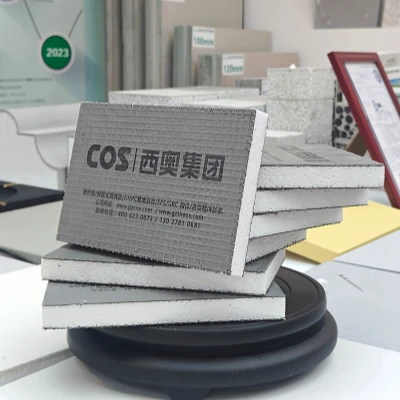
The production process of EPS sandwich panel mainly includes the following key steps:
Pre-release: The EPS foam beads are heated by steam, and the volume expands rapidly, forming non-interconnected bubble holes. This step determines the apparent density of the EPS plate. Then the EPS foam beads are put to maturation and dried and cooled.
Molding: Put the cured EPS foam beads into the plate machine, heat and pressure again, and bond them together to form plates.
Aging and cutting: The formed EPS plates are placed in the drying room for drying and curing to complete the aging process. It is then cut to the required size and shape on a cutting machine with a heating wire.
Preheating: The preheating temperature is generally 00°C, and the preheating time depends on the amount of metal in the mold cavity and the requirements of the product. The higher the amount of metal, the longer the warm-up time.
Mold clamping: Before clamping, the mold needs to be opened, and the venting valve and discharge valve are all opened. The clamping process changes from fast to slow to prevent mold collisions.
Filling mold: There are intermittent feeding and non-intermittent feeding. After filling the mold, turn off the material gun and stop the air supply.
Heating: Heating evenly to ensure that the product is completely fused. When the wall thickness exceeds a certain limit, conduction heating method is used.
Cooling: Commonly used cooling methods include water cooling and vacuum cooling. Water cooling can make the surface of the product smooth and increase the strength of the product; Vacuum cooling time is shorter.
Demoulding: Blow the product to the side of the fixed mold with compressed air to complete the demoulding process.
Product structure and performance characteristics of EPS sandwich panel:
Product structure: the inner and outer sides are glass fiber reinforced plastic plates, and the sandwich layer is polystyrene foam, which is compounded by high pressure of German vacuum technology. The surface is smooth, dirt can be easily removed, the color is bright, and it has excellent gloss retention.
Performance characteristics: It has good thermal insulation performance, low thermal conductivity, good chemical stability to the atmosphere, water and general concentration of acid, alkali, salt and other media, high surface finish, corrosion resistance, sunproof, anti-aging.
Through these process steps and strict quality control, high-quality EPS sandwich panels can be produced to meet the needs of various applications.