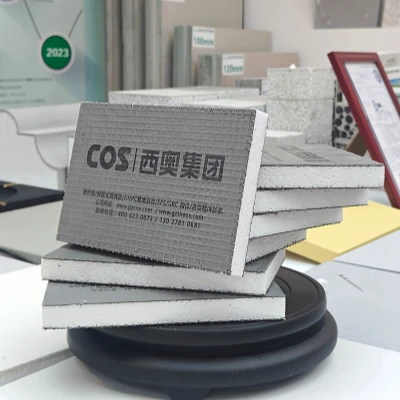
EPS sandwich panel (polystyrene sandwich panel) is a composite material composed of two layers of glass fiber reinforced plastic plate and an intermediate polystyrene foam layer, which is laminated by high pressure of German vacuum technology. Its surface is smooth, dirt is easy to remove, the color is bright, and it has excellent gloss retention. There is a layer of gelcoat with excellent performance on the surface of FRP plate, which has good chemical stability to the atmosphere, water and general concentration of acid, alkali, salt and other media, and is corrosion-resistant, light-proof and anti-aging.

Performance characteristics:
Thermal insulation: EPS sandwich panel has a low thermal conductivity and good thermal insulation performance. The specific values are as follows:
FRP panel: 0.23 W/m²· K
Polystyrene foam (EPS): 0.038-0.043 W/m²· K
80mm thick composite panel: <0.46 W/m²· K2
Lightweight and high-strength: EPS sandwich panel has the characteristics of light weight and high strength, which is suitable for various building structures, especially suitable for adding layers to the original building.
Corrosion resistance: The gelcoat on the surface of FRP plate has good chemical stability to the atmosphere, water and general concentration of acid, alkali, salt and other media, and is not easy to change color, corrosion resistance, sun protection, and aging resistance.
Scope of application
EPS sandwich panels are widely used in thermal insulation/dry cargo compartments, large-span structural roofs and walls, thermal insulation plants, purification plants, high-end and high-end combination houses, container houses, etc.
To sum up, EPS sandwich panel has become a new material commonly used in modern construction due to its excellent thermal insulation performance, light weight and high strength, and wide range of application.